 Français
 English

| ELK.No | ES5051 |
| Product name | CELSR3 rabbit pAb |
| Reactivity | Human;Mouse;Rat |
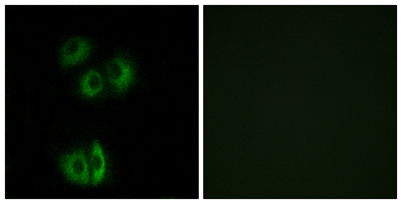
| Applications | IF;ELISA |
| Other name | CELSR3; CDHF11; EGFL1; FMI1; KIAA0812; MEGF2; Cadherin EGF LAG seven-pass G-type receptor 3; Cadherin family member 11; Epidermal growth factor-like protein 1; EGF-like protein 1; Flamingo homolog 1; hFmi1; Multiple epidermal growth factor- |
| Size | 50μL |
| Unit price ($) | 148 |
| Human gene ID | 1951 |
| Human Swiss-Prot | Q9NYQ7 |
| Source | Rabbit |
| Isotype | IgG |
| Target | CELSR3 |
| Fields | |
| Gene name | CELSR3 |
| Protein name | Cadherin EGF LAG seven-pass G-type receptor 3 |
| Human gene link | View Human Gene |
| Human Swiss link | View Human Swiss-Prot |
| Mouse gene ID | 107934 |
| Mouse gene link | View Mouse Gene |
| Mouse Swiss-Prot | Q91ZI0 |
| Mouse Swiss link | View Mouse Swiss-Prot |
| Rat gene ID | 83466 |
| Rat gene link | View Rat Gene |
| Rat Swiss-Prot | O88278 |
| Rat Swiss link | View Rat Swiss-Prot |
| Immunogen | The antiserum was produced against synthesized peptide derived from human CELSR3. AA range:3195-3244 |
| Specificity | CELSR3 Polyclonal Antibody detects endogenous levels of CELSR3 protein. |
| Formulation | Liquid in PBS containing 50% glycerol, 0.5% BSA and 0.02% sodium azide. |
| Clonality | Polyclonal |
| Dilution | Immunofluorescence: 1/200 - 1/1000. ELISA: 1/40000. Not yet tested in other applications. |
| Purification | The antibody was affinity-purified from rabbit antiserum by affinity-chromatography using epitope-specific immunogen. |
| Concentration | 1 mg/ml |
| Storage stability | -20°C/1 year |
| Molecular Weight (Da) | 358kD |
| Observed band (KD) | |
| Background | This gene belongs to the flamingo subfamily, which is included in the cadherin superfamily. The flamingo cadherins consist of nonclassic-type cadherins that do not interact with catenins. They are plasma membrane proteins containing seven epidermal growth factor-like repeats, nine cadherin domains and two laminin A G-type repeats in their ectodomain. They also have seven transmembrane domains, a characteristic feature of their subfamily. The encoded protein may be involved in the regulation of contact-dependent neurite growth and may play a role in tumor formation. [provided by RefSeq, Jun 2013], |
| Function | function:Does not seem to be involved in anion transport.,function:Receptor that may have an important role in cell/cell signaling during nervous system formation.,similarity:Belongs to the G-protein coupled receptor 2 family. LN-TM7 subfamily.,similarity:Belongs to the SLC26A/SulP transporter (TC 2.A.53) family.,similarity:Contains 1 GPS domain.,similarity:Contains 1 laminin EGF-like domain.,similarity:Contains 1 STAS domain.,similarity:Contains 2 laminin G-like domains.,similarity:Contains 8 EGF-like domains.,similarity:Contains 9 cadherin domains.,tissue specificity:Ubiquitous. Highest levels in kidney and pancreas. Lower expression in heart, skeletal muscle, liver and placenta. Also found in lung and brain., |
| Subcellular location | Cell membrane; Multi-pass membrane protein. |
| Expression | Brain,Cord blood,Duodenum,Epithelium,Kidney,Uterus, |

Use collapsible tabs for more detailed information that will help customers make a purchasing decision.
Ex: Shipping and return policies, size guides, and other common questions.