 Français
 English
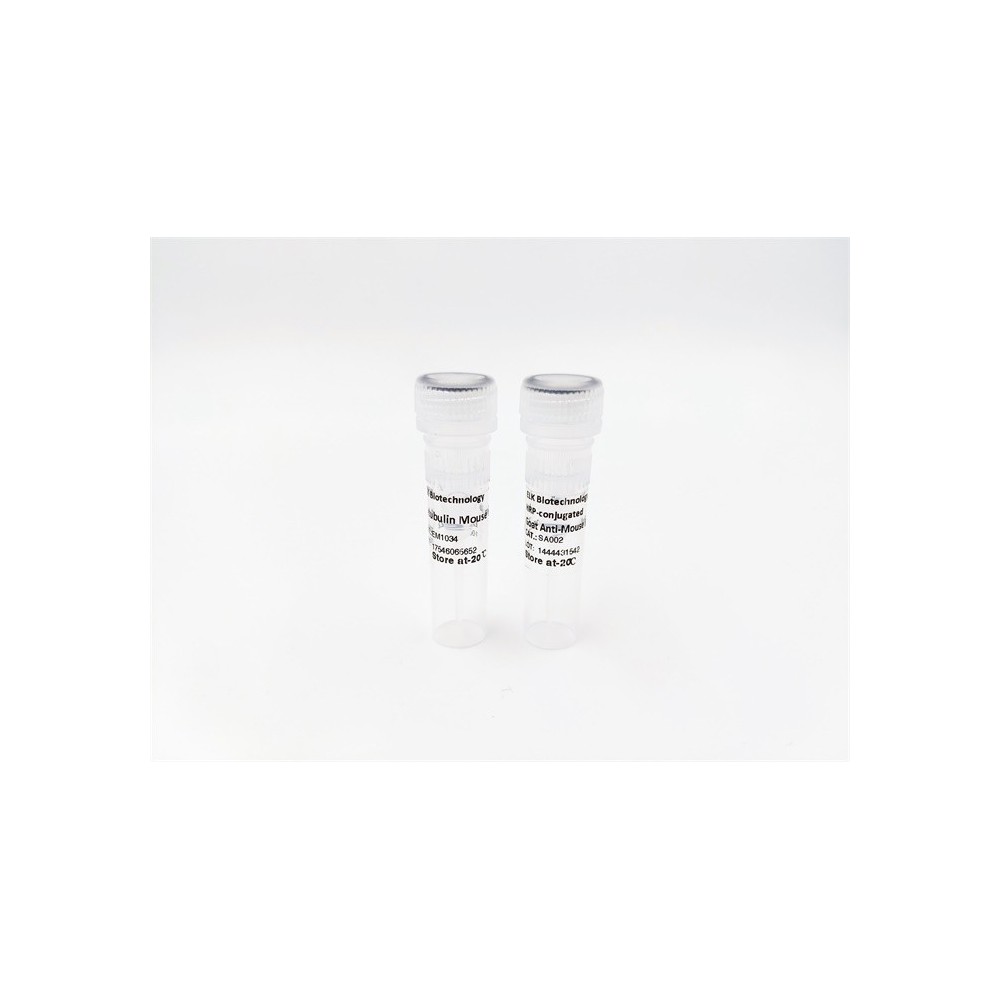

| ELK.No | ES5082 |
| Product name | 4E-BP1 rabbit pAb |
| Reactivity | Human;Mouse;Rat |
| Applications | IHC;IF;ELISA |
| Other name | EIF4EBP1; Eukaryotic translation initiation factor 4E-binding protein 1; 4E-BP1; eIF4E-binding protein 1; Phosphorylated heat- and acid-stable protein regulated by insulin 1; PHAS-I |
| Size | 100μL |
| Unit price ($) | 248 |
| Human gene ID | 1978 |
| Human Swiss-Prot | Q13541 |
| Source | Rabbit |
| Isotype | IgG |
| Target | 4E-BP1 |
| Fields | >>EGFR tyrosine kinase inhibitor resistance;>>ErbB signaling pathway;>>HIF-1 signaling pathway;>>mTOR signaling pathway;>>PI3K-Akt signaling pathway;>>AMPK signaling pathway;>>Longevity regulating pathway;>>Cellular senescence;>>Insulin signaling pathway;>>Human cytomegalovirus infection;>>Human papillomavirus infection;>>Herpes simplex virus 1 infection;>>Chemical carcinogenesis - receptor activation;>>Acute myeloid leukemia;>>Choline metabolism in cancer |
| Gene name | EIF4EBP1 |
| Protein name | Eukaryotic translation initiation factor 4E-binding protein 1 |
| Human gene link | View Human Gene |
| Human Swiss link | View Human Swiss-Prot |
| Mouse gene ID | 13685 |
| Mouse gene link | View Mouse Gene |
| Mouse Swiss-Prot | Q60876 |
| Mouse Swiss link | View Mouse Swiss-Prot |
| Rat gene ID | 116636 |
| Rat gene link | View Rat Gene |
| Rat Swiss-Prot | Q62622 |
| Rat Swiss link | View Rat Swiss-Prot |
| Immunogen | The antiserum was produced against synthesized peptide derived from human 4E-BP1. AA range:2-51 |
| Specificity | 4E-BP1 Polyclonal Antibody detects endogenous levels of 4E-BP1 protein. |
| Formulation | Liquid in PBS containing 50% glycerol, 0.5% BSA and 0.02% sodium azide. |
| Clonality | Polyclonal |
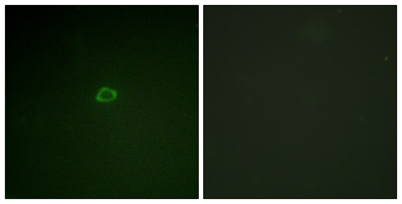
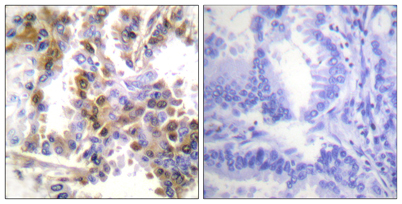
| Dilution | Immunohistochemistry: 1/100 - 1/300. Immunofluorescence: 1/200 - 1/1000. ELISA: 1/5000. Not yet tested in other applications. |
| Purification | The antibody was affinity-purified from rabbit antiserum by affinity-chromatography using epitope-specific immunogen. |
| Concentration | 1 mg/ml |
| Storage stability | -20°C/1 year |
| Molecular Weight (Da) | 12kD |
| Observed band (KD) | |
| Background | eukaryotic translation initiation factor 4E binding protein 1(EIF4EBP1) Homo sapiens This gene encodes one member of a family of translation repressor proteins. The protein directly interacts with eukaryotic translation initiation factor 4E (eIF4E), which is a limiting component of the multisubunit complex that recruits 40S ribosomal subunits to the 5' end of mRNAs. Interaction of this protein with eIF4E inhibits complex assembly and represses translation. This protein is phosphorylated in response to various signals including UV irradiation and insulin signaling, resulting in its dissociation from eIF4E and activation of mRNA translation. [provided by RefSeq, Jul 2008], |
| Function | function:Regulates eIF4E activity by preventing its assembly into the eIF4F complex. Mediates the regulation of protein translation by hormones, growth factors and other stimuli that signal through the MAP kinase pathway.,PTM:Phosphorylated on serine and threonine residues in response to insulin, EGF and PDGF. Phosphorylated upon DNA damage, probably by ATM or ATR.,similarity:Belongs to the eIF4E-binding protein family.,subunit:Nonphosphorylated EIF4EBP1 competes with EIF4G1/EIF4G3 to interact with EIF4E; insulin stimulated MAP-kinase (MAPK1 and MAPK3) phosphorylation of EIF4EBP1 causes dissociation of the complex allowing EIF4G1/EIF4G3 to bind and consequent initiation of translation. Rapamycin can attenuate insulin stimulation, mediated by FKBPs., |
| Subcellular location | nucleoplasm,cytoplasm,cytosol,protein complex, |
| Expression | Colon,Epithelium,Lung,Placenta,Platelet, |

Use collapsible tabs for more detailed information that will help customers make a purchasing decision.
Ex: Shipping and return policies, size guides, and other common questions.