 Français
 English
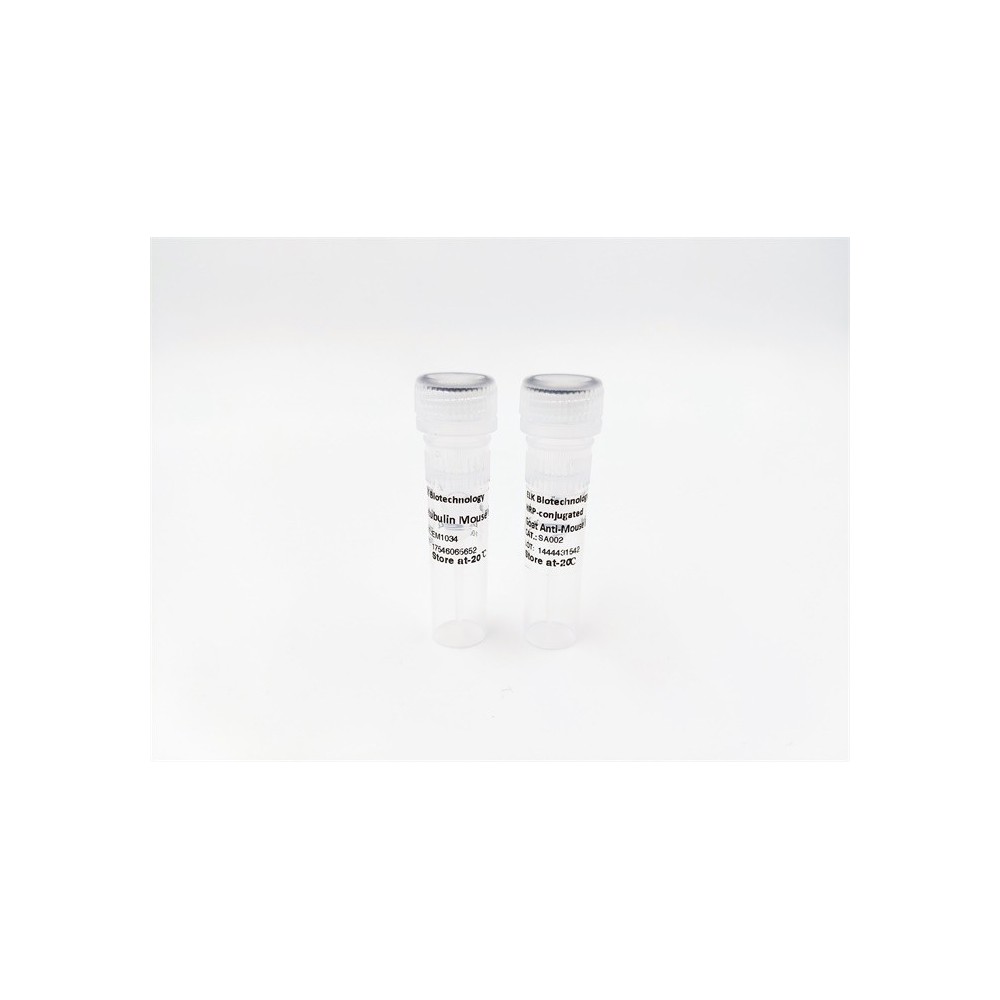

| ELK.No | ES5270 |
| Product name | Arylsulfatase G rabbit pAb |
| Reactivity | Human;Mouse;Rat |
| Applications | WB;IHC;IF;ELISA |
| Other name | ARSG; KIAA1001; Arylsulfatase G; ASG |
| Size | 100μL |
| Unit price ($) | 248 |
| Human gene ID | 22901 |
| Human Swiss-Prot | Q96EG1 |
| Source | Rabbit |
| Isotype | IgG |
| Target | Arylsulfatase G |
| Fields | >>Lysosome |
| Gene name | ARSG |
| Protein name | Arylsulfatase G |
| Human gene link | View Human Gene |
| Human Swiss link | View Human Swiss-Prot |
| Mouse gene ID | 74008 |
| Mouse gene link | View Mouse Gene |
| Mouse Swiss-Prot | Q3TYD4 |
| Mouse Swiss link | View Mouse Swiss-Prot |
| Rat gene ID | 303631 |
| Rat gene link | View Rat Gene |
| Rat Swiss-Prot | Q32KJ9 |
| Rat Swiss link | View Rat Swiss-Prot |
| Immunogen | The antiserum was produced against synthesized peptide derived from human ARSG. AA range:251-300 |
| Specificity | Arylsulfatase G Polyclonal Antibody detects endogenous levels of Arylsulfatase G protein. |
| Formulation | Liquid in PBS containing 50% glycerol, 0.5% BSA and 0.02% sodium azide. |
| Clonality | Polyclonal |
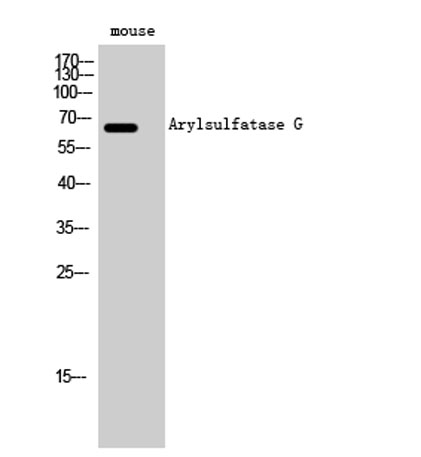
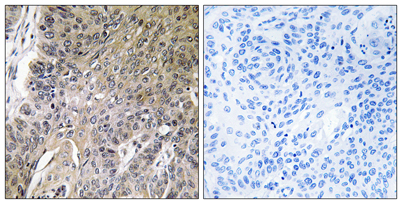
| Dilution | Western Blot: 1/500 - 1/2000. Immunohistochemistry: 1/100 - 1/300. ELISA: 1/40000. Not yet tested in other applications. |
| Purification | The antibody was affinity-purified from rabbit antiserum by affinity-chromatography using epitope-specific immunogen. |
| Concentration | 1 mg/ml |
| Storage stability | -20°C/1 year |
| Molecular Weight (Da) | |
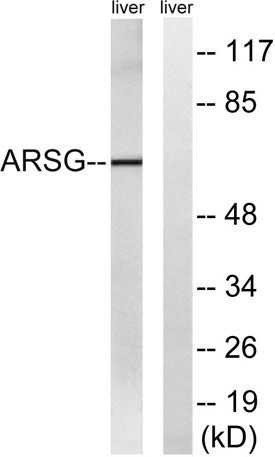
| Observed band (KD) | 65kD |
| Background | The protein encoded by this gene belongs to the sulfatase enzyme family. Sulfatases hydrolyze sulfate esters from sulfated steroids, carbohydrates, proteoglycans, and glycolipids. They are involved in hormone biosynthesis, modulation of cell signaling, and degradation of macromolecules. This protein displays arylsulfatase activity at acidic pH, as is typical of lysosomal sulfatases, and has been shown to localize in the lysosomes. Alternatively spliced transcript variants have been found for this gene. [provided by RefSeq, Jun 2012], |
| Function | cofactor:Binds 1 calcium ion per subunit.,PTM:N-glycosylated.,PTM:The conversion to 3-oxoalanine (also known as C-formylglycine, FGly), of a serine or cysteine residue in prokaryotes and of a cysteine residue in eukaryotes, is critical for catalytic activity.,similarity:Belongs to the sulfatase family.,tissue specificity:Widely expressed., |
| Subcellular location | Lysosome . The 63-kDa precursor protein localizes to pre-lysosomal compartments and tightly associates with organelle membranes, most likely the endoplasmic reticulum. In contrast, proteolytically processed fragments of 34-, 18- and 10-kDa are found in lysosomal fractions and lose their membrane association. . |
| Expression | Widely expressed, with very low expression in brain, lung, heart and skeletal muscle. |

Use collapsible tabs for more detailed information that will help customers make a purchasing decision.
Ex: Shipping and return policies, size guides, and other common questions.