 Français
 English
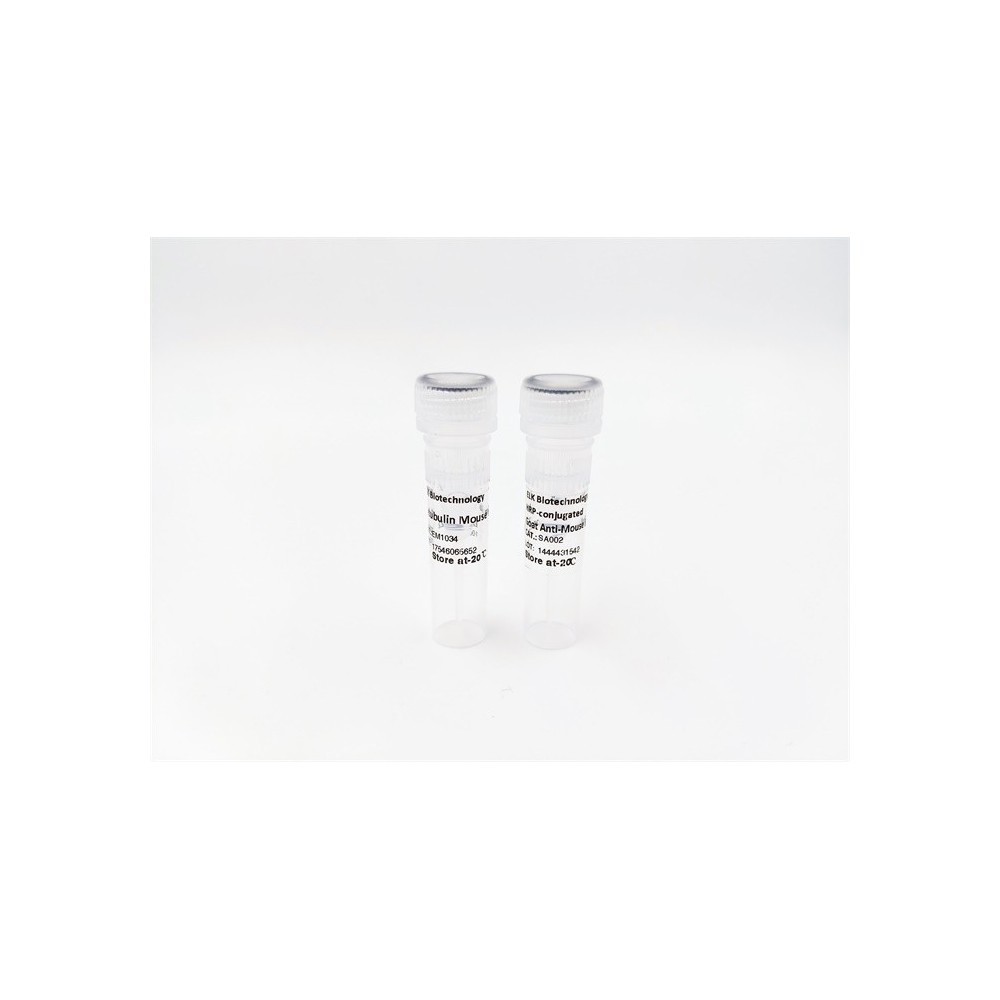

| ELK.No | ES5395 |
| Product name | V-ATPase C2 rabbit pAb |
| Reactivity | Human;Rat;Mouse; |
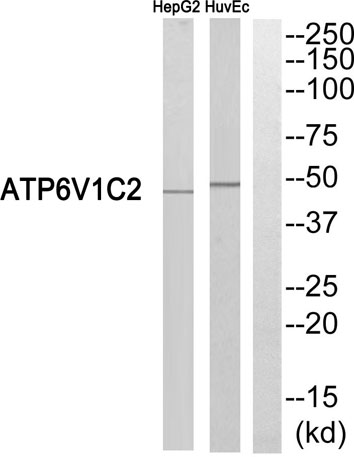
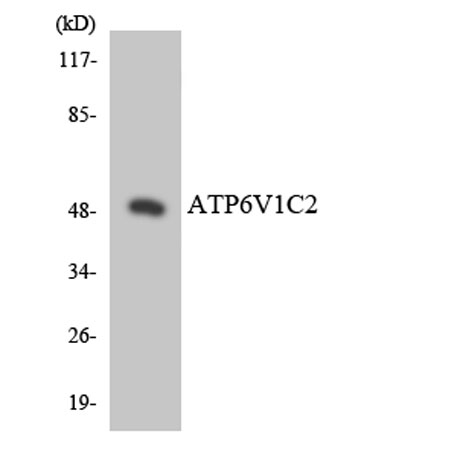
| Applications | WB;ELISA |
| Other name | ATP6V1C2; V-type proton ATPase subunit C 2; V-ATPase subunit C 2; Vacuolar proton pump subunit C 2 |
| Size | 100μL |
| Unit price ($) | 248 |
| Human gene ID | 245973 |
| Human Swiss-Prot | Q8NEY4 |
| Source | Rabbit |
| Isotype | IgG |
| Target | V-ATPase C2 |
| Fields | >>Oxidative phosphorylation;>>Metabolic pathways;>>Phagosome;>>mTOR signaling pathway;>>Synaptic vesicle cycle;>>Collecting duct acid secretion;>>Vibrio cholerae infection;>>Epithelial cell signaling in Helicobacter pylori infection;>>Human papillomavirus infection;>>Rheumatoid arthritis |
| Gene name | ATP6V1C2 |
| Protein name | V-type proton ATPase subunit C 2 |
| Human gene link | View Human Gene |
| Human Swiss link | View Human Swiss-Prot |
| Mouse gene ID | |
| Mouse gene link | |
| Mouse Swiss-Prot | Q99L60 |
| Mouse Swiss link | View Mouse Swiss-Prot |
| Rat gene ID | |
| Rat gene link | |
| Rat Swiss-Prot | |
| Rat Swiss link | |
| Immunogen | The antiserum was produced against synthesized peptide derived from human ATP6V1C2. AA range:121-170 |
| Specificity | V-ATPase C2 Polyclonal Antibody detects endogenous levels of V-ATPase C2 protein. |
| Formulation | Liquid in PBS containing 50% glycerol, 0.5% BSA and 0.02% sodium azide. |
| Clonality | Polyclonal |
| Dilution | Western Blot: 1/500 - 1/2000. ELISA: 1/20000. Not yet tested in other applications. |
| Purification | The antibody was affinity-purified from rabbit antiserum by affinity-chromatography using epitope-specific immunogen. |
| Concentration | 1 mg/ml |
| Storage stability | -20°C/1 year |
| Molecular Weight (Da) | |
| Observed band (KD) | 48kD |
| Background | This gene encodes a component of vacuolar ATPase (V-ATPase), a multisubunit enzyme that mediates acidification of eukaryotic intracellular organelles. V-ATPase dependent organelle acidification is necessary for such intracellular processes as protein sorting, zymogen activation, receptor-mediated endocytosis, and synaptic vesicle proton gradient generation. V-ATPase is composed of a cytosolic V1 domain and a transmembrane V0 domain. The V1 domain consists of three A,three B, and two G subunits, as well as a C, D, E, F, and H subunit. The V1 domain contains the ATP catalytic site. This gene encodes alternate transcriptional splice variants, encoding different V1 domain C subunit isoforms. [provided by RefSeq, Jul 2008], |
| Function | function:Subunit of the peripheral V1 complex of vacuolar ATPase. Subunit C is necessary for the assembly of the catalytic sector of the enzyme and is likely to have a specific function in its catalytic activity. V-ATPase is responsible for acidifying a variety of intracellular compartments in eukaryotic cells.,similarity:Belongs to the V-ATPase C subunit family.,subunit:V-ATPase is an heteromultimeric enzyme composed of a peripheral catalytic V1 complex (components A to H) attached to an integral membrane V0 proton pore complex (components: a, c, c', c'' and d).,tissue specificity:Kidney and placenta., |
| Subcellular location | vacuolar proton-transporting V-type ATPase, V1 domain,lysosomal membrane,cytosol,proton-transporting V-type ATPase, V1 domain,extracellular exosome, |
| Expression | Kidney and placenta. |

Use collapsible tabs for more detailed information that will help customers make a purchasing decision.
Ex: Shipping and return policies, size guides, and other common questions.