 Français
 English

| ELK.No | ES5561 |
| Product name | GLI-3 rabbit pAb |
| Reactivity | Human;Mouse;Rat |
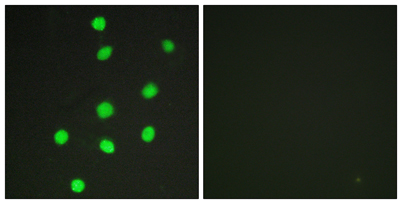
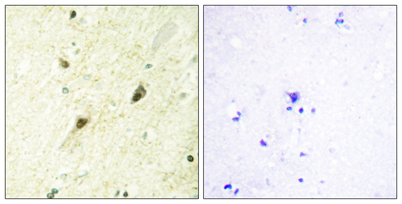
| Applications | IHC;IF;ELISA |
| Other name | GLI3; Transcriptional activator GLI3; GLI3 form of 190 kDa; GLI3-190; GLI3 full length protein; GLI3FL |
| Size | 100μL |
| Unit price ($) | 248 |
| Human gene ID | 2737 |
| Human Swiss-Prot | P10071 |
| Source | Rabbit |
| Isotype | IgG |
| Target | GLI-3 |
| Fields | >>cAMP signaling pathway;>>Hedgehog signaling pathway;>>Pathways in cancer;>>Basal cell carcinoma |
| Gene name | GLI3 |
| Protein name | Transcriptional activator GLI3 |
| Human gene link | View Human Gene |
| Human Swiss link | View Human Swiss-Prot |
| Mouse gene ID | 14634 |
| Mouse gene link | View Mouse Gene |
| Mouse Swiss-Prot | Q61602 |
| Mouse Swiss link | View Mouse Swiss-Prot |
| Rat gene ID | |
| Rat gene link | |
| Rat Swiss-Prot | |
| Rat Swiss link | |
| Immunogen | The antiserum was produced against synthesized peptide derived from human GLI-3. AA range:11-60 |
| Specificity | GLI-3 Polyclonal Antibody detects endogenous levels of GLI-3 protein. |
| Formulation | Liquid in PBS containing 50% glycerol, 0.5% BSA and 0.02% sodium azide. |
| Clonality | Polyclonal |
| Dilution | Immunohistochemistry: 1/100 - 1/300. Immunofluorescence: 1/200 - 1/1000. ELISA: 1/10000. Not yet tested in other applications. |
| Purification | The antibody was affinity-purified from rabbit antiserum by affinity-chromatography using epitope-specific immunogen. |
| Concentration | 1 mg/ml |
| Storage stability | -20°C/1 year |
| Molecular Weight (Da) | 14kD |
| Observed band (KD) | |
| Background | This gene encodes a protein which belongs to the C2H2-type zinc finger proteins subclass of the Gli family. They are characterized as DNA-binding transcription factors and are mediators of Sonic hedgehog (Shh) signaling. The protein encoded by this gene localizes in the cytoplasm and activates patched Drosophila homolog (PTCH) gene expression. It is also thought to play a role during embryogenesis. Mutations in this gene have been associated with several diseases, including Greig cephalopolysyndactyly syndrome, Pallister-Hall syndrome, preaxial polydactyly type IV, and postaxial polydactyly types A1 and B. [provided by RefSeq, Jul 2008], |
| Function | disease:Defects in GLI3 are a cause of Pallister-Hall syndrome (PHS) [MIM:146510]. Pallister-Hall syndrome is characterized by a wide range of clinical manifestations. It mainly associates central or postaxial polydactyly, syndactyly, and hypothalamic hamartoma. Malformations are frequent in the viscera, e.g. anal atresia, bifid uvula, congenital heart malformations, pulmonary or renal dysplasia. It is an autosomal dominant disorder.,disease:Defects in GLI3 are a cause of type A1/B postaxial polydactyly (PAPA1/PAPB) [MIM:174200, 603596]. PAPA in humans is an autosomal dominant trait characterized by an extra digit in the ulnar and/or fibular side of the upper and/or lower extremities. The extra digit is well formed and articulates with the fifth, or extra, metacarpal/metatarsal, and thus it is usually functional.,disease:Defects in GLI3 are a cause of type IV preaxial polydactyly [MIM:17 |
| Subcellular location | Nucleus. Cytoplasm. Cell projection, cilium. GLI3FL is localized predominantly in the cytoplasm while GLI3R resides mainly in the nucleus. Ciliary accumulation requires the presence of KIF7 and SMO. Translocation to the nucleus is promoted by interaction with ZIC1. |
| Expression | Is expressed in a wide variety of normal adult tissues, including lung, colon, spleen, placenta, testis, and myometrium. |

Use collapsible tabs for more detailed information that will help customers make a purchasing decision.
Ex: Shipping and return policies, size guides, and other common questions.