 Français
 English
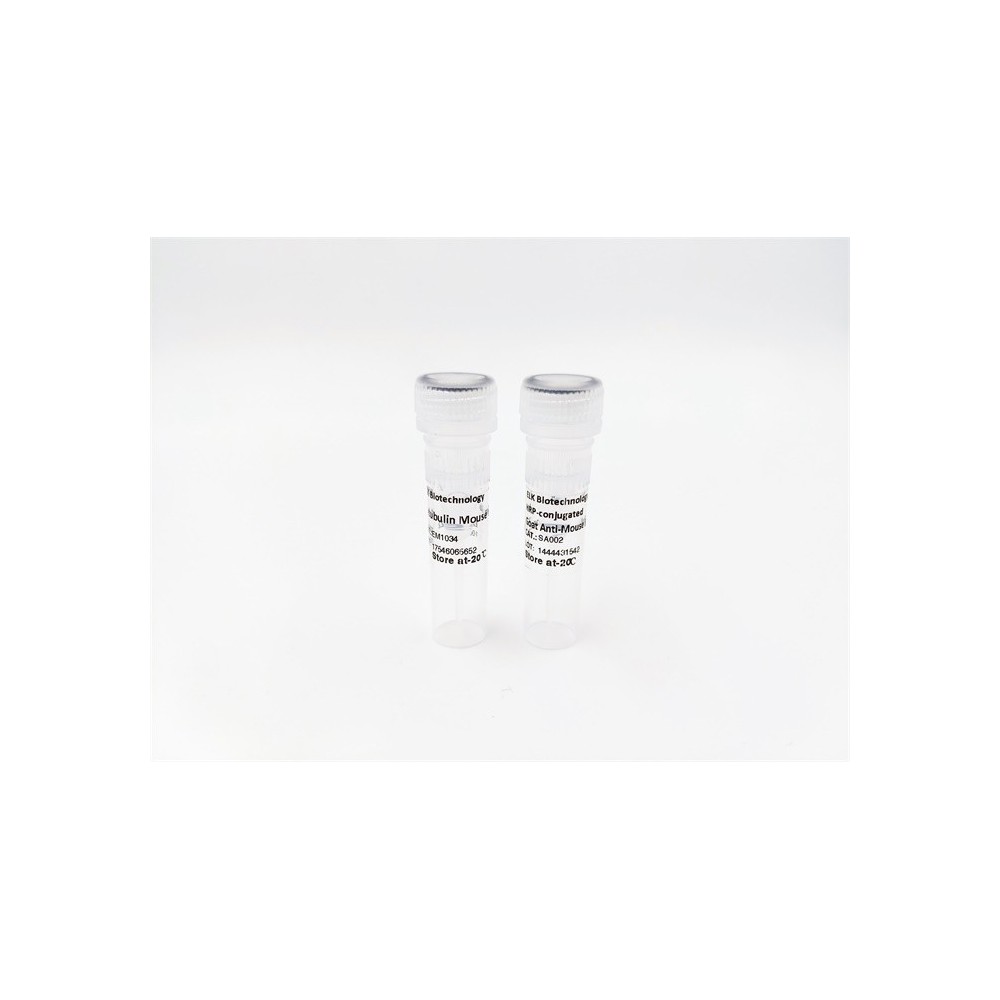

| ELK.No | ES5615 |
| Product name | GPR37 rabbit pAb |
| Reactivity | Human;Mouse;Rat |
| Applications | WB;ELISA |
| Other name | GPR37; Probable G-protein coupled receptor 37; Endothelin B receptor-like protein 1; ETBR-LP-1; Parkin-associated endothelin receptor-like receptor; PAELR |
| Size | 100μL |
| Unit price ($) | 248 |
| Human gene ID | 2861 |
| Human Swiss-Prot | O15354 |
| Source | Rabbit |
| Isotype | IgG |
| Target | GPR37 |
| Fields | >>Parkinson disease;>>Pathways of neurodegeneration - multiple diseases |
| Gene name | GPR37 |
| Protein name | Probable G-protein coupled receptor 37 |
| Human gene link | View Human Gene |
| Human Swiss link | View Human Swiss-Prot |
| Mouse gene ID | 14763 |
| Mouse gene link | View Mouse Gene |
| Mouse Swiss-Prot | Q9QY42 |
| Mouse Swiss link | View Mouse Swiss-Prot |
| Rat gene ID | 117549 |
| Rat gene link | View Rat Gene |
| Rat Swiss-Prot | Q9QYC6 |
| Rat Swiss link | View Rat Swiss-Prot |
| Immunogen | The antiserum was produced against synthesized peptide derived from human GPR37. AA range:211-260 |
| Specificity | GPR37 Polyclonal Antibody detects endogenous levels of GPR37 protein. |
| Formulation | Liquid in PBS containing 50% glycerol, 0.5% BSA and 0.02% sodium azide. |
| Clonality | Polyclonal |
| Dilution | Western Blot: 1/500 - 1/2000. ELISA: 1/10000. Not yet tested in other applications. |
| Purification | The antibody was affinity-purified from rabbit antiserum by affinity-chromatography using epitope-specific immunogen. |
| Concentration | 1 mg/ml |
| Storage stability | -20°C/1 year |
| Molecular Weight (Da) | |
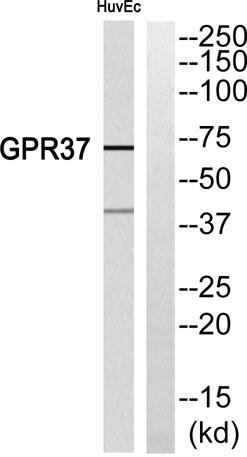
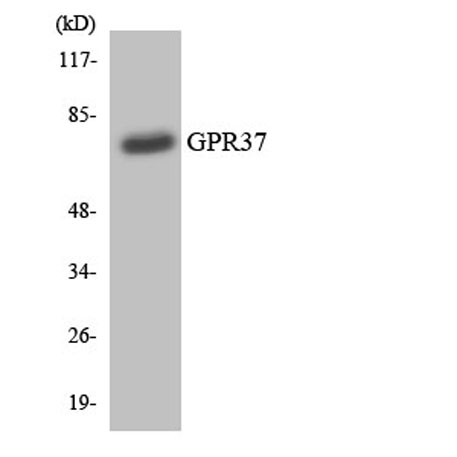
| Observed band (KD) | 68kD |
| Background | This gene is a member of the G protein-coupled receptor family. The encoded protein contains seven transmembrane domains and is found in cell and endoplasmic reticulum membranes. G protein-coupled receptors are involved in translating outside signals into G protein mediated intracellular effects. This gene product interacts with Parkin and is involved in juvenile Parkinson disease. [provided by RefSeq, Oct 2012], |
| Function | function:Orphan receptor. May have a unique functional role in the central nervous system.,PTM:Ubiquitinated by PARK2 in the presence of UBE2E1 and UBE2L3 in the endoplasmic reticulum. The unfolded form is specifically ubiquitinated by SYVN1, which promotes its proteasomal degradation and prevents neuronal cell death.,similarity:Belongs to the G-protein coupled receptor 1 family.,subunit:Forms a complex with PARK2, STUB1 and HSP70. The amount of STUB1 in the complex increases during ER stress. STUB1 promotes the dissociation of HSP70 from PARK2, thus facilitating PARK2-mediated GPR37 ubiquitination. Interacts with PACRG.,tissue specificity:Expressed in brain and spinal cord, and at lower levels in testis, placenta and liver, but no detectable expression observed in any other tissue. When overexpressed in cells, tends to become insoluble and unfolded. Accumulation of the unfolded protein |
| Subcellular location | Cell membrane ; Multi-pass membrane protein . Endoplasmic reticulum membrane ; Multi-pass membrane protein . |
| Expression | Expressed in brain and spinal cord, and at lower levels in testis, placenta and liver, but no detectable expression observed in any other tissue. When overexpressed in cells, tends to become insoluble and unfolded. Accumulation of the unfolded protein may lead to dopaminergic neuronal death in juvenile Parkinson disease (PDJ). |

Use collapsible tabs for more detailed information that will help customers make a purchasing decision.
Ex: Shipping and return policies, size guides, and other common questions.