 Français
 English
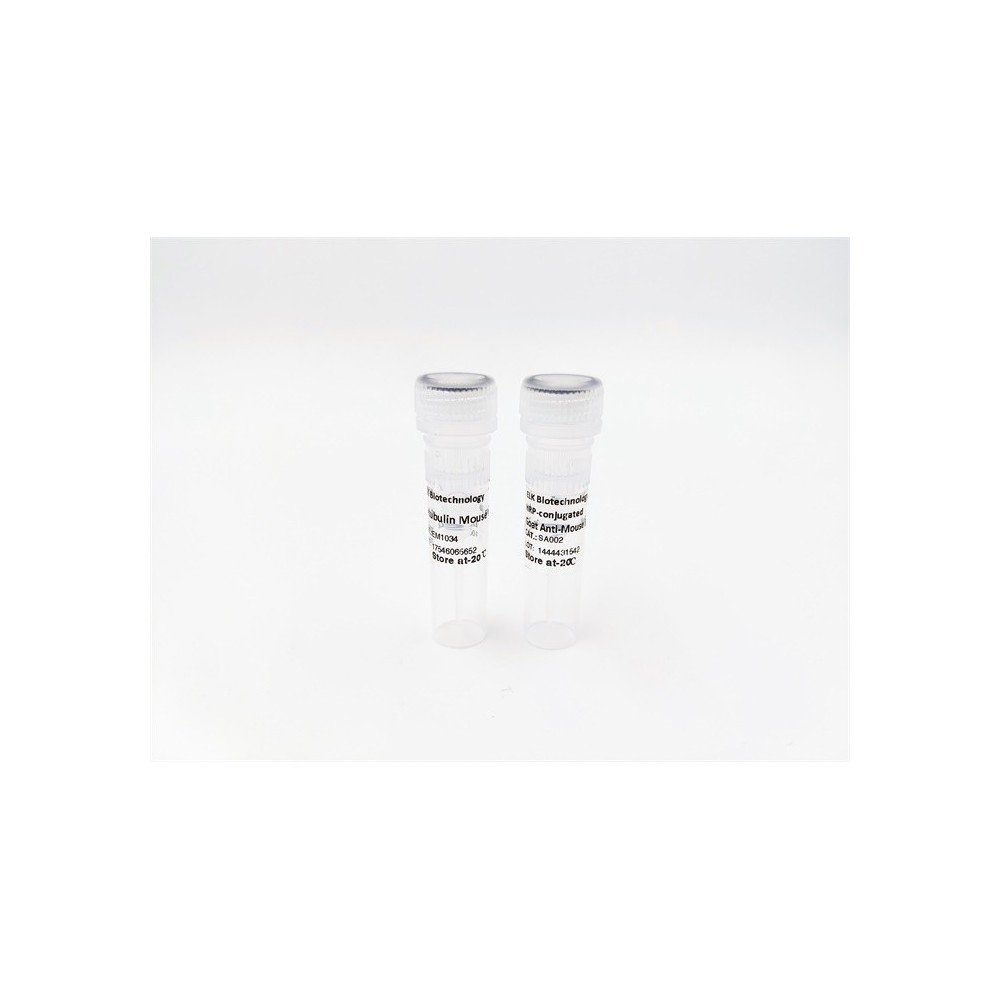

| ELK.No | ES6028 |
| Product name | Arginase I rabbit pAb |
| Reactivity | Human;Mouse;Rat |
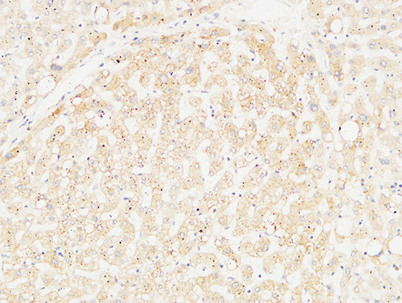
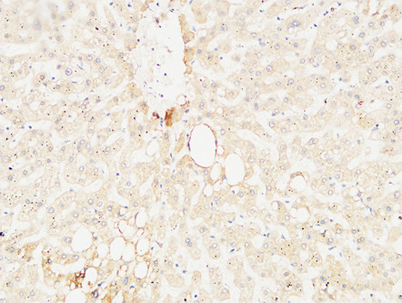
| Applications | WB;IHC;IF;ELISA |
| Other name | ARG1; Arginase-1; Liver-type arginase; Type I arginase |
| Size | 50μL |
| Unit price ($) | 148 |
| Human gene ID | 383 |
| Human Swiss-Prot | P05089 |
| Source | Rabbit |
| Isotype | IgG |
| Target | Arginase I |
| Fields | >>Arginine biosynthesis;>>Arginine and proline metabolism;>>Metabolic pathways;>>Biosynthesis of amino acids;>>Amoebiasis |
| Gene name | ARG1 |
| Protein name | Arginase-1 |
| Human gene link | View Human Gene |
| Human Swiss link | View Human Swiss-Prot |
| Mouse gene ID | |
| Mouse gene link | |
| Mouse Swiss-Prot | Q61176 |
| Mouse Swiss link | View Mouse Swiss-Prot |
| Rat gene ID | |
| Rat gene link | |
| Rat Swiss-Prot | |
| Rat Swiss link | |
| Immunogen | The antiserum was produced against synthesized peptide derived from human ARG1. AA range:61-110 |
| Specificity | Arginase I Polyclonal Antibody detects endogenous levels of Arginase I protein. |
| Formulation | Liquid in PBS containing 50% glycerol, 0.5% BSA and 0.02% sodium azide. |
| Clonality | Polyclonal |
| Dilution | IHC-p: 100-300.Western Blot: 1/500 - 1/2000. ELISA: 1/5000. Not yet tested in other applications. |
| Purification | The antibody was affinity-purified from rabbit antiserum by affinity-chromatography using epitope-specific immunogen. |
| Concentration | 1 mg/ml |
| Storage stability | -20°C/1 year |
| Molecular Weight (Da) | |
| Observed band (KD) | 35kD |
| Background | Arginase catalyzes the hydrolysis of arginine to ornithine and urea. At least two isoforms of mammalian arginase exist (types I and II) which differ in their tissue distribution, subcellular localization, immunologic crossreactivity and physiologic function. The type I isoform encoded by this gene, is a cytosolic enzyme and expressed predominantly in the liver as a component of the urea cycle. Inherited deficiency of this enzyme results in argininemia, an autosomal recessive disorder characterized by hyperammonemia. Two transcript variants encoding different isoforms have been found for this gene. [provided by RefSeq, Sep 2011], |
| Function | catalytic activity:L-arginine + H(2)O = L-ornithine + urea.,cofactor:Binds 2 manganese ions per subunit.,disease:Defects in ARG1 are the cause of argininemia (ARGIN) [MIM:207800]; also known as hyperargininemia. Argininemia is a rare autosomal recessive disorder of the urea cycle. Arginine is elevated in the blood and cerebrospinal fluid, and periodic hyperammonemia occurs. Clinical manifestations include developmental delay, seizures, mental retardation, hypotonia, ataxia, progressive spastic quadriplegia.,induction:By arginine or homoarginine.,online information:Arginase entry,pathway:Nitrogen metabolism; urea cycle; L-ornithine and urea from L-arginine: step 1/1.,similarity:Belongs to the arginase family.,subunit:Homotrimer., |
| Subcellular location | Cytoplasm . Cytoplasmic granule . Localized in azurophil granules of neutrophils (PubMed:15546957). . |
| Expression | Within the immune system initially reported to be selectively expressed in granulocytes (polymorphonuclear leukocytes [PMNs]) (PubMed:15546957). Also detected in macrophages mycobacterial granulomas (PubMed:23749634). Expressed in group2 innate lymphoid cells (ILC2s) during lung disease (PubMed:27043409). |


Use collapsible tabs for more detailed information that will help customers make a purchasing decision.
Ex: Shipping and return policies, size guides, and other common questions.