 Français
 English
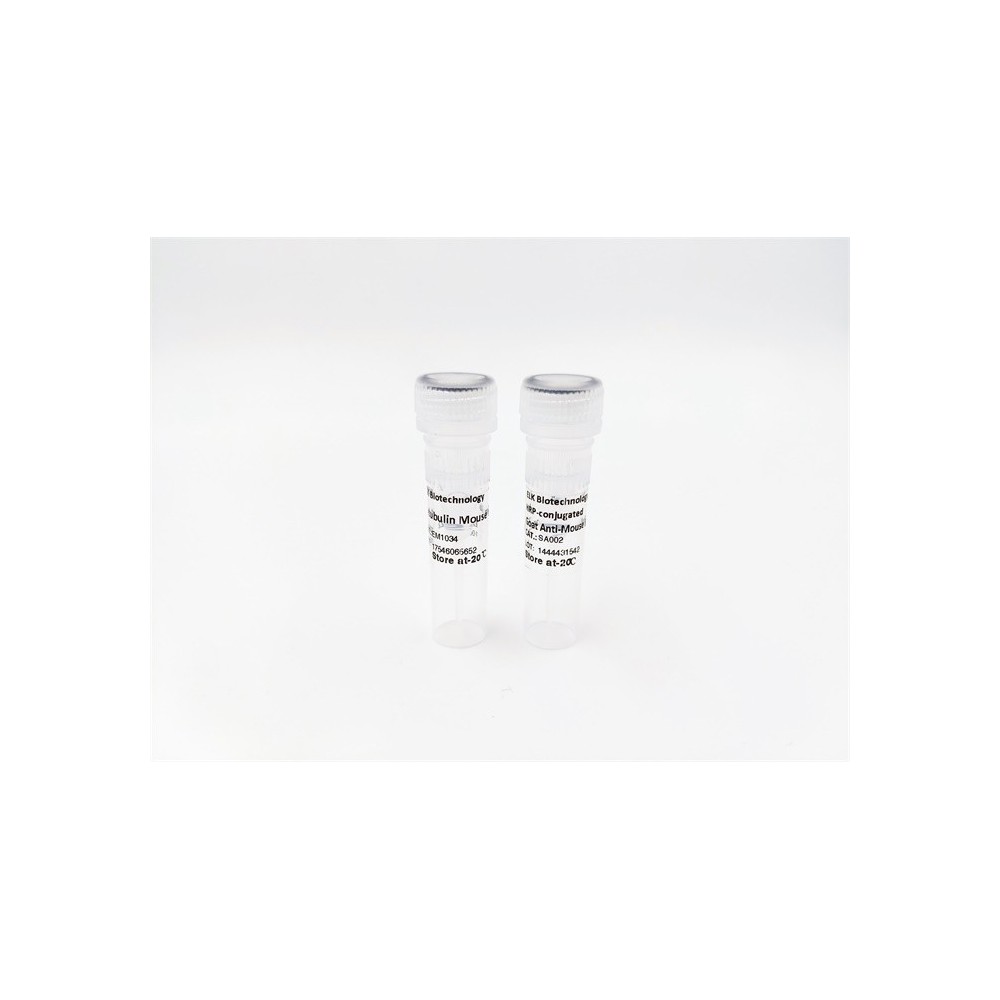

| ELK.No | ES6083 |
| Product name | Laminin β-3 rabbit pAb |
| Reactivity | Human;Rat;Mouse; |
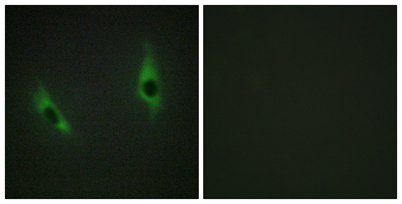
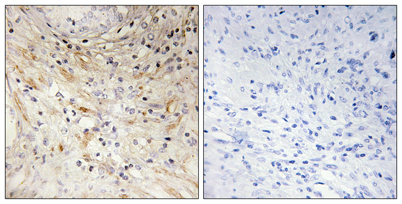
| Applications | IHC;IF;ELISA |
| Other name | LAMB3; LAMNB1; Laminin subunit beta-3; Epiligrin subunit bata; Kalinin B1 chain; Kalinin subunit beta; Laminin B1k chain; Laminin-5 subunit beta; Nicein subunit beta |
| Size | 100μL |
| Unit price ($) | 248 |
| Human gene ID | 3914 |
| Human Swiss-Prot | Q13751 |
| Source | Rabbit |
| Isotype | IgG |
| Target | Laminin β-3 |
| Fields | >>PI3K-Akt signaling pathway;>>Focal adhesion;>>ECM-receptor interaction;>>Toxoplasmosis;>>Amoebiasis;>>Human papillomavirus infection;>>Pathways in cancer;>>Small cell lung cancer |
| Gene name | LAMB3 |
| Protein name | Laminin subunit beta-3 |
| Human gene link | View Human Gene |
| Human Swiss link | View Human Swiss-Prot |
| Mouse gene ID | |
| Mouse gene link | |
| Mouse Swiss-Prot | Q61087 |
| Mouse Swiss link | View Mouse Swiss-Prot |
| Rat gene ID | |
| Rat gene link | |
| Rat Swiss-Prot | |
| Rat Swiss link | |
| Immunogen | The antiserum was produced against synthesized peptide derived from human LAMB3. AA range:671-720 |
| Specificity | Laminin β-3 Polyclonal Antibody detects endogenous levels of Laminin β-3 protein. |
| Formulation | Liquid in PBS containing 50% glycerol, 0.5% BSA and 0.02% sodium azide. |
| Clonality | Polyclonal |
| Dilution | Immunohistochemistry: 1/100 - 1/300. Immunofluorescence: 1/200 - 1/1000. ELISA: 1/5000. Not yet tested in other applications. |
| Purification | The antibody was affinity-purified from rabbit antiserum by affinity-chromatography using epitope-specific immunogen. |
| Concentration | 1 mg/ml |
| Storage stability | -20°C/1 year |
| Molecular Weight (Da) | 130kD |
| Observed band (KD) | |
| Background | The product encoded by this gene is a laminin that belongs to a family of basement membrane proteins. This protein is a beta subunit laminin, which together with an alpha and a gamma subunit, forms laminin-5. Mutations in this gene cause epidermolysis bullosa junctional Herlitz type, and generalized atrophic benign epidermolysis bullosa, diseases that are characterized by blistering of the skin. Multiple alternatively spliced transcript variants that encode the same protein have been found for this gene. [provided by RefSeq, Jul 2008], |
| Function | disease:Defects in LAMB3 are a cause of epidermolysis bullosa junctional Herlitz type (H-JEB) [MIM:226700]; also known as junctional epidermolysis bullosa Herlitz-Pearson type. JEB defines a group of blistering skin diseases characterized by tissue separation which occurs within the dermo-epidermal basement membrane. H-JEB is a severe, infantile and lethal form. Death occurs usually within the first six months of life. Occasionally, children survive to teens. H-JEB is marked by bullous lesions at birth and extensive denudation of skin and mucous membranes that may be hemorrhagic.,disease:Defects in LAMB3 are a cause of generalized atrophic benign epidermolysis bullosa (GABEB) [MIM:226650]. GABEB is a non-lethal, adult form of junctional epidermolysis bullosa characterized by life-long blistering of the skin, associated with hair and tooth abnormalities.,domain:Domain VI is globular.,doma |
| Subcellular location | Secreted, extracellular space, extracellular matrix, basement membrane. |
| Expression | Found in the basement membranes (major component). |

Use collapsible tabs for more detailed information that will help customers make a purchasing decision.
Ex: Shipping and return policies, size guides, and other common questions.