 Français
 English
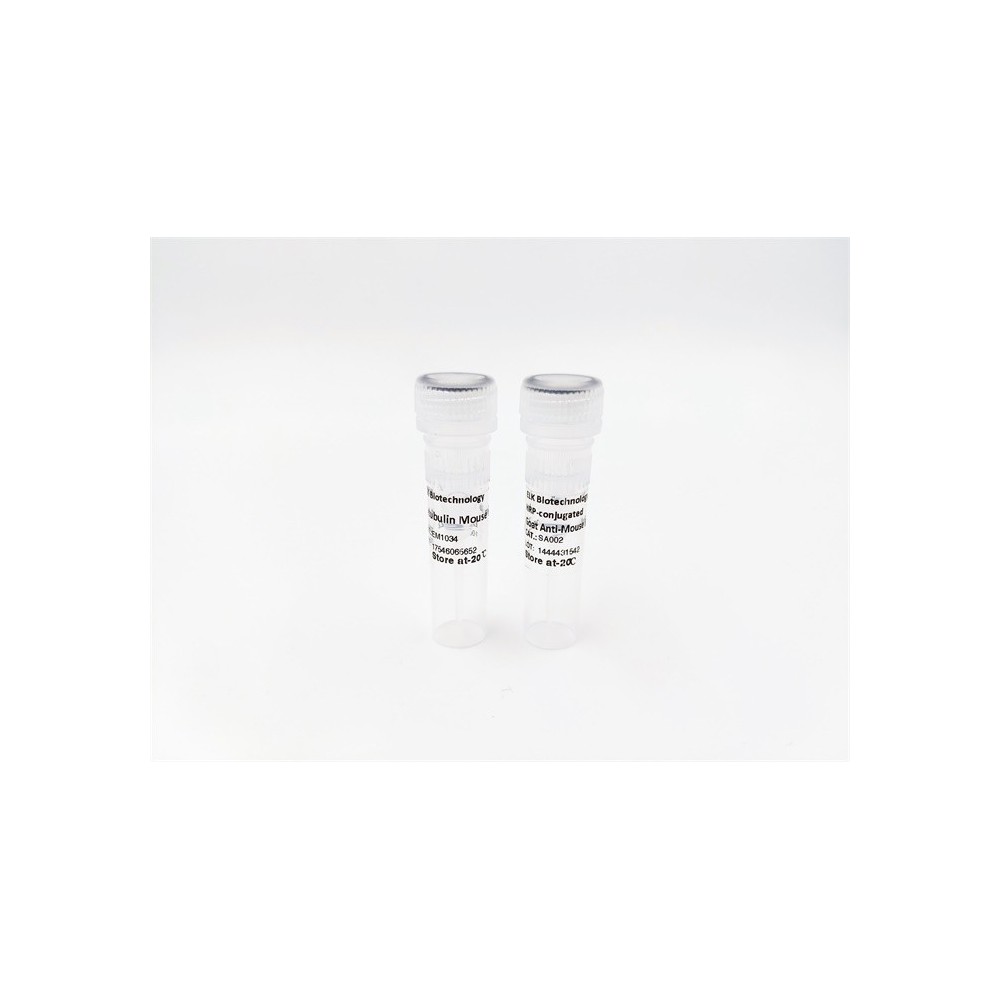

| ELK.No | ES6091 |
| Product name | LBP rabbit pAb |
| Reactivity | Human;Mouse;Rat |
| Applications | WB;ELISA;IHC |
| Other name | LBP; Lipopolysaccharide-binding protein; LBP |
| Size | 50μL |
| Unit price ($) | 148 |
| Human gene ID | 3929 |
| Human Swiss-Prot | P18428 |
| Source | Rabbit |
| Isotype | IgG |
| Target | LBP |
| Fields | >>NF-kappa B signaling pathway;>>Toll-like receptor signaling pathway;>>Alcoholic liver disease;>>Tuberculosis;>>Lipid and atherosclerosis |
| Gene name | LBP |
| Protein name | Lipopolysaccharide-binding protein |
| Human gene link | View Human Gene |
| Human Swiss link | View Human Swiss-Prot |
| Mouse gene ID | 16803 |
| Mouse gene link | View Mouse Gene |
| Mouse Swiss-Prot | Q61805 |
| Mouse Swiss link | View Mouse Swiss-Prot |
| Rat gene ID | |
| Rat gene link | |
| Rat Swiss-Prot | Q63313 |
| Rat Swiss link | View Rat Swiss-Prot |
| Immunogen | The antiserum was produced against synthesized peptide derived from human LBP. AA range:221-270 |
| Specificity | LBP Polyclonal Antibody detects endogenous levels of LBP protein. |
| Formulation | Liquid in PBS containing 50% glycerol, 0.5% BSA and 0.02% sodium azide. |
| Clonality | Polyclonal |
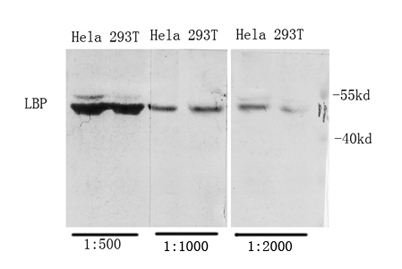
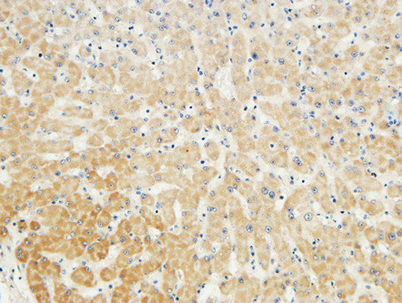
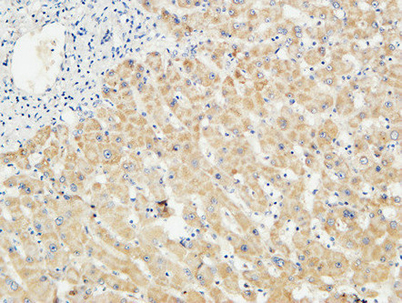
| Dilution | WB 1:500-2000;IHC-p 1:50-300; ELISA 2000-20000 |
| Purification | The antibody was affinity-purified from rabbit antiserum by affinity-chromatography using epitope-specific immunogen. |
| Concentration | 1 mg/ml |
| Storage stability | -20°C/1 year |
| Molecular Weight (Da) | |
| Observed band (KD) | 53kD |
| Background | lipopolysaccharide binding protein(LBP) Homo sapiens The protein encoded by this gene is involved in the acute-phase immunologic response to gram-negative bacterial infections. Gram-negative bacteria contain a glycolipid, lipopolysaccharide (LPS), on their outer cell wall. Together with bactericidal permeability-increasing protein (BPI), the encoded protein binds LPS and interacts with the CD14 receptor, probably playing a role in regulating LPS-dependent monocyte responses. Studies in mice suggest that the encoded protein is necessary for the rapid acute-phase response to LPS but not for the clearance of LPS from circulation. This protein is part of a family of structurally and functionally related proteins, including BPI, plasma cholesteryl ester transfer protein (CETP), and phospholipid transfer protein (PLTP). [provided by RefSeq, Apr 2012], |
| Function | function:Binds to the lipid A moiety of bacterial lipopolysaccharides (LPS), a glycolipid present in the outer membrane of all Gram-negative bacteria. The LBP/LPS complex seems to interact with the CD14 receptor.,similarity:Belongs to the BPI/LBP/Plunc superfamily. BPI/LBP family., |
| Subcellular location | Secreted . Cytoplasmic granule membrane . Membrane-associated in polymorphonuclear Leukocytes (PMN) granules. . |
| Expression | Detected in blood serum (at protein level). |

Use collapsible tabs for more detailed information that will help customers make a purchasing decision.
Ex: Shipping and return policies, size guides, and other common questions.