 Français
 English
CD71/TfR (phospho Ser24) rabbit pAb
AO-06-ES6200-100

| ELK.No | ES6200 |
| Product name | CD71/TfR (phospho Ser24) rabbit pAb |
| Reactivity | Human;Mouse |
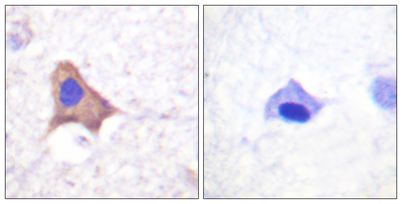
| Applications | WB;IHC;IF;ELISA |
| Other name | TFRC; Transferrin receptor protein 1; TR; TfR; TfR1; Trfr; T9; p90; CD antigen CD71 |
| Size | 100μL |
| Unit price ($) | 248 |
| Human gene ID | 4155 |
| Human Swiss-Prot | P02786 |
| Source | Rabbit |
| Isotype | IgG |
| Target | CD71/TfR |
| Fields | >>HIF-1 signaling pathway;>>Endocytosis;>>Phagosome;>>Ferroptosis;>>Hematopoietic cell lineage |
| Gene name | TFRC |
| Protein name | Transferrin receptor protein 1 |
| Human gene link | View Human Gene |
| Human Swiss link | View Human Swiss-Prot |
| Mouse gene ID | 22042 |
| Mouse gene link | View Mouse Gene |
| Mouse Swiss-Prot | Q62351 |
| Mouse Swiss link | View Mouse Swiss-Prot |
| Rat gene ID | |
| Rat gene link | |
| Rat Swiss-Prot | |
| Rat Swiss link | |
| Immunogen | The antiserum was produced against synthesized peptide derived from human CD71/TfR around the phosphorylation site of Ser24. AA range:15-64 |
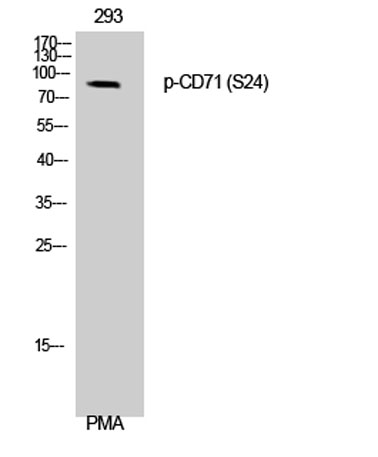
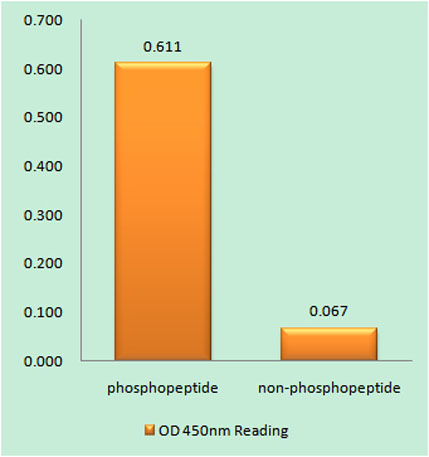
| Specificity | Phospho-CD71 (S24) Polyclonal Antibody detects endogenous levels of CD71 protein only when phosphorylated at S24. |
| Formulation | Liquid in PBS containing 50% glycerol, 0.5% BSA and 0.02% sodium azide. |
| Clonality | Polyclonal |
| Dilution | Western Blot: 1/500 - 1/2000. Immunohistochemistry: 1/100 - 1/300. ELISA: 1/10000. Not yet tested in other applications. |
| Purification | The antibody was affinity-purified from rabbit antiserum by affinity-chromatography using epitope-specific immunogen. |
| Concentration | 1 mg/ml |
| Storage stability | -20°C/1 year |
| Molecular Weight (Da) | |
| Observed band (KD) | 89kD |
| Background | This gene encodes a cell surface receptor necessary for cellular iron uptake by the process of receptor-mediated endocytosis. This receptor is required for erythropoiesis and neurologic development. Multiple alternatively spliced variants have been identified. [provided by RefSeq, Sep 2015], |
| Function | function:Cellular uptake of iron occurs via receptor-mediated endocytosis of ligand-occupied transferrin receptor into specialized endosomes. Endosomal acidification leads to iron release. The apotransferrin-receptor complex is then recycled to the cell surface with a return to neutral pH and the concomitant loss of affinity of apotransferrin for its receptor. Transferrin receptor is necessary for development of erythrocytes and the nervous system (By similarity). A second ligand, the heditary hemochromatosis protein HFE, competes for binding with transferrin for an overlapping C-terminal binding site.,induction:Regulated by cellular iron levels through binding of the iron regulatory proteins, IRP1 and IRP2, to iron-responsive elements in the 3'-UTR. Up-regulated upon mitogenic stimulation.,miscellaneous:Canine and feline parvoviruses bind human and feline transferrin receptors and use t |
| Subcellular location | Cell membrane ; Single-pass type II membrane protein . Melanosome . Identified by mass spectrometry in melanosome fractions from stage I to stage IV. .; [Transferrin receptor protein 1, serum form]: Secreted . |
| Expression | Brain,Epithelium,Erythroleukemia,Eye,Human endometrium carcinoma cell line,Liver,Pl |

Use collapsible tabs for more detailed information that will help customers make a purchasing decision.
Ex: Shipping and return policies, size guides, and other common questions.