 Français
 English
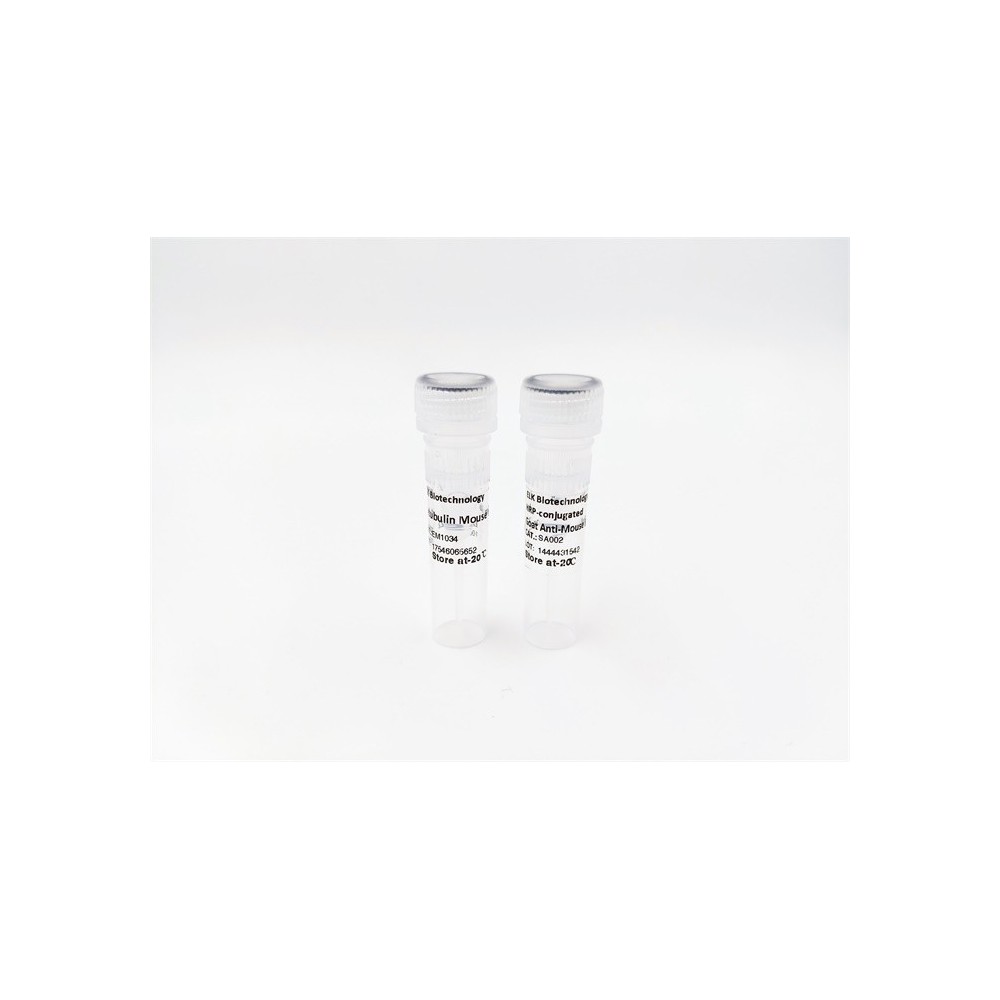

| ELK.No | ES6426 |
| Product name | Trk A rabbit pAb |
| Reactivity | Human;Rat;Mouse; |
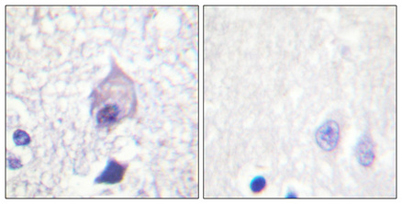
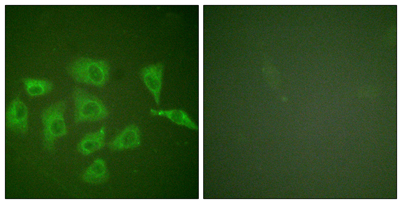
| Applications | IHC;IF;ELISA |
| Other name | NTRK1; MTC; TRK; TRKA; High affinity nerve growth factor receptor; Neurotrophic tyrosine kinase receptor type 1; TRK1-transforming tyrosine kinase protein; Tropomyosin-related kinase A; Tyrosine kinase receptor; Tyrosine kinase receptor A; |
| Size | 50μL |
| Unit price ($) | 148 |
| Human gene ID | 4914 |
| Human Swiss-Prot | P04629 |
| Source | Rabbit |
| Isotype | IgG |
| Target | Trk A |
| Fields | >>MAPK signaling pathway;>>Ras signaling pathway;>>Calcium signaling pathway;>>PI3K-Akt signaling pathway;>>Apoptosis;>>Neurotrophin signaling pathway;>>Inflammatory mediator regulation of TRP channels;>>Pathways in cancer;>>Transcriptional misregulation in cancer;>>Thyroid cancer;>>Central carbon metabolism in cancer |
| Gene name | NTRK1 |
| Protein name | High affinity nerve growth factor receptor |
| Human gene link | View Human Gene |
| Human Swiss link | View Human Swiss-Prot |
| Mouse gene ID | |
| Mouse gene link | |
| Mouse Swiss-Prot | Q3UFB7 |
| Mouse Swiss link | View Mouse Swiss-Prot |
| Rat gene ID | |
| Rat gene link | |
| Rat Swiss-Prot | |
| Rat Swiss link | |
| Immunogen | The antiserum was produced against synthesized peptide derived from human Trk A. AA range:747-796 |
| Specificity | Trk A Polyclonal Antibody detects endogenous levels of Trk A protein. |
| Formulation | Liquid in PBS containing 50% glycerol, 0.5% BSA and 0.02% sodium azide. |
| Clonality | Polyclonal |
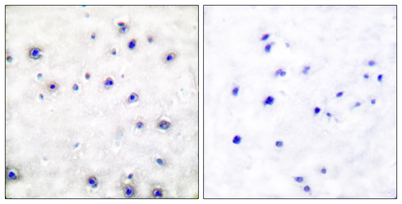
| Dilution | Immunohistochemistry: 1/100 - 1/300. Immunofluorescence: 1/200 - 1/1000. ELISA: 1/5000. Not yet tested in other applications. |
| Purification | The antibody was affinity-purified from rabbit antiserum by affinity-chromatography using epitope-specific immunogen. |
| Concentration | 1 mg/ml |
| Storage stability | -20°C/1 year |
| Molecular Weight (Da) | |
| Observed band (KD) | 140-180kD |
| Background | This gene encodes a member of the neurotrophic tyrosine kinase receptor (NTKR) family. This kinase is a membrane-bound receptor that, upon neurotrophin binding, phosphorylates itself and members of the MAPK pathway. The presence of this kinase leads to cell differentiation and may play a role in specifying sensory neuron subtypes. Mutations in this gene have been associated with congenital insensitivity to pain, anhidrosis, self-mutilating behavior, mental retardation and cancer. Alternate transcriptional splice variants of this gene have been found, but only three have been characterized to date. [provided by RefSeq, Jul 2008], |
| Function | alternative products:Both isoforms have similar biological properties,catalytic activity:ATP + a [protein]-L-tyrosine = ADP + a [protein]-L-tyrosine phosphate.,caution:The sequence shown here is derived from an Ensembl automatic analysis pipeline and should be considered as preliminary data.,disease:Chromosomal aberrations involving NTRK1 are a cause of thyroid papillary carcinoma (PACT) [MIM:188550]. Intrachromosomal rearrangement that links the protein kinase domain of NTRK1 to the 5'-end of the TPR gene forms the fusion protein TRK-T1. TRK-T1 is a 55 kDa protein reacting with antibodies against the C-terminus of the NTRK1 protein.,disease:Chromosomal aberrations involving NTRK1 are a cause of thyroid papillary carcinoma (PACT) [MIM:188550]. Translocation t(1;3)(q21;q11) with TFG generates the TRKT3 (TRK-T3) transcript by fusing TFG to the 3'-end of NTRK1; a rearrangement with TPM3 gen |
| Subcellular location | Cell membrane ; Single-pass type I membrane protein . Early endosome membrane ; Single-pass type I membrane protein . Late endosome membrane ; Single-pass type I membrane protein . Recycling endosome membrane ; Single-pass type I membrane protein . Rapidly internalized after NGF binding (PubMed:1281417). Internalized to endosomes upon binding of NGF or NTF3 and further transported to the cell body via a retrograde axonal transport. Localized at cell membrane and early endosomes before nerve growth factor (NGF) stimulation. Recruited to late endosomes after NGF stimulation. Colocalized with RAPGEF2 at late endosomes. . |
| Expression | Isoform TrkA-I is found in most non-neuronal tissues. Isoform TrkA-II is primarily expressed in neuronal cells. TrkA-III is specifically expressed by pluripotent neural stem and neural crest progenitors. |

Use collapsible tabs for more detailed information that will help customers make a purchasing decision.
Ex: Shipping and return policies, size guides, and other common questions.