 Français
 English

| ELK.No | ES6585 |
| Product name | PHKB rabbit pAb |
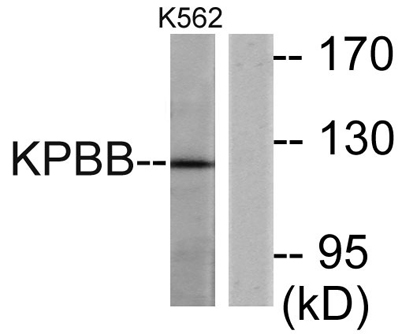
| Reactivity | Human;Mouse |
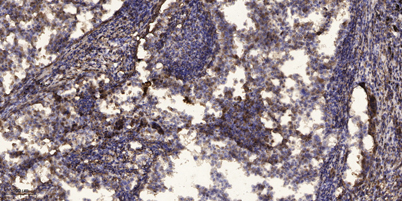
| Applications | WB;IHC |
| Other name | PHKB; Phosphorylase b kinase regulatory subunit beta; Phosphorylase kinase subunit beta |
| Size | 100μL |
| Unit price ($) | 248 |
| Human gene ID | 5257 |
| Human Swiss-Prot | Q93100 |
| Source | Rabbit |
| Isotype | IgG |
| Target | PHKB |
| Fields | >>Calcium signaling pathway;>>Insulin signaling pathway;>>Glucagon signaling pathway |
| Gene name | PHKB |
| Protein name | Phosphorylase b kinase regulatory subunit beta |
| Human gene link | View Human Gene |
| Human Swiss link | View Human Swiss-Prot |
| Mouse gene ID | 102093 |
| Mouse gene link | View Mouse Gene |
| Mouse Swiss-Prot | Q7TSH2 |
| Mouse Swiss link | View Mouse Swiss-Prot |
| Rat gene ID | |
| Rat gene link | |
| Rat Swiss-Prot | |
| Rat Swiss link | |
| Immunogen | The antiserum was produced against synthesized peptide derived from human KPBB. AA range:661-710 |
| Specificity | PHKB Polyclonal Antibody detects endogenous levels of PHKB protein. |
| Formulation | Liquid in PBS containing 50% glycerol, 0.5% BSA and 0.02% sodium azide. |
| Clonality | Polyclonal |
| Dilution | WB 1:500-2000;IHC-p 1:50-300 |
| Purification | The antibody was affinity-purified from rabbit antiserum by affinity-chromatography using epitope-specific immunogen. |
| Concentration | 1 mg/ml |
| Storage stability | -20°C/1 year |
| Molecular Weight (Da) | |
| Observed band (KD) | 124kD |
| Background | Phosphorylase kinase is a polymer of 16 subunits, four each of alpha, beta, gamma and delta. The alpha subunit includes the skeletal muscle and hepatic isoforms, encoded by two different genes. The beta subunit is the same in both the muscle and hepatic isoforms, encoded by this gene, which is a member of the phosphorylase b kinase regulatory subunit family. The gamma subunit also includes the skeletal muscle and hepatic isoforms, encoded by two different genes. The delta subunit is a calmodulin and can be encoded by three different genes. The gamma subunits contain the active site of the enzyme, whereas the alpha and beta subunits have regulatory functions controlled by phosphorylation. The delta subunit mediates the dependence of the enzyme on calcium concentration. Mutations in this gene cause glycogen storage disease type 9B, also known as phosphorylase kinase deficiency |
| Function | disease:Defects in PHKB are the cause of glycogen storage disease type 9B (GSD9B) [MIM:261750]; also known as phosphorylase kinase deficiency of liver and muscle (PKD). GSD9B is a metabolic disorder characterized by hepathomegaly, only slightly elevated transaminases and plasma lipids, clinical improvement with increasing age, and remarkably no clinical muscle involvement. Biochemical observations suggest that this mild phenotype is caused by an incomplete holoenzyme that lacks the beta subunit, but that may possess residual activity.,enzyme regulation:By phosphorylation of various serine residues.,function:Phosphorylase b kinase catalyzes the phosphorylation of serine in certain substrates, including troponin I. The beta chain acts as a regulatory unit and modulates the activity of the holoenzyme in response to phosphorylation.,pathway:Glycan biosynthesis; glycogen metabolism.,similarit |
| Subcellular location | Cell membrane ; Lipid-anchor ; Cytoplasmic side . |
| Expression | Uterus, |

Use collapsible tabs for more detailed information that will help customers make a purchasing decision.
Ex: Shipping and return policies, size guides, and other common questions.