 Français
 English
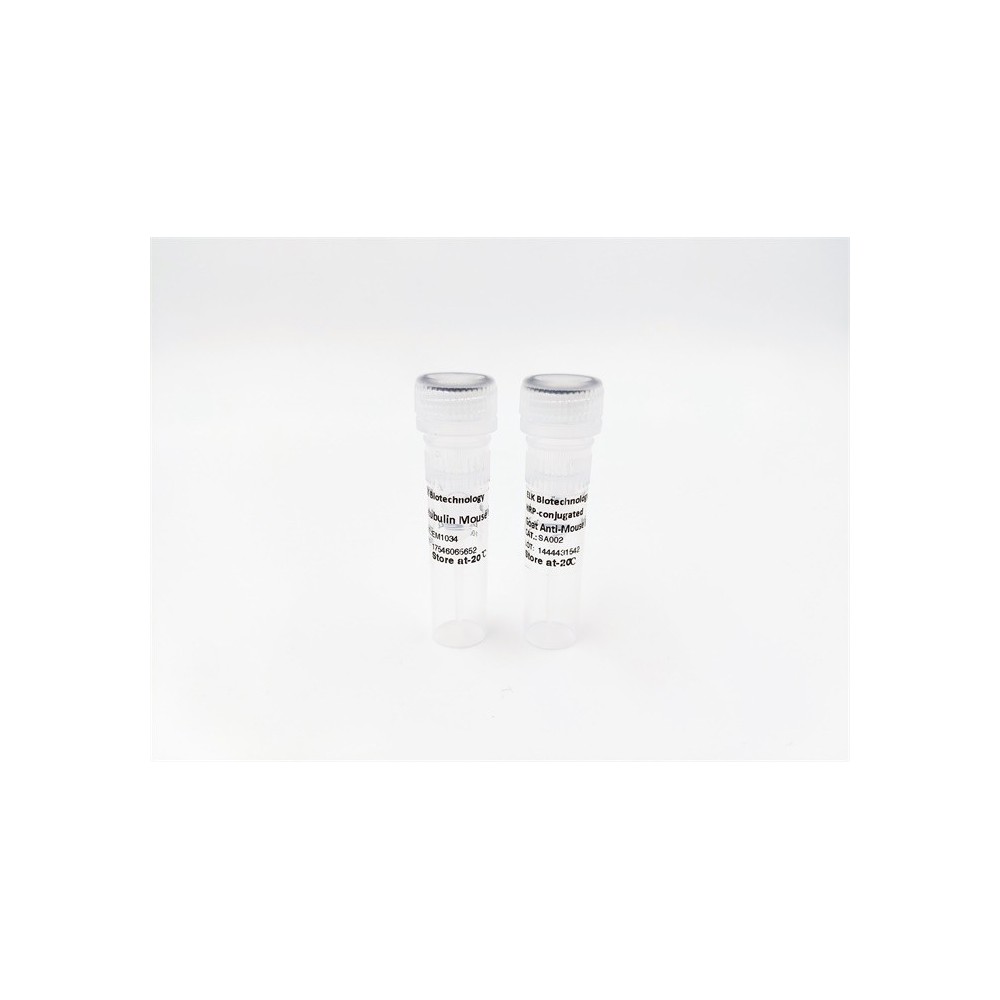

| ELK.No | ES6664 |
| Product name | Brn-3 rabbit pAb |
| Reactivity | Human;Mouse |
| Applications | WB;ELISA |
| Other name | POU4F3; BRN3C; POU domain; class 4, transcription factor 3; Brain-specific homeobox/POU domain protein 3C; Brain-3C; Brn-3C |
| Size | 100μL |
| Unit price ($) | 248 |
| Human gene ID | 5459 |
| Human Swiss-Prot | Q15319 |
| Source | Rabbit |
| Isotype | IgG |
| Target | Brn-3 |
| Fields | |
| Gene name | POU4F3 |
| Protein name | POU domain class 4 transcription factor 3 |
| Human gene link | View Human Gene |
| Human Swiss link | View Human Swiss-Prot |
| Mouse gene ID | 18998 |
| Mouse gene link | View Mouse Gene |
| Mouse Swiss-Prot | Q63955 |
| Mouse Swiss link | View Mouse Swiss-Prot |
| Rat gene ID | |
| Rat gene link | |
| Rat Swiss-Prot | |
| Rat Swiss link | |
| Immunogen | The antiserum was produced against synthesized peptide derived from human POU4F3. AA range:231-280 |
| Specificity | Brn-3 Polyclonal Antibody detects endogenous levels of Brn-3 protein. |
| Formulation | Liquid in PBS containing 50% glycerol, 0.5% BSA and 0.02% sodium azide. |
| Clonality | Polyclonal |
| Dilution | Western Blot: 1/500 - 1/2000. ELISA: 1/5000. Not yet tested in other applications. |
| Purification | The antibody was affinity-purified from rabbit antiserum by affinity-chromatography using epitope-specific immunogen. |
| Concentration | 1 mg/ml |
| Storage stability | -20°C/1 year |
| Molecular Weight (Da) | |
| Observed band (KD) | 35kD |
| Background | This gene encodes a member of the POU-domain family of transcription factors. POU-domain proteins have been observed to play important roles in control of cell identity in several systems. This protein is found in the retina and may play a role in determining or maintaining the identities of a small subset of visual system neurons. Defects in this gene are the cause of non-syndromic sensorineural deafness autosomal dominant type 15. [provided by RefSeq, Mar 2009], |
| Function | disease:Defects in POU4F3 are the cause of non-syndromic sensorineural deafness autosomal dominant type 15 (DFNA15) [MIM:602459]. DFNA15 is a form of sensorineural hearing loss. Sensorineural deafness results from damage to the neural receptors of the inner ear, the nerve pathways to the brain, or the area of the brain that receives sound information.,function:May play a role in determining or maintaining the identities of a small subset of visual system neurons.,online information:Gene page,similarity:Belongs to the POU transcription factor family. Class-4 subfamily.,similarity:Contains 1 homeobox DNA-binding domain.,similarity:Contains 1 POU-specific domain.,tissue specificity:Brain. Seems to be specific to the retina., |
| Subcellular location | Nucleus . Cytoplasm . Preferentially localized in the nucleus. . |
| Expression | Brain. Seems to be specific to the retina. |


Use collapsible tabs for more detailed information that will help customers make a purchasing decision.
Ex: Shipping and return policies, size guides, and other common questions.