 Français
 English
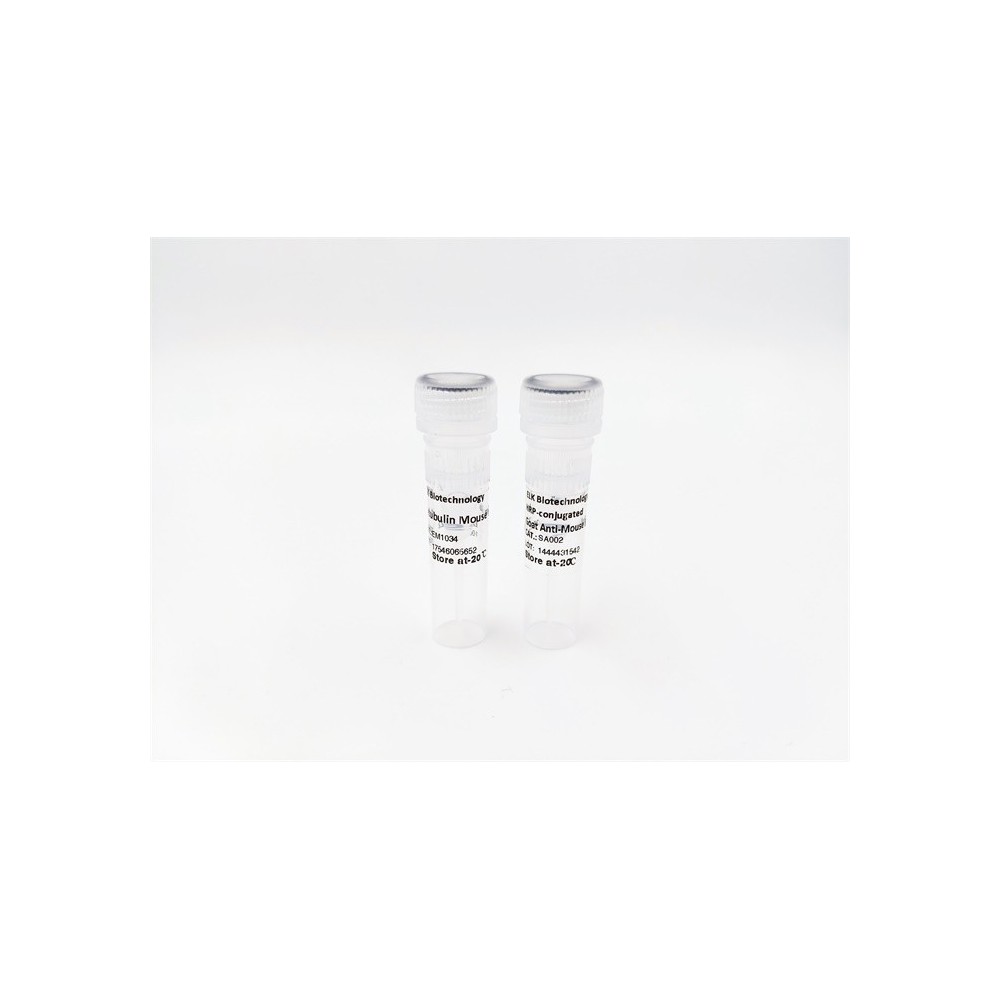

| ELK.No | ES6943 |
| Product name | PTP IA-2β rabbit pAb |
| Reactivity | Human;Mouse;Rat |
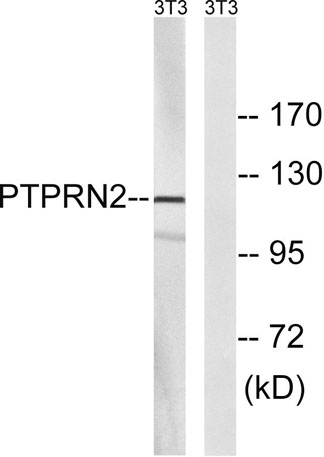
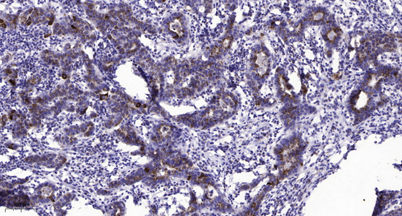
| Applications | WB;ELISA;IHC |
| Other name | PTPRN2; KIAA0387; Receptor-type tyrosine-protein phosphatase N2; R-PTP-N2; Islet cell autoantigen-related protein; IAR; ICAAR; Phogrin |
| Size | 100μL |
| Unit price ($) | 248 |
| Human gene ID | 5799 |
| Human Swiss-Prot | Q92932 |
| Source | Rabbit |
| Isotype | IgG |
| Target | PTP IA-2β |
| Fields | >>Type I diabetes mellitus |
| Gene name | PTPRN2 |
| Protein name | Receptor-type tyrosine-protein phosphatase N2 |
| Human gene link | View Human Gene |
| Human Swiss link | View Human Swiss-Prot |
| Mouse gene ID | 19276 |
| Mouse gene link | View Mouse Gene |
| Mouse Swiss-Prot | P80560 |
| Mouse Swiss link | View Mouse Swiss-Prot |
| Rat gene ID | 29714 |
| Rat gene link | View Rat Gene |
| Rat Swiss-Prot | Q63475 |
| Rat Swiss link | View Rat Swiss-Prot |
| Immunogen | The antiserum was produced against synthesized peptide derived from human PTPRN2. AA range:206-255 |
| Specificity | PTP IA-2β Polyclonal Antibody detects endogenous levels of PTP IA-2β protein. |
| Formulation | Liquid in PBS containing 50% glycerol, 0.5% BSA and 0.02% sodium azide. |
| Clonality | Polyclonal |
| Dilution | WB 1:500-2000;IHC-p 1:50-300; ELISA 2000-20000 |
| Purification | The antibody was affinity-purified from rabbit antiserum by affinity-chromatography using epitope-specific immunogen. |
| Concentration | 1 mg/ml |
| Storage stability | -20°C/1 year |
| Molecular Weight (Da) | |
| Observed band (KD) | 111kD |
| Background | This gene encodes a protein with sequence similarity to receptor-like protein tyrosine phosphatases. However, tyrosine phosphatase activity has not been experimentally validated for this protein. Studies of the rat ortholog suggest that the encoded protein may instead function as a phosphatidylinositol phosphatase with the ability to dephosphorylate phosphatidylinositol 3-phosphate and phosphatidylinositol 4,5-diphosphate, and this function may be involved in the regulation of insulin secretion. This protein has been identified as an autoantigen in insulin-dependent diabetes mellitus. Alternative splicing results in multiple transcript variants. [provided by RefSeq, Feb 2015], |
| Function | catalytic activity:Protein tyrosine phosphate + H(2)O = protein tyrosine + phosphate.,disease:Autoantigen in insulin-dependent diabetes mellitus (IDDM).,domain:The cytoplasmic domain appears to contain the autoantigenic epitopes.,function:Implicated in development of nervous system and pancreatic endocrine cells.,PTM:Appears to undergo multiple proteolytic cleavage at consecutive basic residues.,similarity:Belongs to the protein-tyrosine phosphatase family. Receptor class 8 subfamily.,similarity:Contains 1 tyrosine-protein phosphatase domain.,tissue specificity:Highest levels in brain and pancreas. Lower levels in trachea, prostate, stomach and spinal chord., |
| Subcellular location | Cytoplasmic vesicle, secretory vesicle membrane ; Single-pass type I membrane protein . Cytoplasmic vesicle, secretory vesicle, synaptic vesicle membrane ; Single-pass type I membrane protein . Predominantly found on dense-core secretory granules. Sorting to secretory granules in part is dependent of the N-terminal propeptide domain of the precursor and its interaction with CPE (By similarity). Transiently found at the cell membrane, when secretory vesicles fuse with the cell membrane to release their cargo. Is then endocytosed and recycled to secretory vesicles involving clathrin-dependent AP2-mediated endocytosis. Recycled via STX6- but not TTTGN1/TGN38-containing compartments (By similarity). .; [IA-2beta60]: Cytoplasmic vesicle, secretory vesicle membrane . |
| Expression | Highest levels in brain and pancreas (PubMed:8954911, PubMed:8798755). Lower levels in trachea, prostate, stomach and spinal cord (PubMed:8798755). |

Use collapsible tabs for more detailed information that will help customers make a purchasing decision.
Ex: Shipping and return policies, size guides, and other common questions.