 Français
 English
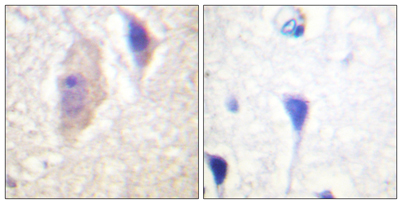
Bcr (phospho Tyr360) rabbit pAb
AO-06-ES7065-100

| ELK.No | ES7065 |
| Product name | Bcr (phospho Tyr360) rabbit pAb |
| Reactivity | Human;Mouse;Monkey |
| Applications | WB;IHC;IF;ELISA |
| Other name | BCR; BCR1; D22S11; Breakpoint cluster region protein; Renal carcinoma antigen NY-REN-26 |
| Size | 100μL |
| Unit price ($) | 248 |
| Human gene ID | 613 |
| Human Swiss-Prot | P11274 |
| Source | Rabbit |
| Isotype | IgG |
| Target | Bcr |
| Fields | >>Pathways in cancer;>>Chronic myeloid leukemia |
| Gene name | BCR |
| Protein name | Breakpoint cluster region protein |
| Human gene link | View Human Gene |
| Human Swiss link | View Human Swiss-Prot |
| Mouse gene ID | 110279 |
| Mouse gene link | View Mouse Gene |
| Mouse Swiss-Prot | Q6PAJ1 |
| Mouse Swiss link | View Mouse Swiss-Prot |
| Rat gene ID | |
| Rat gene link | |
| Rat Swiss-Prot | |
| Rat Swiss link | |
| Immunogen | The antiserum was produced against synthesized peptide derived from human Bcr around the phosphorylation site of Tyr360. AA range:331-380 |
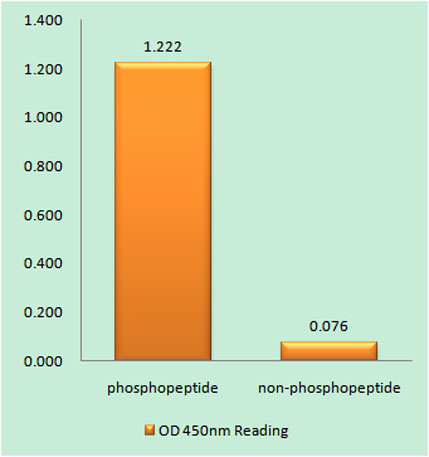
| Specificity | Phospho-Bcr (Y360) Polyclonal Antibody detects endogenous levels of Bcr protein only when phosphorylated at Y360. |
| Formulation | Liquid in PBS containing 50% glycerol, 0.5% BSA and 0.02% sodium azide. |
| Clonality | Polyclonal |
| Dilution | Western Blot: 1/500 - 1/2000. Immunohistochemistry: 1/100 - 1/300. Immunofluorescence: 1/200 - 1/1000. ELISA: 1/40000. Not yet tested in other applications. |
| Purification | The antibody was affinity-purified from rabbit antiserum by affinity-chromatography using epitope-specific immunogen. |
| Concentration | 1 mg/ml |
| Storage stability | -20°C/1 year |
| Molecular Weight (Da) | |
| Observed band (KD) | 142kD |
| Background | A reciprocal translocation between chromosomes 22 and 9 produces the Philadelphia chromosome, which is often found in patients with chronic myelogenous leukemia. The chromosome 22 breakpoint for this translocation is located within the BCR gene. The translocation produces a fusion protein which is encoded by sequence from both BCR and ABL, the gene at the chromosome 9 breakpoint. Although the BCR-ABL fusion protein has been extensively studied, the function of the normal BCR gene product is not clear. The protein has serine/threonine kinase activity and is a GTPase-activating protein for p21rac. Two transcript variants encoding different isoforms have been found for this gene. [provided by RefSeq, Jul 2008], |
| Function | catalytic activity:ATP + a protein = ADP + a phosphoprotein.,disease:A chromosomal aberration involving BCR is a cause of chronic myeloid leukemia (CML) [MIM:608232]. Translocation t(9;22)(q34;q11) with ABL1. The translocation produces a BCR-ABL found also in acute myeloid leukemia (AML) and acute lymphoblastic leukemia (ALL).,domain:The DH domain is involved in interaction with CCPG1.,domain:The region involved in binding to ABL1 SH2-domain is rich in serine residues and needs to be Ser/Thr phosphorylated prior to SH2 binding. This region is essential for the activation of the ABL1 tyrosine kinase and transforming potential of the chimeric BCR-ABL oncogene.,function:GTPase-activating protein for RAC1 and CDC42. Promotes the exchange of RAC or CDC42-bound GDP by GTP, thereby activating them. Displays serine/threonine kinase activity.,PTM:Autophosphorylated.,similarity:Contains 1 C2 domai |
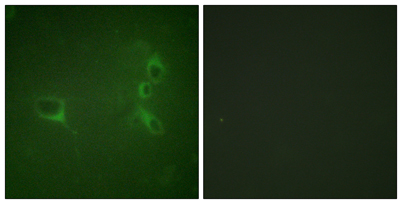
| Subcellular location | Cell junction, synapse, postsynaptic density . Cell projection, dendritic spine . Cell projection, axon . Cell junction, synapse . |
| Expression | Brain,Epithelium,Platelet,Renal cell carcinoma,T-cell, |

Use collapsible tabs for more detailed information that will help customers make a purchasing decision.
Ex: Shipping and return policies, size guides, and other common questions.