 Français
 English

| ELK.No | ES7173 |
| Product name | Artemis rabbit pAb |
| Reactivity | Human;Rat;Mouse; |
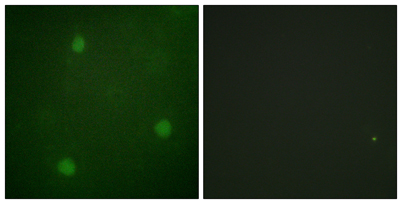
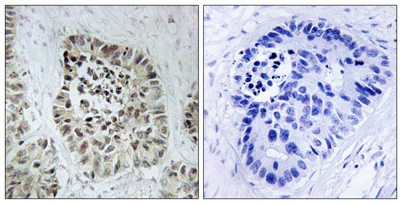
| Applications | IHC;IF;ELISA |
| Other name | DCLRE1C; ARTEMIS; ASCID; SCIDA; SNM1C; Protein artemis; DNA cross-link repair 1C protein; Protein A-SCID; SNM1 homolog C; hSNM1C; SNM1-like protein |
| Size | 100μL |
| Unit price ($) | 248 |
| Human gene ID | 64421 |
| Human Swiss-Prot | Q96SD1 |
| Source | Rabbit |
| Isotype | IgG |
| Target | Artemis |
| Fields | >>Non-homologous end-joining;>>Primary immunodeficiency |
| Gene name | DCLRE1C |
| Protein name | Protein artemis |
| Human gene link | View Human Gene |
| Human Swiss link | View Human Swiss-Prot |
| Mouse gene ID | |
| Mouse gene link | |
| Mouse Swiss-Prot | Q8K4J0 |
| Mouse Swiss link | View Mouse Swiss-Prot |
| Rat gene ID | |
| Rat gene link | |
| Rat Swiss-Prot | |
| Rat Swiss link | |
| Immunogen | The antiserum was produced against synthesized peptide derived from human Artemis. AA range:482-531 |
| Specificity | Artemis Polyclonal Antibody detects endogenous levels of Artemis protein. |
| Formulation | Liquid in PBS containing 50% glycerol, 0.5% BSA and 0.02% sodium azide. |
| Clonality | Polyclonal |
| Dilution | Immunohistochemistry: 1/100 - 1/300. Immunofluorescence: 1/200 - 1/1000. ELISA: 1/10000. Not yet tested in other applications. |
| Purification | The antibody was affinity-purified from rabbit antiserum by affinity-chromatography using epitope-specific immunogen. |
| Concentration | 1 mg/ml |
| Storage stability | -20°C/1 year |
| Molecular Weight (Da) | 78kD |
| Observed band (KD) | |
| Background | This gene encodes a nuclear protein that is involved in V(D)J recombination and DNA repair. The encoded protein has single-strand-specific 5'-3' exonuclease activity; it also exhibits endonuclease activity on 5' and 3' overhangs and hairpins. The protein also functions in the regulation of the cell cycle in response to DNA damage. Mutations in this gene can cause Athabascan-type severe combined immunodeficiency (SCIDA) and Omenn syndrome. Alternative splicing results in multiple transcript variants. [provided by RefSeq, Jan 2014], |
| Function | disease:Defects in DCLRE1C are a cause of Omenn syndrome (OS) [MIM:603554]. OS is characterized by severe combined immunodeficiency associated with erythrodermia, hepatosplenomegaly, lymphadenopathy and alopecia. Affected individuals have elevated T-lymphocyte counts with a restricted T-cell receptor (TCR) repertoire. They also generally lack B-lymphocytes, but have normal natural killer (NK) cell function (T+ B- NK+).,disease:Defects in DCLRE1C are a cause of severe combined immunodeficiency autosomal recessive T-cell-negative/B-cell-negative/NK-cell-positive with sensitivity to ionizing radiation (RSSCID) [MIM:602450]. SCID refers to a genetically and clinically heterogeneous group of rare congenital disorders characterized by impairment of both humoral and cell-mediated immunity, leukopenia, and low or absent antibody levels. Patients with SCID present in infancy with recurrent, persi |
| Subcellular location | Nucleus . |
| Expression | Ubiquitously expressed, with highest levels in the kidney, lung, pancreas and placenta (at the mRNA level). Expression is not increased in thymus or bone marrow, sites of V(D)J recombination. |

Use collapsible tabs for more detailed information that will help customers make a purchasing decision.
Ex: Shipping and return policies, size guides, and other common questions.