 Français
 English
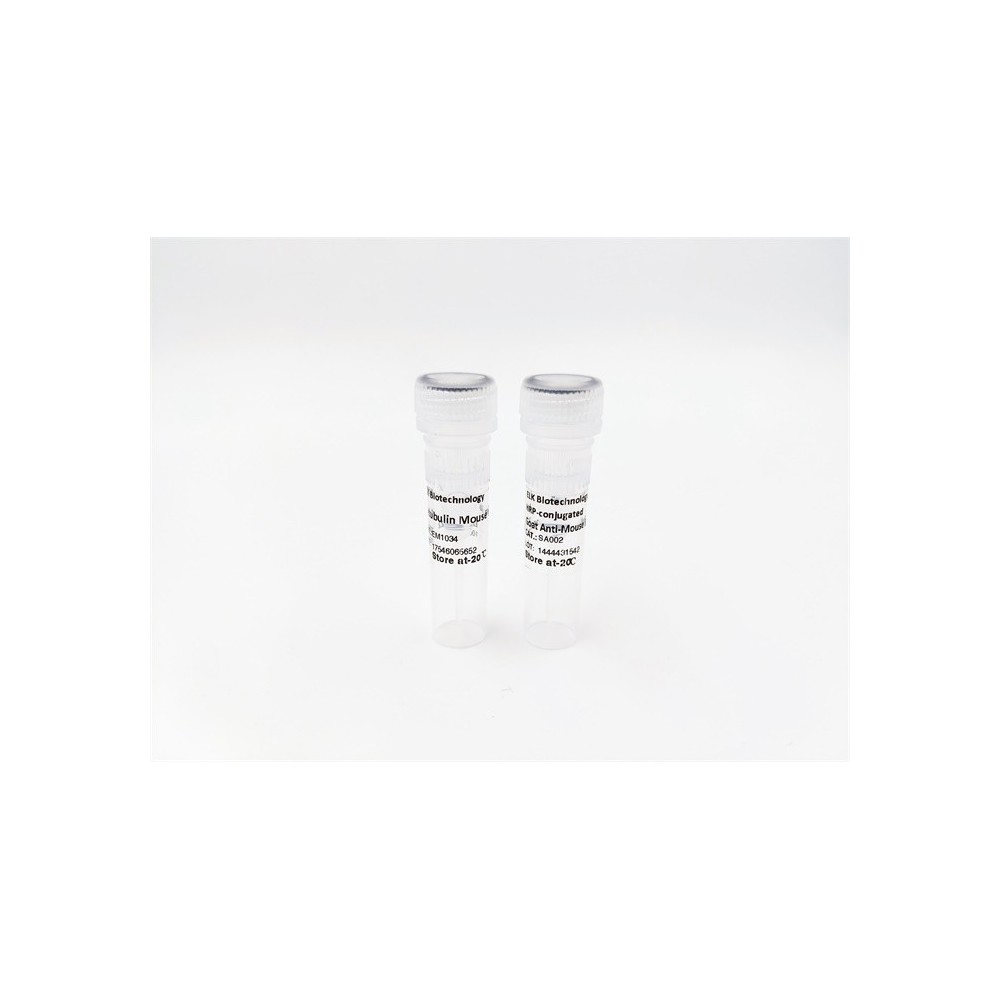
Tuberin (phospho Ser939) rabbit pAb
AO-06-ES7448-100

| ELK.No | ES7448 |
| Product name | Tuberin (phospho Ser939) rabbit pAb |
| Reactivity | Human;Mouse;Rat |
| Applications | WB;IHC;IF;ELISA |
| Other name | TSC2; TSC4; Tuberin; Tuberous sclerosis 2 protein |
| Size | 100μL |
| Unit price ($) | 248 |
| Human gene ID | 7249 |
| Human Swiss-Prot | P49815 |
| Source | Rabbit |
| Isotype | IgG |
| Target | Tuberin |
| Fields | >>Phospholipase D signaling pathway;>>p53 signaling pathway;>>Autophagy - animal;>>mTOR signaling pathway;>>PI3K-Akt signaling pathway;>>AMPK signaling pathway;>>Longevity regulating pathway;>>Cellular senescence;>>Thermogenesis;>>Insulin signaling pathway;>>Thyroid hormone signaling pathway;>>Human cytomegalovirus infection;>>Human papillomavirus infection;>>Herpes simplex virus 1 infection;>>Choline metabolism in cancer |
| Gene name | TSC2 |
| Protein name | Tuberin |
| Human gene link | View Human Gene |
| Human Swiss link | View Human Swiss-Prot |
| Mouse gene ID | |
| Mouse gene link | |
| Mouse Swiss-Prot | Q61037 |
| Mouse Swiss link | View Mouse Swiss-Prot |
| Rat gene ID | 24855 |
| Rat gene link | View Rat Gene |
| Rat Swiss-Prot | P49816 |
| Rat Swiss link | View Rat Swiss-Prot |
| Immunogen | The antiserum was produced against synthesized peptide derived from human Tuberin/TSC2 around the phosphorylation site of Ser939. AA range:905-954 |
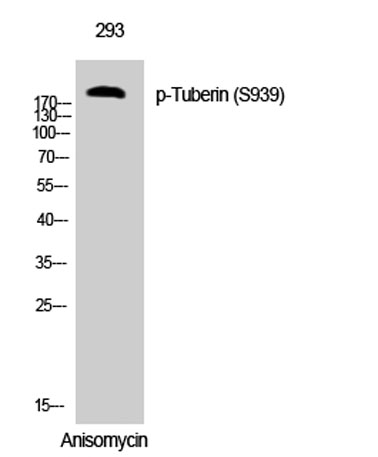
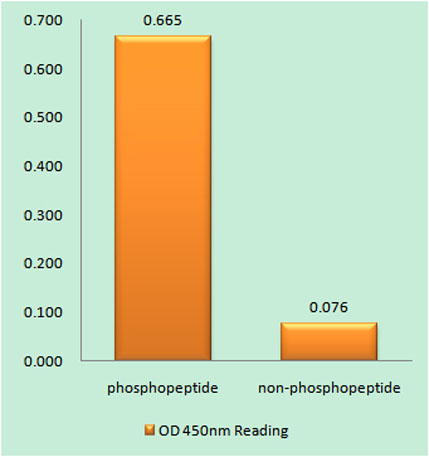
| Specificity | Phospho-Tuberin (S939) Polyclonal Antibody detects endogenous levels of Tuberin protein only when phosphorylated at S939. |
| Formulation | Liquid in PBS containing 50% glycerol, 0.5% BSA and 0.02% sodium azide. |
| Clonality | Polyclonal |
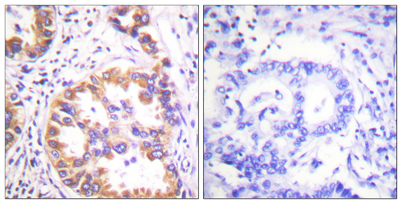
| Dilution | Western Blot: 1/500 - 1/2000. Immunohistochemistry: 1/100 - 1/300. ELISA: 1/10000. Not yet tested in other applications. |
| Purification | The antibody was affinity-purified from rabbit antiserum by affinity-chromatography using epitope-specific immunogen. |
| Concentration | 1 mg/ml |
| Storage stability | -20°C/1 year |
| Molecular Weight (Da) | |
| Observed band (KD) | 200kD |
| Background | Mutations in this gene lead to tuberous sclerosis complex. Its gene product is believed to be a tumor suppressor and is able to stimulate specific GTPases. The protein associates with hamartin in a cytosolic complex, possibly acting as a chaperone for hamartin. Alternative splicing results in multiple transcript variants encoding different isoforms. [provided by RefSeq, Jul 2008], |
| Function | alternative products:Additional isoforms seem to exist. Experimental confirmation may be lacking for some isoforms,disease:Defects in TSC2 are a cause of lymphangioleiomyomatosis (LAM) [MIM:606690]. LAM is a progressive and often fatal lung disease characterized by a diffuse proliferation of abnormal smooth muscle cells in the lungs. It affects almost exclusively young women and can occur as an isolated disorder or in association with tuberous sclerosis complex.,disease:Defects in TSC2 are the cause of tuberous sclerosis complex (TSC) [MIM:191100]. The molecular basis of TSC is a functional impairment of the tuberin-hamartin complex. TSC is an autosomal dominant multi-system disorder that affects especially the brain, kidneys, heart, and skin. TSC is characterized by hamartomas (benign overgrowths predominantly of a cell or tissue type that occurs normally in the organ) and hamartias (de |
| Subcellular location | Cytoplasm. Membrane; Peripheral membrane protein. At steady state found in association with membranes. |
| Expression | Liver, brain, heart, lymphocytes, fibroblasts, biliary epithelium, pancreas, skeletal muscle, kidney, lung and placenta. |

Use collapsible tabs for more detailed information that will help customers make a purchasing decision.
Ex: Shipping and return policies, size guides, and other common questions.