 Français
 English

| ELK.No | ES7477 |
| Product name | THP rabbit pAb |
| Reactivity | Human;Rat;Mouse; |
| Applications | WB; ELISA;IHC |
| Other name | UMOD; Uromodulin; Tamm-Horsfall urinary glycoprotein; THP |
| Size | 100μL |
| Unit price ($) | 248 |
| Human gene ID | 7369 |
| Human Swiss-Prot | P07911 |
| Source | Rabbit |
| Isotype | IgG |
| Target | THP |
| Fields | |
| Gene name | UMOD |
| Protein name | Uromodulin |
| Human gene link | View Human Gene |
| Human Swiss link | View Human Swiss-Prot |
| Mouse gene ID | |
| Mouse gene link | |
| Mouse Swiss-Prot | Q91X17 |
| Mouse Swiss link | View Mouse Swiss-Prot |
| Rat gene ID | |
| Rat gene link | |
| Rat Swiss-Prot | |
| Rat Swiss link | |
| Immunogen | The antiserum was produced against synthesized peptide derived from human THP. AA range:329-378 |
| Specificity | THP Polyclonal Antibody detects endogenous levels of THP protein. |
| Formulation | Liquid in PBS containing 50% glycerol, 0.5% BSA and 0.02% sodium azide. |
| Clonality | Polyclonal |
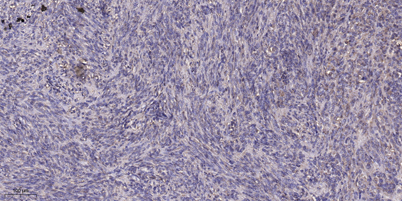
| Dilution | WB 1:500-2000;IHC-p 1:50-300; ELISA 2000-20000 |
| Purification | The antibody was affinity-purified from rabbit antiserum by affinity-chromatography using epitope-specific immunogen. |
| Concentration | 1 mg/ml |
| Storage stability | -20°C/1 year |
| Molecular Weight (Da) | |
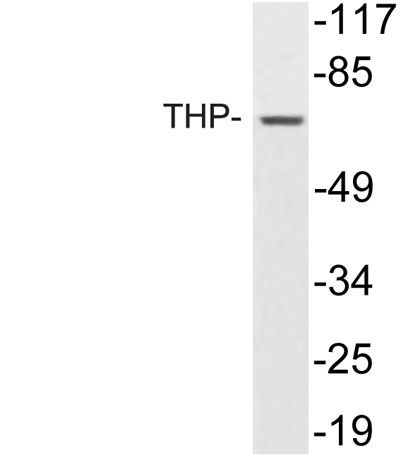
| Observed band (KD) | 70kD |
| Background | The protein encoded by this gene is the most abundant protein in mammalian urine under physiological conditions. Its excretion in urine follows proteolytic cleavage of the ectodomain of its glycosyl phosphatidylinosital-anchored counterpart that is situated on the luminal cell surface of the loop of Henle. This protein may act as a constitutive inhibitor of calcium crystallization in renal fluids. Excretion of this protein in urine may provide defense against urinary tract infections caused by uropathogenic bacteria. Defects in this gene are associated with the renal disorders medullary cystic kidney disease-2 (MCKD2), glomerulocystic kidney disease with hyperuricemia and isosthenuria (GCKDHI), and familial juvenile hyperuricemic nephropathy (FJHN). Alternative splicing of this gene results in multiple transcript variants. [provided by RefSeq, Jul 2013], |
| Function | disease:Defects in UMOD are a cause of glomerulocystic kidney disease with hyperuricemia and isosthenuria [MIM:609886]. Glomerulocystic kidney disease (GCKD) and medullary cystic disease/familial juvenile hyperuricemic nephropathy (MCKD/HNFJ) are two distinct renal disorders that share some common clinical features. The former is characterized by a cystic dilatation of Bowman's space and a collapse of glomerular tuft. Familial GCKD can be associated with either hypoplastic or normal sized kidneys. A GCKD clinical variant presents the association with hyperuricemia due to low fractional excretion of uric acid and severe impairment of urine concentrating ability that are reminiscent of MCKD/HNFJ.,disease:Defects in UMOD are the cause of familial juvenile hyperuricemic nephropathy (HNFJ) [MIM:162000]. HNFJ is a heritable autosomal dominant renal disease characterized by juvenil onset of hyp |
| Subcellular location | Apical cell membrane ; Lipid-anchor, GPI-anchor . Basolateral cell membrane ; Lipid-anchor, GPI-anchor . Cell projection, cilium membrane . Only a small fraction sorts to the basolateral pole of tubular epithelial cells compared to apical localization (PubMed:22776760). Secreted into urine after cleavage (PubMed:18375198, PubMed:26811476). Colocalizes with NPHP1 and KIF3A (PubMed:20172860). .; [Uromodulin, secreted form]: Secreted . Detected in urine. . |
| Expression | Expressed in the tubular cells of the kidney. Most abundant protein in normal urine (at protein level). Synthesized exclusively in the kidney. Expressed exclusively by epithelial cells of the thick ascending limb of Henle's loop (TALH) and of distal convoluted tubule lumen. |

Use collapsible tabs for more detailed information that will help customers make a purchasing decision.
Ex: Shipping and return policies, size guides, and other common questions.