 Français
 English
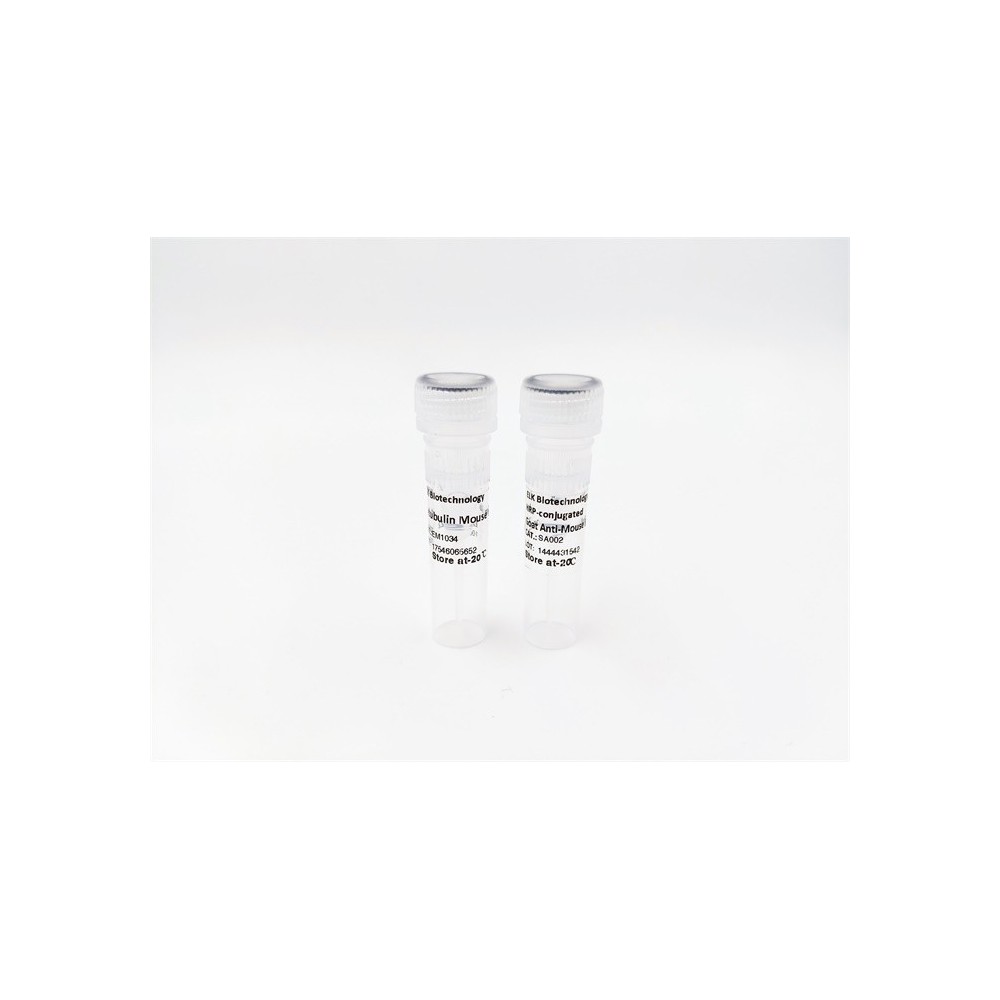

| ELK.No | ES7605 |
| Product name | Caldesmon rabbit pAb |
| Reactivity | Human;Mouse;Rat |
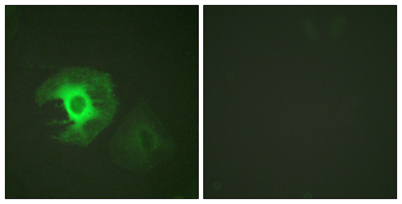
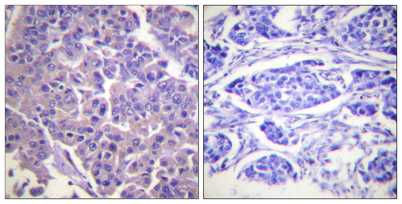
| Applications | WB;IHC;IF;ELISA |
| Other name | CALD1; CAD; CDM; Caldesmon; CDM |
| Size | 50μL |
| Unit price ($) | 148 |
| Human gene ID | 800 |
| Human Swiss-Prot | Q05682 |
| Source | Rabbit |
| Isotype | IgG |
| Target | Caldesmon |
| Fields | >>Vascular smooth muscle contraction |
| Gene name | CALD1 |
| Protein name | Caldesmon |
| Human gene link | View Human Gene |
| Human Swiss link | View Human Swiss-Prot |
| Mouse gene ID | |
| Mouse gene link | |
| Mouse Swiss-Prot | |
| Mouse Swiss link | |
| Rat gene ID | 25687 |
| Rat gene link | View Rat Gene |
| Rat Swiss-Prot | Q62736 |
| Rat Swiss link | View Rat Swiss-Prot |
| Immunogen | The antiserum was produced against synthesized peptide derived from human Caldesmon. AA range:744-793 |
| Specificity | Caldesmon Polyclonal Antibody detects endogenous levels of Caldesmon protein. |
| Formulation | Liquid in PBS containing 50% glycerol, 0.5% BSA and 0.02% sodium azide. |
| Clonality | Polyclonal |
| Dilution | Western Blot: 1/500 - 1/2000. Immunohistochemistry: 1/100 - 1/300. Immunofluorescence: 1/200 - 1/1000. ELISA: 1/5000. Not yet tested in other applications. |
| Purification | The antibody was affinity-purified from rabbit antiserum by affinity-chromatography using epitope-specific immunogen. |
| Concentration | 1 mg/ml |
| Storage stability | -20°C/1 year |
| Molecular Weight (Da) | |
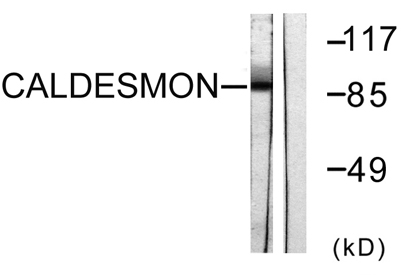
| Observed band (KD) | 80kD |
| Background | This gene encodes a calmodulin- and actin-binding protein that plays an essential role in the regulation of smooth muscle and nonmuscle contraction. The conserved domain of this protein possesses the binding activities to Ca(2+)-calmodulin, actin, tropomyosin, myosin, and phospholipids. This protein is a potent inhibitor of the actin-tropomyosin activated myosin MgATPase, and serves as a mediating factor for Ca(2+)-dependent inhibition of smooth muscle contraction. Alternative splicing of this gene results in multiple transcript variants encoding distinct isoforms. [provided by RefSeq, Jul 2008], |
| Function | domain:The N-terminal part seems to be a myosin/calmodulin-binding domain, and the C-terminal a tropomyosin/actin/calmodulin-binding domain. These two domains are separated by a central helical region in the smooth-muscle form.,function:Actin- and myosin-binding protein implicated in the regulation of actomyosin interactions in smooth muscle and nonmuscle cells (could act as a bridge between myosin and actin filaments). Stimulates actin binding of tropomyosin which increases the stabilization of actin filament structure. In muscle tissues, inhibits the actomyosin ATPase by binding to F-actin. This inhibition is attenuated by calcium-calmodulin and is potentiated by tropomyosin. Interacts with actin, myosin, two molecules of tropomyosin and with calmodulin. Also play an essential role during cellular mitosis and receptor capping.,PTM:In non-muscle cells, phosphorylation by CDC2 during mit |
| Subcellular location | Cytoplasm, cytoskeleton . Cytoplasm, myofibril . Cytoplasm, cytoskeleton, stress fiber . On thin filaments in smooth muscle and on stress fibers in fibroblasts (nonmuscle). . |
| Expression | High-molecular-weight caldesmon (isoform 1) is predominantly expressed in smooth muscles, whereas low-molecular-weight caldesmon (isoforms 2, 3, 4 and 5) are widely distributed in non-muscle tissues and cells. Not expressed in skeletal muscle or heart. |

Use collapsible tabs for more detailed information that will help customers make a purchasing decision.
Ex: Shipping and return policies, size guides, and other common questions.