 Français
 English

| ELK.No | ES7671 |
| Product name | Protocadherin-11 rabbit pAb |
| Reactivity | Human;Rat;Mouse; |
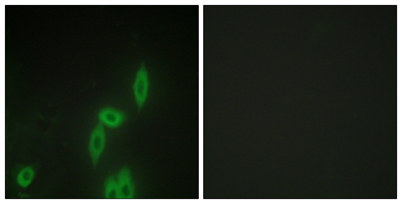
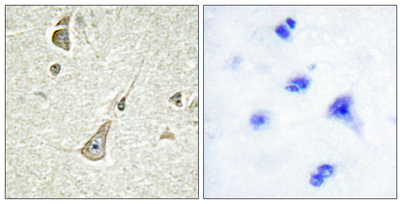
| Applications | IHC;IF;ELISA |
| Other name | PCDH11Y; PCDH11; PCDH22; PCDHY; Protocadherin-11 Y-linked; Protocadherin-11; Protocadherin on the Y chromosome; PCDH-Y; Protocadherin prostate cancer; Protocadherin-PC; Protocadherin-22; PCDH11X; KIAA1326; PCDH11; PCDHX; Protocadherin-11 X- |
| Size | 50μL |
| Unit price ($) | 148 |
| Human gene ID | 83259/27328 |
| Human Swiss-Prot | Q9BZA8/Q9BZA7 |
| Source | Rabbit |
| Isotype | IgG |
| Target | Protocadherin-11 |
| Fields | |
| Gene name | PCDH11X/PCDH11Y |
| Protein name | Protocadherin-11 X/Y-linked |
| Human gene link | View Human Gene |
| Human Swiss link | View Human Swiss-Prot |
| Mouse gene ID | |
| Mouse gene link | |
| Mouse Swiss-Prot | |
| Mouse Swiss link | |
| Rat gene ID | |
| Rat gene link | |
| Rat Swiss-Prot | |
| Rat Swiss link | |
| Immunogen | The antiserum was produced against synthesized peptide derived from human PCDH-X/Y. AA range:531-580 |
| Specificity | Protocadherin-11 Polyclonal Antibody detects endogenous levels of Protocadherin-11 protein. |
| Formulation | Liquid in PBS containing 50% glycerol, 0.5% BSA and 0.02% sodium azide. |
| Clonality | Polyclonal |
| Dilution | Immunohistochemistry: 1/100 - 1/300. Immunofluorescence: 1/200 - 1/1000. ELISA: 1/20000. Not yet tested in other applications. |
| Purification | The antibody was affinity-purified from rabbit antiserum by affinity-chromatography using epitope-specific immunogen. |
| Concentration | 1 mg/ml |
| Storage stability | -20°C/1 year |
| Molecular Weight (Da) | 147kD |
| Observed band (KD) | |
| Background | This gene belongs to the protocadherin family, a subfamily of the cadherin superfamily. The encoded protein consists of an extracellular domain containing seven cadherin repeats, a transmembrane domain, and a cytoplasmic tail that differs from those of the classical cadherins. This gene is located on the Y chromosome in a block of X/Y homology and is very closely related to its paralog on the X chromosome. The protein is thought to play a role in cell-cell recognition during development of the central nervous system. Alternative splicing results in multiple transcript variants encoding different isoforms. [provided by RefSeq, Jul 2013], |
| Function | alternative products:Additional isoforms seem to exist,disease:A chromosomal aberration involving PCDH11Y is a cause of multiple congenital abnormalities, including severe bilateral vesicoureteral reflux (VUR) with ureterovesical junction defects. Translocation t(Y;3)(p11;p12) with ROBO2.,function:Potential calcium-dependent cell-adhesion protein.,similarity:Contains 7 cadherin domains.,subunit:Interacts with CTNNB1.,tissue specificity:Expressed strongly in fetal brain and brain (cortex, amygdala, thalamus, substantia nigra, hippocampus, caudate nucleus and corpus callosum). Expressed at low level in testis. Expressed in apoptosis-resistant cells., |
| Subcellular location | Cell membrane ; Single-pass type I membrane protein . |
| Expression | Expressed strongly in fetal brain and brain (cortex, amygdala, thalamus, substantia nigra, hippocampus, caudate nucleus and corpus callosum). Expressed at low level in testis. Expressed in apoptosis-resistant cells. |

Use collapsible tabs for more detailed information that will help customers make a purchasing decision.
Ex: Shipping and return policies, size guides, and other common questions.