 Français
 English

| ELK.No | ES7976 |
| Product name | EDG-4 rabbit pAb |
| Reactivity | Human;Mouse;Monkey |
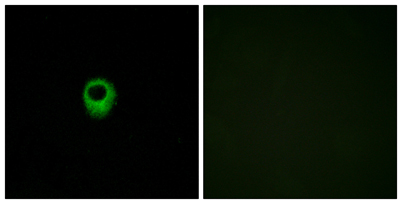
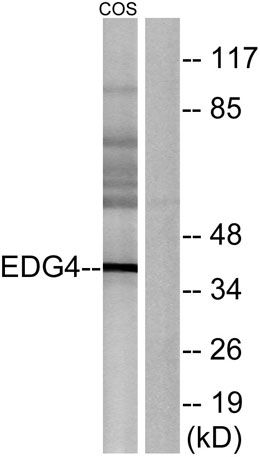
| Applications | WB;IF;ELISA |
| Other name | LPAR2; EDG4; LPA2; Lysophosphatidic acid receptor 2; LPA receptor 2; LPA-2; Lysophosphatidic acid receptor Edg-4 |
| Size | 50μL |
| Unit price ($) | 148 |
| Human gene ID | 9170 |
| Human Swiss-Prot | Q9HBW0 |
| Source | Rabbit |
| Isotype | IgG |
| Target | EDG-4 |
| Fields | >>Rap1 signaling pathway;>>Phospholipase D signaling pathway;>>Neuroactive ligand-receptor interaction;>>PI3K-Akt signaling pathway;>>Regulation of actin cytoskeleton;>>Pathogenic Escherichia coli infection;>>Pathways in cancer |
| Gene name | LPAR2 |
| Protein name | Lysophosphatidic acid receptor 2 |
| Human gene link | View Human Gene |
| Human Swiss link | View Human Swiss-Prot |
| Mouse gene ID | |
| Mouse gene link | |
| Mouse Swiss-Prot | Q9JL06 |
| Mouse Swiss link | View Mouse Swiss-Prot |
| Rat gene ID | |
| Rat gene link | |
| Rat Swiss-Prot | |
| Rat Swiss link | |
| Immunogen | The antiserum was produced against synthesized peptide derived from human EDG4. AA range:271-320 |
| Specificity | EDG-4 Polyclonal Antibody detects endogenous levels of EDG-4 protein. |
| Formulation | Liquid in PBS containing 50% glycerol, 0.5% BSA and 0.02% sodium azide. |
| Clonality | Polyclonal |
| Dilution | Western Blot: 1/500 - 1/2000. Immunofluorescence: 1/200 - 1/1000. ELISA: 1/40000. Not yet tested in other applications. |
| Purification | The antibody was affinity-purified from rabbit antiserum by affinity-chromatography using epitope-specific immunogen. |
| Concentration | 1 mg/ml |
| Storage stability | -20°C/1 year |
| Molecular Weight (Da) | |
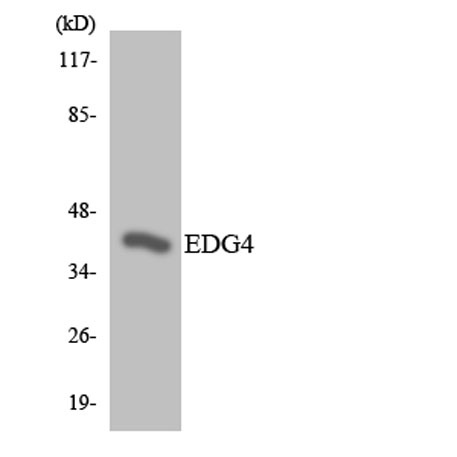
| Observed band (KD) | 39kD |
| Background | lysophosphatidic acid receptor 2(LPAR2) Homo sapiens This gene encodes a member of family I of the G protein-coupled receptors, as well as the EDG family of proteins. This protein functions as a lysophosphatidic acid (LPA) receptor and contributes to Ca2+ mobilization, a critical cellular response to LPA in cells, through association with Gi and Gq proteins. An alternative splice variant has been described but its full length sequence has not been determined. [provided by RefSeq, Jul 2008], |
| Function | function:Receptor for lysophosphatidic acid (LPA), a mediator of diverse cellular activities. Seems to be coupled to the G(i)/G(o), G(12)/G(13), and G(q) families of heteromeric G proteins. Plays a key role in phospholipase C-beta (PLC-beta) signaling pathway.,miscellaneous:PubMed:9525886 cDNA clone has a guanine nucleotide deletion that causes a frameshift near its C-terminal coding region. This likely reflects a somatic mutation in the ovary tumor cells from which the cDNA was isolated and may have altered the function of the encoded receptor, and contributed to transformation of the original ovary cells that formed a tumor.,similarity:Belongs to the G-protein coupled receptor 1 family.,subunit:Interacts with SLC9A3R2/NHERF2, MAGI3 and PLCB3.,tissue specificity:Expressed most abundantly in testes and peripheral blood leukocytes with less expression in pancreas, spleen, thymus and prost |
| Subcellular location | Cell surface . Cell membrane ; Multi-pass membrane protein . Prior to LPA treatment found predominantly at the cell surface but in the presence of LPA colocalizes with RALA in the endocytic vesicles. |
| Expression | Expressed most abundantly in testes and peripheral blood leukocytes with less expression in pancreas, spleen, thymus and prostate. Little or no expression in heart, brain, placenta, lung, liver, skeletal muscle, kidney, ovary, small intestine, or colon. |

Use collapsible tabs for more detailed information that will help customers make a purchasing decision.
Ex: Shipping and return policies, size guides, and other common questions.