 Français
 English
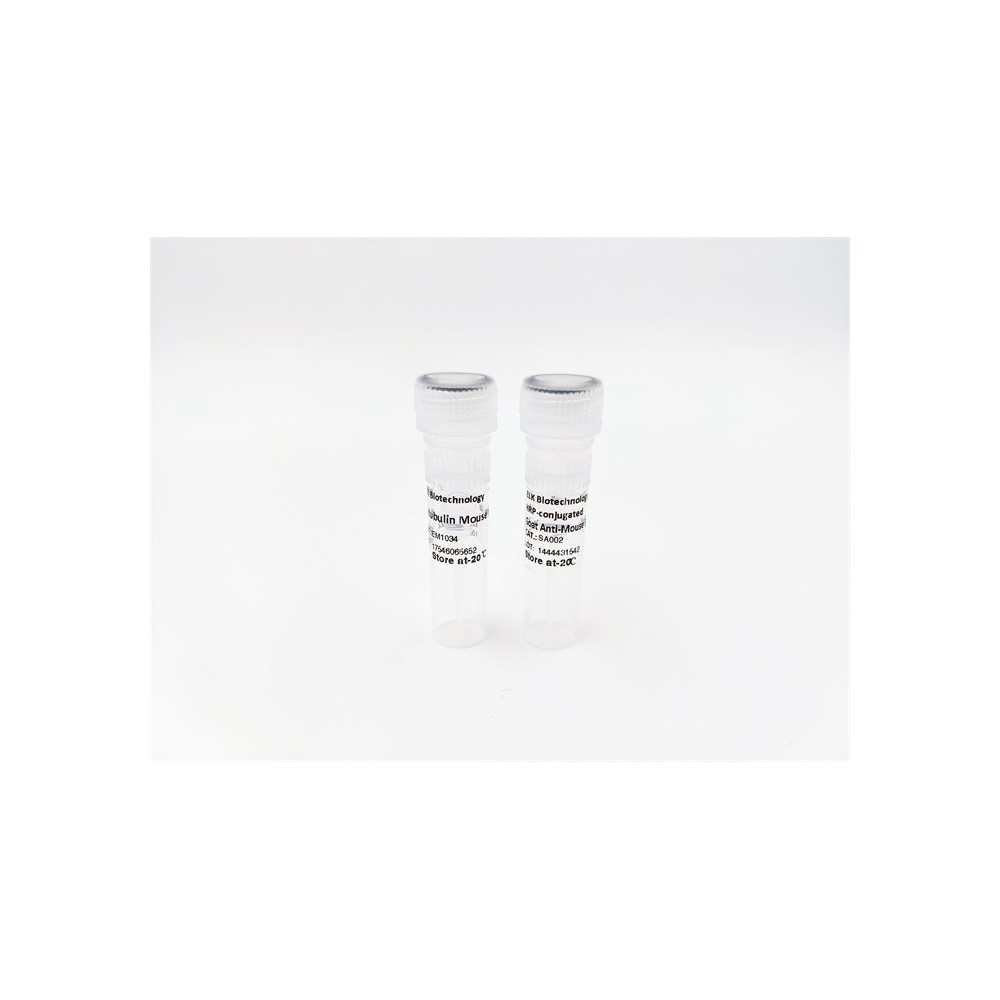
RIP140 (Acetyl Lys158) rabbit pAb
AO-06-ES8434-100

| ELK.No | ES8434 |
| Product name | RIP140 (Acetyl Lys158) rabbit pAb |
| Reactivity | Human;Mouse;Rat |
| Applications | WB;ELISA;IHC |
| Other name | NRIP1; Nuclear receptor-interacting protein 1; Nuclear factor RIP140; Receptor-interacting protein 140 |
| Size | 100μL |
| Unit price ($) | 248 |
| Human gene ID | 8204 |
| Human Swiss-Prot | P48552 |
| Source | Rabbit |
| Isotype | IgG |
| Target | RIP140 |
| Fields | |
| Gene name | NRIP1 |
| Protein name | Nuclear receptor-interacting protein 1 |
| Human gene link | View Human Gene |
| Human Swiss link | View Human Swiss-Prot |
| Mouse gene ID | 268903 |
| Mouse gene link | View Mouse Gene |
| Mouse Swiss-Prot | Q8CBD1 |
| Mouse Swiss link | View Mouse Swiss-Prot |
| Rat gene ID | |
| Rat gene link | |
| Rat Swiss-Prot | |
| Rat Swiss link | |
| Immunogen | Synthesized acetyl-peptide derived from human RIP140 around the acetylation site of K158. |
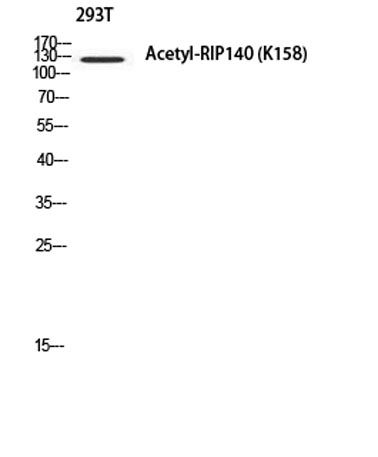
| Specificity | Acetyl-RIP140 (K158) Polyclonal Antibody detects endogenous levels of RIP140 around the acetylation site of K158 protein. |
| Formulation | Liquid in PBS containing 50% glycerol, 0.5% BSA and 0.02% sodium azide. |
| Clonality | Polyclonal |
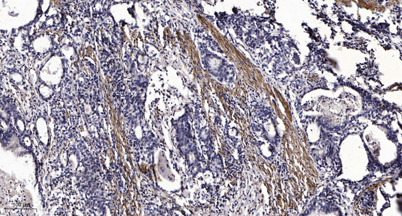
| Dilution | WB 1:500-2000;IHC-p 1:50-300; ELISA 2000-20000 |
| Purification | The antibody was affinity-purified from rabbit antiserum by affinity-chromatography using epitope-specific immunogen. |
| Concentration | 1 mg/ml |
| Storage stability | -20°C/1 year |
| Molecular Weight (Da) | |
| Observed band (KD) | |
| Background | Nuclear receptor interacting protein 1 (NRIP1) is a nuclear protein that specifically interacts with the hormone-dependent activation domain AF2 of nuclear receptors. Also known as RIP140, this protein modulates transcriptional activity of the estrogen receptor. [provided by RefSeq, Jul 2008], |
| Function | disease:Genetic variation in NRIP1 may act as predisposing factor for endometriosis.,domain:Contains 9 Leu-Xaa-Xaa-Leu-Leu (LXXLL) motifs, which have different affinities for nuclear receptors. The C-terminal LTKTNPILYYMLQK motif is required for ligand-dependent interaction with RAAR and RXRB homo- and heterodimers, for the corepressor activity, and for the formation of an HDAC3 complex with RARA/RXRB (By similarity). Contains at least four autonomous repression domains (RD1-4). RD1 functions via a histone deacetylase (HDAC)-independent mechanism, whereas RD2, RD3 and RD4 can function by HDAC-dependent or independent mechanisms, depending on cell type. RD2 is dependent on CTBP binding.,function:Modulates transcriptional activation by steroid receptors such as NR3C1, NR3C2 and ESR1. Also modulates transcriptional repression by nuclear hormone receptors.,PTM:Acetylation regulates its nucle |
| Subcellular location | Nucleus . Localized to discrete foci and redistributes to larger nuclear domains upon binding to ligand-bound NR3C1. |
| Expression | Brain,Epithelium,Mammary gland,Skin, |

Use collapsible tabs for more detailed information that will help customers make a purchasing decision.
Ex: Shipping and return policies, size guides, and other common questions.