 Français
 English

| ELK.No | ES8464 |
| Product name | TLE1/2/3/4 rabbit pAb |
| Reactivity | Human;Mouse;Rat |
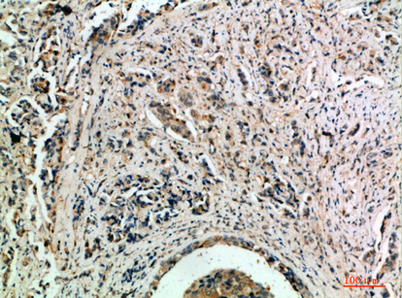
| Applications | WB;ELISA;IHC |
| Other name | similar to transducin-like enhancer of split 1/2/3/4 |
| Size | 100μL |
| Unit price ($) | 248 |
| Human gene ID | 7088 |
| Human Swiss-Prot | Q04724/Q04725/Q04726/Q04727 |
| Source | Rabbit |
| Isotype | IgG |
| Target | TLE1/2/3/4 |
| Fields | >>Wnt signaling pathway;>>Notch signaling pathway |
| Gene name | |
| Protein name | TLE1/2/3/4 |
| Human gene link | View Human Gene |
| Human Swiss link | View Human Swiss-Prot |
| Mouse gene ID | |
| Mouse gene link | |
| Mouse Swiss-Prot | |
| Mouse Swiss link | |
| Rat gene ID | |
| Rat gene link | |
| Rat Swiss-Prot | |
| Rat Swiss link | |
| Immunogen | The antiserum was produced against synthesized peptide derived from the C-terminal region of human TLE1/TLE2/TLE3/TLE4. AA range:721-770 |
| Specificity | TLE1/2/3/4 Polyclonal Antibody detects endogenous levels of TLE1/2/3/4 |
| Formulation | Liquid in PBS containing 50% glycerol, 0.5% BSA and 0.02% sodium azide. |
| Clonality | Polyclonal |
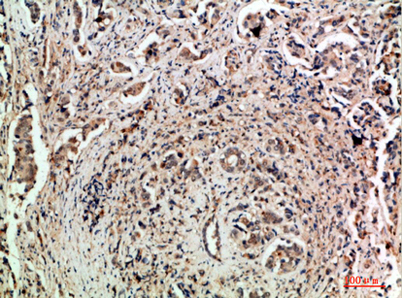
| Dilution | WB 1:500-2000;IHC-p 1:50-300; ELISA 2000-20000 |
| Purification | The antibody was affinity-purified from rabbit antiserum by affinity-chromatography using epitope-specific immunogen. |
| Concentration | 1 mg/ml |
| Storage stability | -20°C/1 year |
| Molecular Weight (Da) | |
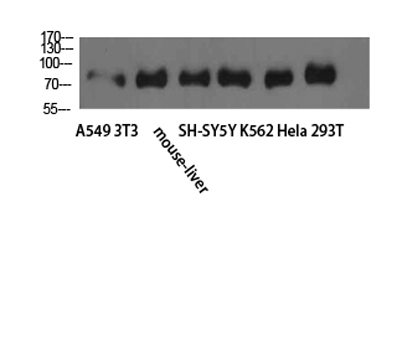
| Observed band (KD) | 90kD |
| Background | function:Transcriptional corepressor that binds to a number of transcription factors. Inhibits NF-kappa-B-regulated gene expression. Inhibits the transcriptional activation mediated by FOXA2, and by CTNNB1 and TCF family members in Wnt signaling. The effects of full-length TLE family members may be modulated by association with dominant-negative AES. Unusual function as coactivator for ESRRG.,PTM:Phosphorylated, probably by CDC2. The degree of phosphorylation varies throughout the cell cycle, and is highest at the G2/M transition. Becomes hyperphosphorylated in response to cell differentiation and interaction with HES1 or RUNX1.,similarity:Belongs to the WD repeat Groucho/TLE family.,similarity:Contains 6 WD repeats.,subcellular location:Nuclear and chromatin-associated, depending on isoforms and phosphorylation status. Hyperphosphorylation decreases the affinity for nuclear components.,subunit:Homooligomer and heterooligomer with other family members. Binds LEF1, RUNX1, RUNX3, FOXA2, KDM6A, UTY, histone H3, HESX1, ESRRG and the NF-kappa-B subunit RELA. Interacts with HES1 (via WRPW motif).,tissue specificity:In all tissues examined, mostly in brain, liver and muscle., |
| Function | function:Transcriptional corepressor that binds to a number of transcription factors. Inhibits NF-kappa-B-regulated gene expression. Inhibits the transcriptional activation mediated by FOXA2, and by CTNNB1 and TCF family members in Wnt signaling. The effects of full-length TLE family members may be modulated by association with dominant-negative AES. Unusual function as coactivator for ESRRG.,PTM:Phosphorylated, probably by CDC2. The degree of phosphorylation varies throughout the cell cycle, and is highest at the G2/M transition. Becomes hyperphosphorylated in response to cell differentiation and interaction with HES1 or RUNX1.,similarity:Belongs to the WD repeat Groucho/TLE family.,similarity:Contains 6 WD repeats.,subcellular location:Nuclear and chromatin-associated, depending on isoforms and phosphorylation status. Hyperphosphorylation decreases the affinity for nuclear components., |
| Subcellular location | Nucleus . Nuclear and chromatin-associated, depending on isoforms and phosphorylation status. Hyperphosphorylation decreases the affinity for nuclear components. |
| Expression | In all tissues examined, mostly in brain, liver and muscle. |

Use collapsible tabs for more detailed information that will help customers make a purchasing decision.
Ex: Shipping and return policies, size guides, and other common questions.