 Français
 English
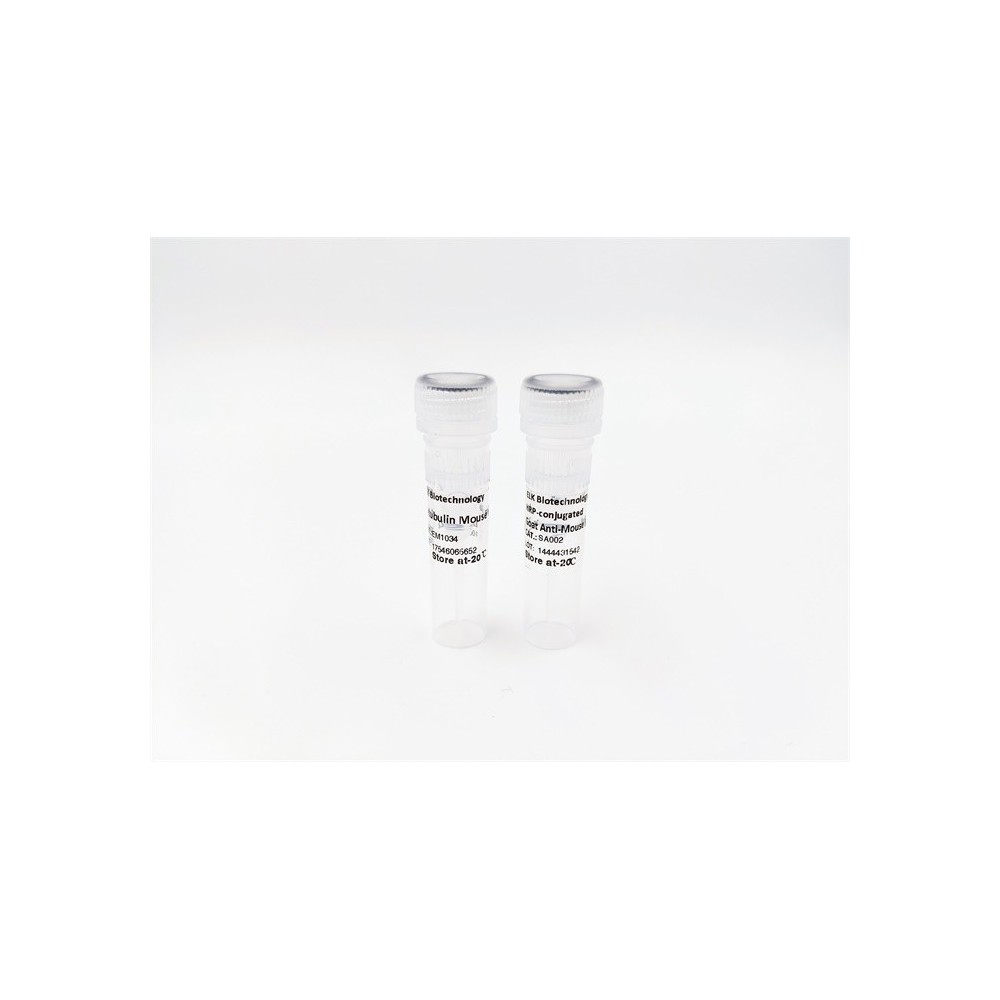

| ELK.No | ES8494 |
| Product name | Tryptase-3 rabbit pAb |
| Reactivity | Human;Rat;Mouse; |
| Applications | WB;ELISA |
| Other name | Tryptase delta (EC 3.4.21.59) (Delta-tryptase) (HmMCP-3-like tryptase III) (Mast cell mMCP-7-like) (Tryptase-3) |
| Size | 100μL |
| Unit price ($) | 248 |
| Human gene ID | 23430 |
| Human Swiss-Prot | Q9BZJ3 |
| Source | Rabbit |
| Isotype | IgG |
| Target | Tryptase-3 |
| Fields | >>Influenza A |
| Gene name | TPSD1 |
| Protein name | Tryptase-3 |
| Human gene link | View Human Gene |
| Human Swiss link | View Human Swiss-Prot |
| Mouse gene ID | |
| Mouse gene link | |
| Mouse Swiss-Prot | |
| Mouse Swiss link | |
| Rat gene ID | |
| Rat gene link | |
| Rat Swiss-Prot | |
| Rat Swiss link | |
| Immunogen | Synthesized peptide derived from Tryptase-3 at AA range: 51-100 |
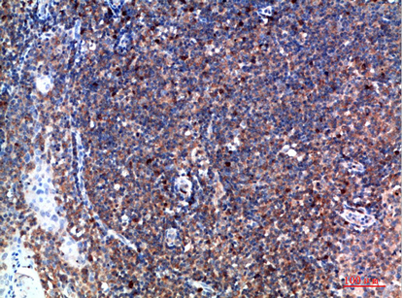
| Specificity | Tryptase-3 Polyclonal Antibody detects endogenous levels of Tryptase-3 |
| Formulation | Liquid in PBS containing 50% glycerol, 0.5% BSA and 0.02% sodium azide. |
| Clonality | Polyclonal |
| Dilution | WB 1:500-2000, ELISA 1:10000-20000 |
| Purification | The antibody was affinity-purified from rabbit antiserum by affinity-chromatography using epitope-specific immunogen. |
| Concentration | 1 mg/ml |
| Storage stability | -20°C/1 year |
| Molecular Weight (Da) | |
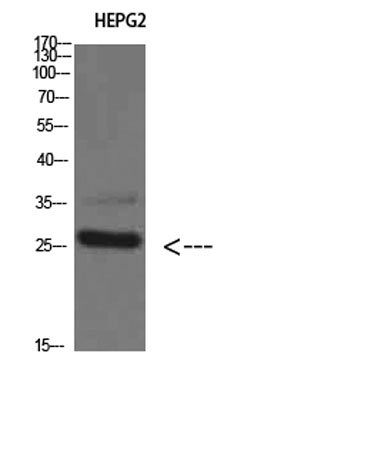
| Observed band (KD) | 26kD |
| Background | tryptase delta 1(TPSD1) Homo sapiens Tryptases comprise a family of trypsin-like serine proteases, the peptidase family S1. Tryptases are enzymatically active only as heparin-stabilized tetramers, and they are resistant to all known endogenous proteinase inhibitors. Several tryptase genes are clustered on chromosome 16p13.3. These genes are characterized by several distinct features. They have a highly conserved 3' UTR and contain tandem repeat sequences at the 5' flank and 3' UTR which are thought to play a role in regulation of the mRNA stability. Although this gene may be an exception, most of the tryptase genes have an intron immediately upstream of the initiator Met codon, which separates the site of transcription initiation from protein coding sequence. This feature is characteristic of tryptases but is unusual in other genes. Tryptases have been implicated as mediators in the pathogenesis of asthma and other allergic and |
| Function | catalytic activity:Preferential cleavage: Arg-|-Xaa, Lys-|-Xaa, but with more restricted specificity than trypsin.,caution:Although PubMed:11174199 reported this as a pseudogene, PubMed:12391231 showed it is expressed and has proteolytic activity when expressed in bacterial cells.,function:Tryptase is the major neutral protease present in mast cells and is secreted upon the coupled activation-degranulation response of this cell type.,similarity:Belongs to the peptidase S1 family. Tryptase subfamily.,similarity:Contains 1 peptidase S1 domain.,subcellular location:Released from the secretory granules upon mast cell activation.,subunit:Homotetramer.,tissue specificity:Expressed in colon, lung, heart and synovial tissue. May be specific to mast cells., |
| Subcellular location | Secreted . Released from the secretory granules upon mast cell activation. . |
| Expression | Expressed in colon, lung, heart and synovial tissue. May be specific to mast cells. |

Use collapsible tabs for more detailed information that will help customers make a purchasing decision.
Ex: Shipping and return policies, size guides, and other common questions.