 Français
 English
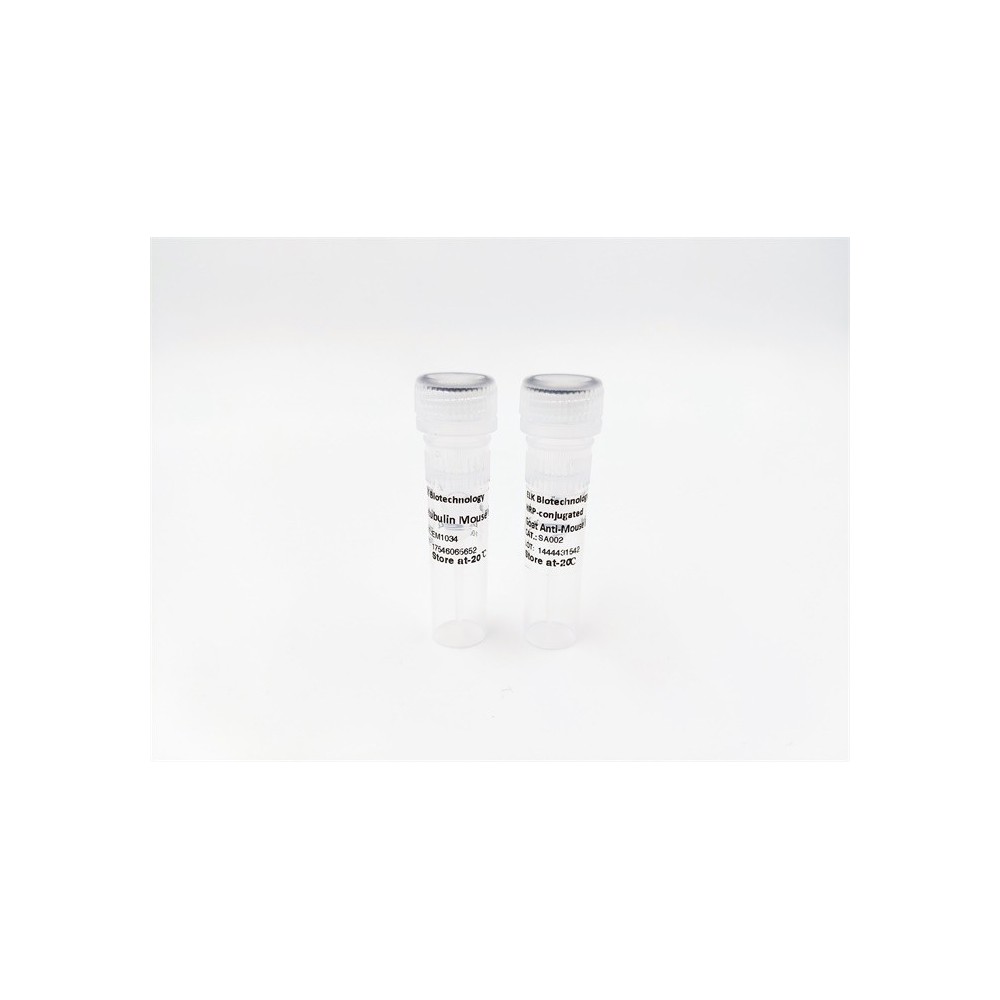

| ELK.No | ES8500 |
| Product name | CYFIP2 rabbit pAb |
| Reactivity | Human;Mouse;Rat |
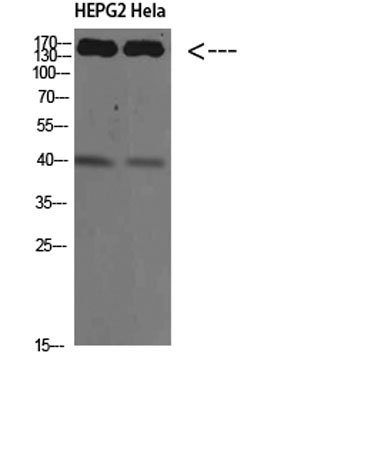
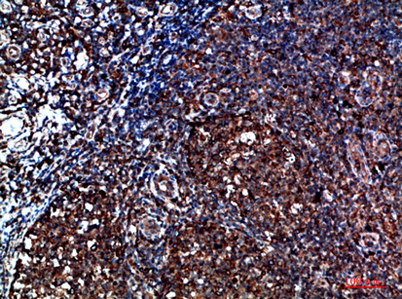
| Applications | WB;ELISA |
| Other name | Cytoplasmic FMR1-interacting protein 2 (p53-inducible protein 121) |
| Size | 50μL |
| Unit price ($) | 148 |
| Human gene ID | 26999 |
| Human Swiss-Prot | Q96F07 |
| Source | Rabbit |
| Isotype | IgG |
| Target | CYFIP2 |
| Fields | >>Regulation of actin cytoskeleton;>>Pathogenic Escherichia coli infection;>>Salmonella infection |
| Gene name | CYFIP2 |
| Protein name | CYFIP2 |
| Human gene link | View Human Gene |
| Human Swiss link | View Human Swiss-Prot |
| Mouse gene ID | 76884 |
| Mouse gene link | |
| Mouse Swiss-Prot | Q5SQX6 |
| Mouse Swiss link | View Mouse Swiss-Prot |
| Rat gene ID | |
| Rat gene link | |
| Rat Swiss-Prot | |
| Rat Swiss link | |
| Immunogen | Synthesized peptide derived from CYFIP2 at AA range: 1171-1220 |
| Specificity | CYFIP2 Polyclonal Antibody detects endogenous levels of CYFIP2 |
| Formulation | Liquid in PBS containing 50% glycerol, 0.5% BSA and 0.02% sodium azide. |
| Clonality | Polyclonal |
| Dilution | WB 1:500-2000, ELISA 1:10000-20000 |
| Purification | The antibody was affinity-purified from rabbit antiserum by affinity-chromatography using epitope-specific immunogen. |
| Concentration | 1 mg/ml |
| Storage stability | -20°C/1 year |
| Molecular Weight (Da) | |
| Observed band (KD) | 150+45kD |
| Background | disease:Up-regulated significantly in CD4+ T lymphocytes from patients with multiple sclerosis (at protein level).,function:Involved in T-cell adhesion and p53-dependent induction of apoptosis. Does not bind RNA.,induction:By p53.,RNA editing:Partially edited. Editing appears to be brain-specific.,similarity:Belongs to the CYFIP family.,subcellular location:Highly expressed in the perinuclear region. Enriched in synaptosomes. Treatment with leptomycin-B triggers translocation to the nucleus.,subunit:Interacts with FMR1, FXR1 AND FXR2. Component of the WAVE1 complex composed of ABI2, CYFIP2, C3orf10/HSPC300, NCKAP1 and WASF1/WAVE1. CYFIP2 binds to activated RAC1 which causes the complex to dissociate, releasing activated WASF1. The complex can also be activated by NCK1., |
| Function | disease:Up-regulated significantly in CD4+ T lymphocytes from patients with multiple sclerosis (at protein level).,function:Involved in T-cell adhesion and p53-dependent induction of apoptosis. Does not bind RNA.,induction:By p53.,RNA editing:Partially edited. Editing appears to be brain-specific.,similarity:Belongs to the CYFIP family.,subcellular location:Highly expressed in the perinuclear region. Enriched in synaptosomes. Treatment with leptomycin-B triggers translocation to the nucleus.,subunit:Interacts with FMR1, FXR1 AND FXR2. Component of the WAVE1 complex composed of ABI2, CYFIP2, C3orf10/HSPC300, NCKAP1 and WASF1/WAVE1. CYFIP2 binds to activated RAC1 which causes the complex to dissociate, releasing activated WASF1. The complex can also be activated by NCK1., |
| Subcellular location | Cytoplasm . Nucleus . Cytoplasm, perinuclear region . Cell junction, synapse, synaptosome . Highly expressed in the perinuclear regionand enriched in synaptosomes (By similarity). Treatment with leptomycin-B triggers translocation to the nucleus (PubMed:17245118). . |
| Expression | Expressed in T-cells. Increased expression is observed in CD4(+) T-lymphocytes from patients with multiple sclerosis (at protein level). |

Use collapsible tabs for more detailed information that will help customers make a purchasing decision.
Ex: Shipping and return policies, size guides, and other common questions.