 Français
 English
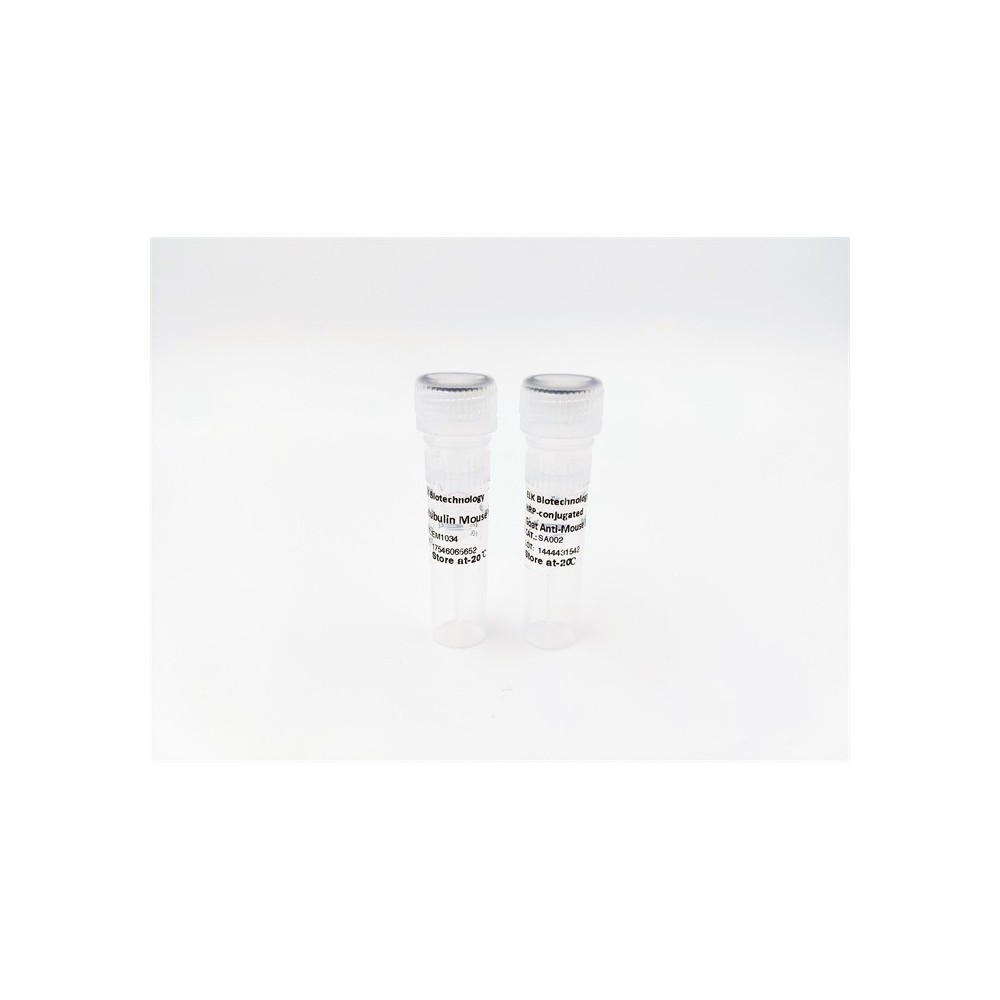

| ELK.No | ES8504 |
| Product name | ETBR rabbit pAb |
| Reactivity | Human;Rat;Mouse; |
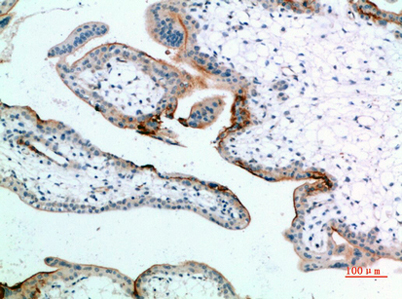
| Applications | WB;IHC;IF;ELISA |
| Other name | Endothelin B receptor (ET-B;ET-BR;Endothelin receptor non-selective type) |
| Size | 50μL |
| Unit price ($) | 148 |
| Human gene ID | 1910 |
| Human Swiss-Prot | P24530 |
| Source | Rabbit |
| Isotype | IgG |
| Target | ETBR |
| Fields | >>Calcium signaling pathway;>>cGMP-PKG signaling pathway;>>Neuroactive ligand-receptor interaction;>>Melanogenesis;>>Relaxin signaling pathway;>>Pathways in cancer |
| Gene name | EDNRB |
| Protein name | ETBR |
| Human gene link | View Human Gene |
| Human Swiss link | View Human Swiss-Prot |
| Mouse gene ID | 13618 |
| Mouse gene link | |
| Mouse Swiss-Prot | P48302 |
| Mouse Swiss link | View Mouse Swiss-Prot |
| Rat gene ID | |
| Rat gene link | |
| Rat Swiss-Prot | |
| Rat Swiss link | |
| Immunogen | Synthesized peptide derived from ETBR at AA range: 31-80 |
| Specificity | ETBR Polyclonal Antibody detects endogenous levels of ETBR |
| Formulation | Liquid in PBS containing 50% glycerol, 0.5% BSA and 0.02% sodium azide. |
| Clonality | Polyclonal |
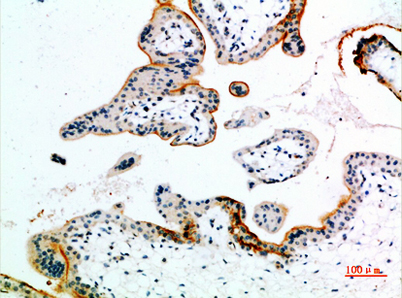
| Dilution | IHC-p: 100-300.WB 1:500-2000, ELISA 1:10000-20000 |
| Purification | The antibody was affinity-purified from rabbit antiserum by affinity-chromatography using epitope-specific immunogen. |
| Concentration | 1 mg/ml |
| Storage stability | -20°C/1 year |
| Molecular Weight (Da) | |
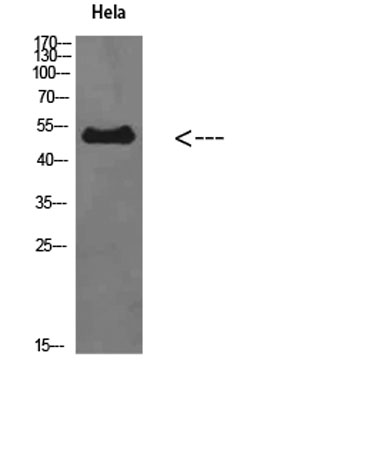
| Observed band (KD) | 50kD |
| Background | The protein encoded by this gene is a G protein-coupled receptor which activates a phosphatidylinositol-calcium second messenger system. Its ligand, endothelin, consists of a family of three potent vasoactive peptides: ET1, ET2, and ET3. Studies suggest that the multigenic disorder, Hirschsprung disease type 2, is due to mutations in the endothelin receptor type B gene. Alternative splicing and the use of alternative promoters results in multiple transcript variants. [provided by RefSeq, Oct 2016], |
| Function | disease:Defects in EDNRB are a cause of Waardenburg syndrome type IV (WS4) [MIM:277580]; also known as Waardenburg-Shah syndrome. WS4 is characterized by the association of Waardenburg features (depigmentation and deafness) and the absence of enteric ganglia in the distal part of the intestine (Hirschsprung disease).,disease:Defects in EDNRB are the cause of ABCD syndrome (ABCDS) [MIM:600501]. ABCD syndrome is an autosomal recessive syndrome characterized by albinism, black lock at temporal occipital region, bilateral deafness, aganglionosis of the large intestine and total absence of neurocytes and nerve fibers in the small intestine.,disease:Defects in EDNRB are the cause of Hirschsprung disease type 2 (HSCR2) [MIM:600155]; also known as aganglionic megacolon (MGC). It is a congenital disorder characterized by absence of enteric ganglia along a variable length of the intestine. It is t |
| Subcellular location | Cell membrane ; Multi-pass membrane protein. internalized after activation by endothelins. . |
| Expression | Expressed in placental stem villi vessels, but not in cultured placental villi smooth muscle cells. |

Use collapsible tabs for more detailed information that will help customers make a purchasing decision.
Ex: Shipping and return policies, size guides, and other common questions.