 Français
 English
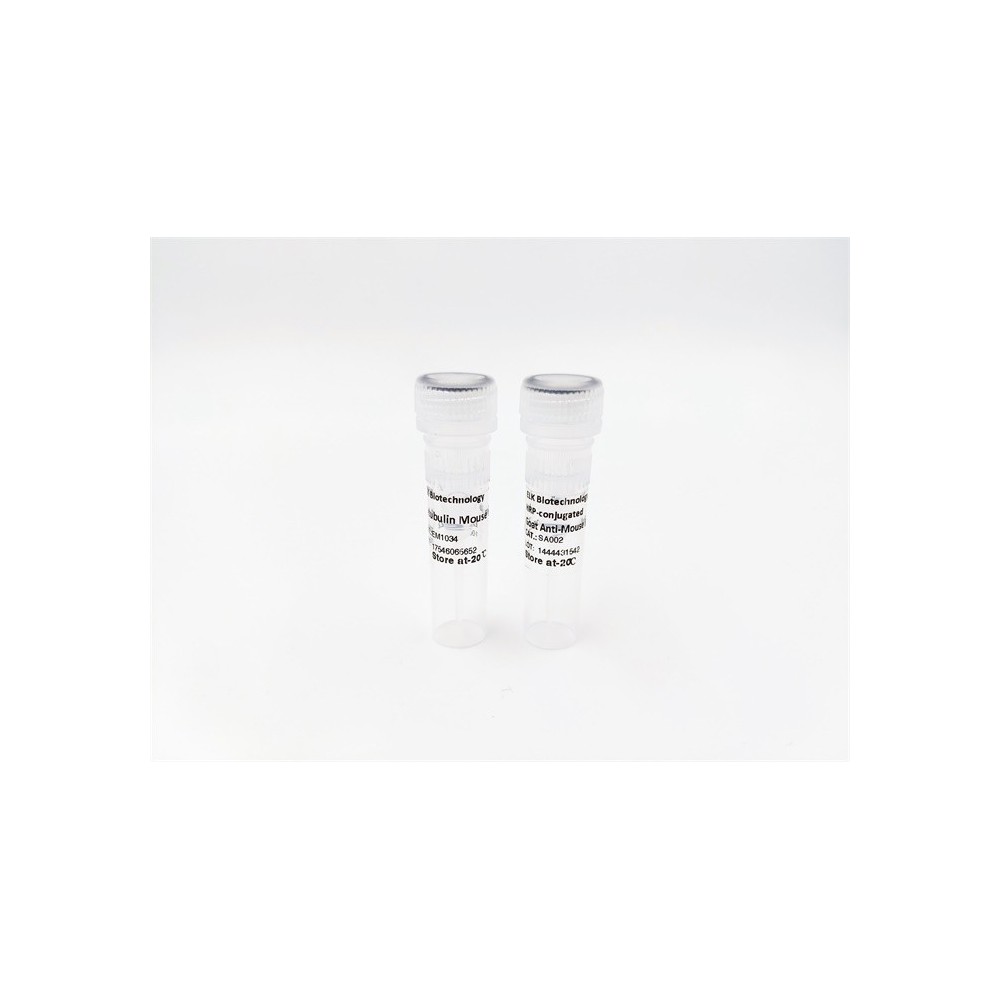

| ELK.No | ES8543 |
| Product name | FBXO7 rabbit pAb |
| Reactivity | Human;Rat;Mouse; |
| Applications | WB;ELISA |
| Other name | FBXO7 FBX7 |
| Size | 50μL |
| Unit price ($) | 148 |
| Human gene ID | 25793 |
| Human Swiss-Prot | Q9Y3I1 |
| Source | Rabbit |
| Isotype | IgG |
| Target | FBXO7 |
| Fields | |
| Gene name | FBXO7 FBX7 |
| Protein name | F-box protein 7 |
| Human gene link | View Human Gene |
| Human Swiss link | View Human Swiss-Prot |
| Mouse gene ID | 69754 |
| Mouse gene link | |
| Mouse Swiss-Prot | Q3U7U3 |
| Mouse Swiss link | View Mouse Swiss-Prot |
| Rat gene ID | |
| Rat gene link | |
| Rat Swiss-Prot | |
| Rat Swiss link | |
| Immunogen | Synthetic peptide from human protein at AA range: 371-420 |
| Specificity | The antibody detects endogenous FBXO7 protein |
| Formulation | Liquid in PBS containing 50% glycerol, 0.5% BSA and 0.02% sodium azide. |
| Clonality | Polyclonal |
| Dilution | WB 1:500-2000, ELISA 1:10000-20000 |
| Purification | The antibody was affinity-purified from rabbit antiserum by affinity-chromatography using epitope-specific immunogen. |
| Concentration | 1 mg/ml |
| Storage stability | -20°C/1 year |
| Molecular Weight (Da) | |
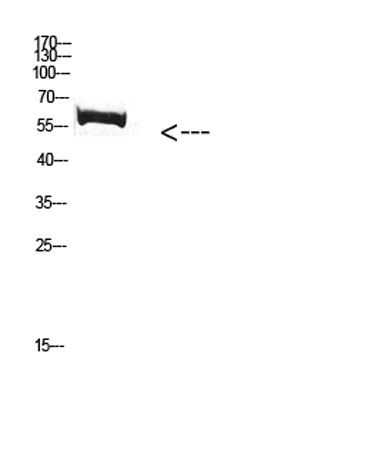
| Observed band (KD) | 58kD |
| Background | This gene encodes a member of the F-box protein family which is characterized by an approximately 40 amino acid motif, the F-box. The F-box proteins constitute one of the four subunits of the ubiquitin protein ligase complex called SCFs (SKP1-cullin-F-box), which function in phosphorylation-dependent ubiquitination. The F-box proteins are divided into 3 classes: Fbws containing WD-40 domains, Fbls containing leucine-rich repeats, and Fbxs containing either different protein-protein interaction modules or no recognizable motifs. The protein encoded by this gene belongs to the Fbxs class and it may play a role in regulation of hematopoiesis. Alternatively spliced transcript variants of this gene have been identified with the full-length natures of only some variants being determined. [provided by RefSeq, Jul 2008], |
| Function | disease:Defects in FBXO7 may be the cause of parkinsonian-pyramidal syndrome (PKPS) [MIM:260300]. PKPS is a hypokinetic rigid disorder, the most common example of which is Parkinson disease. PKPS is a rare disorder that exhibits both Parkinsonian and pyramidal-associated signs. Symptoms, which may bevague in the beginning, start in young adulthood, progress relatively slowly, and may culminate in severe movement incapacity. Response to levadopa is usually dramatic and sustained for many years. Most, but not all, reported cases have been familial and associated with parental consanguinity, suggesting autosomal-recessive inheritance.,function:Substrate recognition component of a (SKP1-CUL1-F-box protein) E3 ubiquitin-protein ligase complex which mediates the ubiquitination and subsequent proteasomal degradation of target proteins. Recognizes BIRC2 and DLGAP5.,pathway:Protein modification; |
| Subcellular location | Cytoplasm . Nucleus . Mitochondrion . Cytoplasm, cytosol . Predominantly cytoplasmic (PubMed:16096642). A minor proportion is detected in the nucleus (PubMed:16096642). Relocates from the cytosol to depolarized mitochondria (PubMed:23933751). . |
| Expression | Fetal kidney,Pancreas, |

Use collapsible tabs for more detailed information that will help customers make a purchasing decision.
Ex: Shipping and return policies, size guides, and other common questions.