 Français
 English
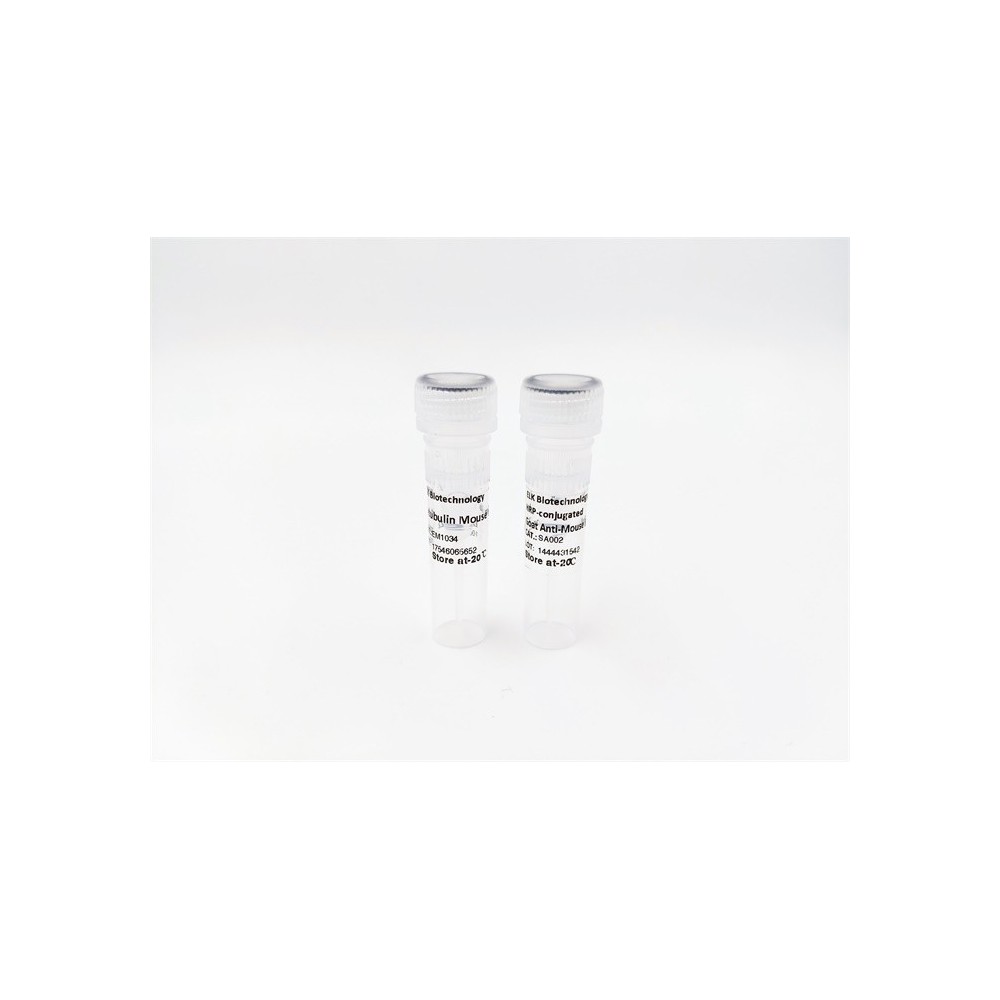

| ELK.No | ES9289 |
| Product name | PSMD9 rabbit pAb |
| Reactivity | Human;Mouse;Rat |
| Applications | WB;ELISA |
| Other name | |
| Size | 100μL |
| Unit price ($) | 248 |
| Human gene ID | 5715 |
| Human Swiss-Prot | O00233 |
| Source | Rabbit |
| Isotype | IgG |
| Target | PSMD9 |
| Fields | >>Proteasome;>>Alzheimer disease;>>Parkinson disease;>>Amyotrophic lateral sclerosis;>>Huntington disease;>>Spinocerebellar ataxia;>>Prion disease;>>Pathways of neurodegeneration - multiple diseases |
| Gene name | PSMD9 |
| Protein name | 26S proteasome non-ATPase regulatory subunit 9 (26S proteasome regulatory subunit p27) |
| Human gene link | |
| Human Swiss link | View Human Swiss-Prot |
| Mouse gene ID | |
| Mouse gene link | |
| Mouse Swiss-Prot | Q9CR00 |
| Mouse Swiss link | View Mouse Swiss-Prot |
| Rat gene ID | |
| Rat gene link | |
| Rat Swiss-Prot | Q9WTV5 |
| Rat Swiss link | View Rat Swiss-Prot |
| Immunogen | Synthesized peptide derived from human protein . at AA range: 40-120 |
| Specificity | PSMD9 Polyclonal Antibody detects endogenous levels of protein. |
| Formulation | Liquid in PBS containing 50% glycerol, and 0.02% sodium azide. |
| Clonality | Polyclonal |
| Dilution | WB 1:500-2000 ELISA 1:5000-20000 |
| Purification | The antibody was affinity-purified from rabbit antiserum by affinity-chromatography using epitope-specific immunogen. |
| Concentration | 1 mg/ml |
| Storage stability | -20°C/1 year |
| Molecular Weight (Da) | |
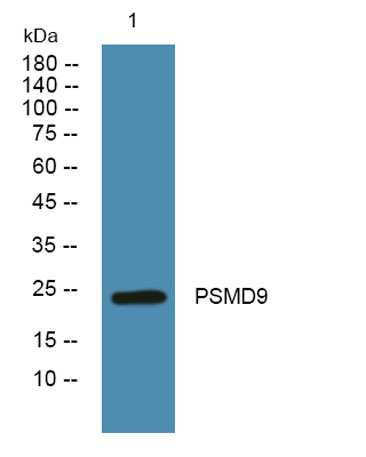
| Observed band (KD) | 24kD |
| Background | The 26S proteasome is a multicatalytic proteinase complex with a highly ordered structure composed of 2 complexes, a 20S core and a 19S regulator. The 20S core is composed of 4 rings of 28 non-identical subunits; 2 rings are composed of 7 alpha subunits and 2 rings are composed of 7 beta subunits. The 19S regulator is composed of a base, which contains 6 ATPase subunits and 2 non-ATPase subunits, and a lid, which contains up to 10 non-ATPase subunits. Proteasomes are distributed throughout eukaryotic cells at a high concentration and cleave peptides in an ATP/ubiquitin-dependent process in a non-lysosomal pathway. An essential function of a modified proteasome, the immunoproteasome, is the processing of class I MHC peptides. This gene encodes a non-ATPase subunit of the 19S regulator. Three transcript variants encoding two different isoforms have been found for this gene. [provided b |
| Function | function:Acts as a regulatory subunit of the 26S proteasome which is involved in the ATP-dependent degradation of ubiquitinated proteins.,similarity:Belongs to the proteasome subunit p27 family.,similarity:Contains 1 PDZ (DHR) domain.,subunit:Subunit of the modulator trimer complex that stimulates the association of the PA700 regulator with the catalytic 20S proteasome to form the ATP-dependent active 26S proteasome. P27 is associated not only with the modulator complex but also significantly with the 26S proteasome complex.,tissue specificity:Expressed in all tissues tested, highly expressed in liver and kidney., |
| Subcellular location | nucleus,nucleoplasm,cytoplasm,cytosol,proteasome regulatory particle,proteasome regulatory particle, base subcomplex, |
| Expression | Expressed in all tissues tested, highly expressed in liver and kidney. |

Use collapsible tabs for more detailed information that will help customers make a purchasing decision.
Ex: Shipping and return policies, size guides, and other common questions.