 Français
 English
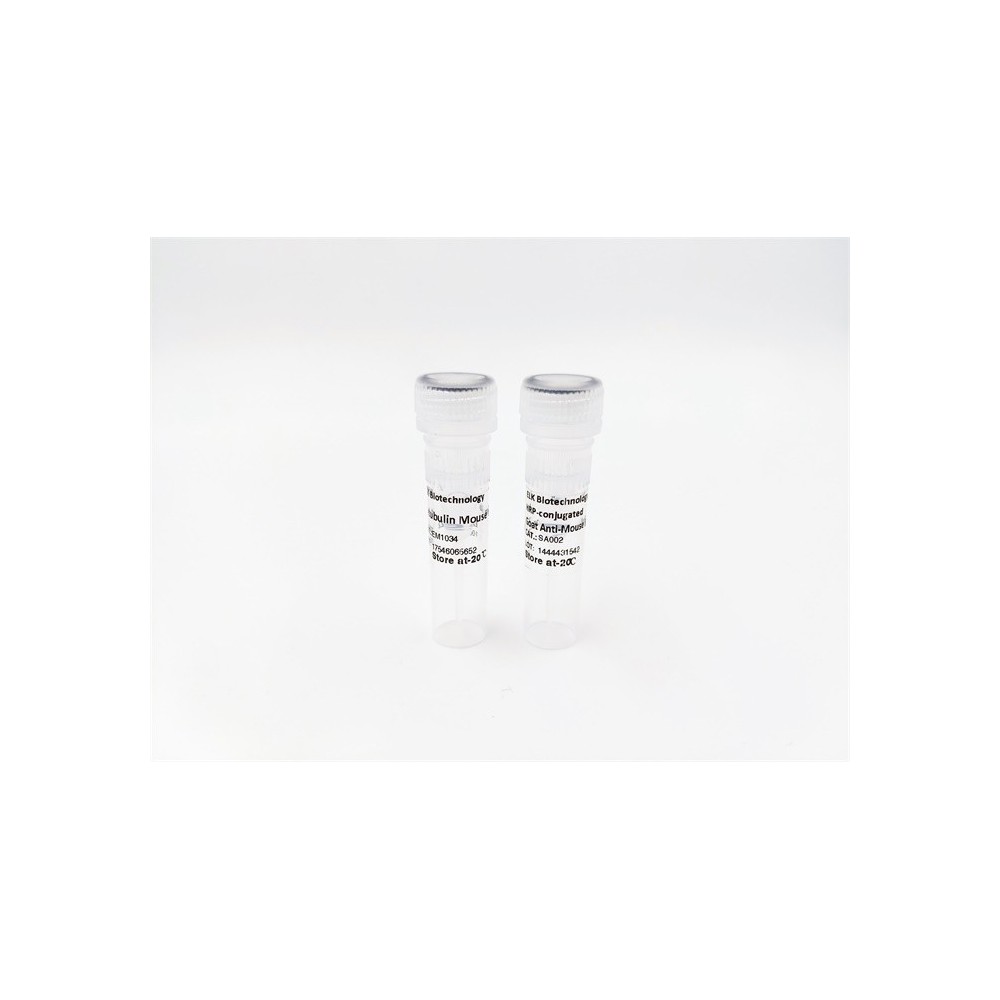

| ELK.No | ES9573 |
| Product name | CYTD rabbit pAb |
| Reactivity | Human;Rat;Mouse; |
| Applications | WB;ELISA |
| Other name | |
| Size | 100μL |
| Unit price ($) | 248 |
| Human gene ID | 1473 |
| Human Swiss-Prot | P28325 |
| Source | Rabbit |
| Isotype | IgG |
| Target | CYTD |
| Fields | >>Salivary secretion |
| Gene name | CST5 |
| Protein name | Cystatin-D (Cystatin-5) |
| Human gene link | |
| Human Swiss link | View Human Swiss-Prot |
| Mouse gene ID | |
| Mouse gene link | |
| Mouse Swiss-Prot | |
| Mouse Swiss link | |
| Rat gene ID | |
| Rat gene link | |
| Rat Swiss-Prot | |
| Rat Swiss link | |
| Immunogen | Synthesized peptide derived from part region of human protein |
| Specificity | CYTD Polyclonal Antibody detects endogenous levels of protein. |
| Formulation | Liquid in PBS containing 50% glycerol, and 0.02% sodium azide. |
| Clonality | Polyclonal |
| Dilution | WB 1:500-2000 ELISA 1:5000-20000 |
| Purification | The antibody was affinity-purified from rabbit antiserum by affinity-chromatography using epitope-specific immunogen. |
| Concentration | 1 mg/ml |
| Storage stability | -20°C/1 year |
| Molecular Weight (Da) | |
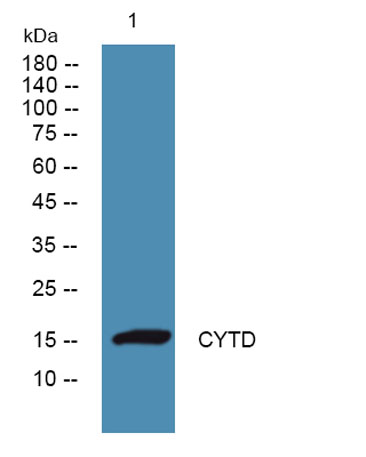
| Observed band (KD) | 15kD |
| Background | The cystatin superfamily encompasses proteins that contain multiple cystatin-like sequences. Some of the members are active cysteine protease inhibitors, while others have lost or perhaps never acquired this inhibitory activity. There are three inhibitory families in the superfamily, including the type 1 cystatins (stefins), type 2 cystatins and the kininogens. The type 2 cystatin proteins are a class of cysteine proteinase inhibitors found in a variety of human fluids and secretions. The cystatin locus on chromosome 20 contains the majority of the type 2 cystatin genes and pseudogenes. This gene is located in the cystatin locus and encodes a protein found in saliva and tears. The encoded protein may play a protective role against proteinases present in the oral cavity. [provided by RefSeq, Jul 2008], |
| Function | function:Cysteine proteinase inhibitor that possibly plays a protective role against proteinases present in the oral cavity. The order of preference for inhibition is cathepsin S > cathepsin H > cathepsin L > cathepsin B.,similarity:Belongs to the cystatin family.,subunit:Monomer.,tissue specificity:Expressed in parotid gland but not in seminal vesicle, prostate, epididymis, testis, ovary, placenta, thyroid, gastric corpus, small intestine, liver, or gall bladder tissue., |
| Subcellular location | Secreted . |
| Expression | Expressed in submandibular and sublingual saliva but not in parotid saliva (at protein level). Expressed in parotid gland but not in seminal vesicle, prostate, epididymis, testis, ovary, placenta, thyroid, gastric corpus, small intestine, liver, or gall bladder tissue. |

Use collapsible tabs for more detailed information that will help customers make a purchasing decision.
Ex: Shipping and return policies, size guides, and other common questions.