 Français
 English
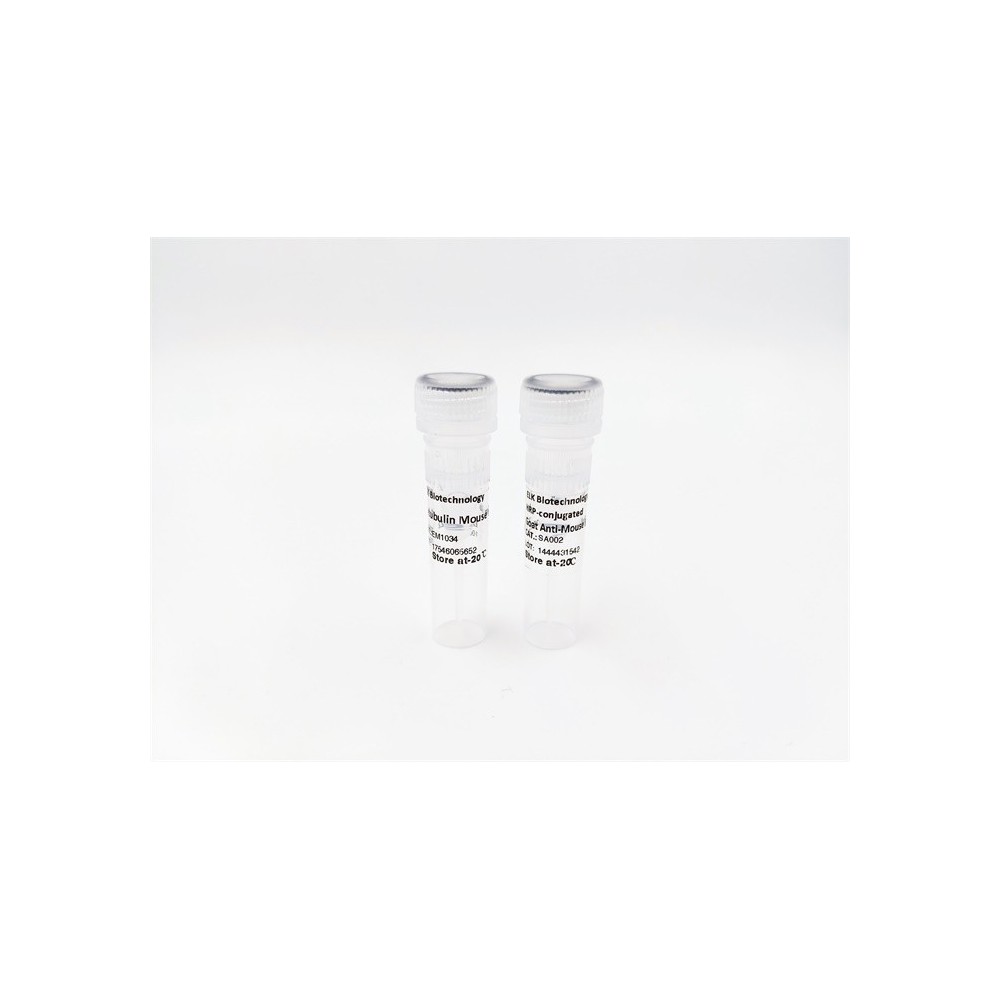

| ELK.No | ES9789 |
| Product name | MED28 rabbit pAb |
| Reactivity | Human;Mouse;Rat |
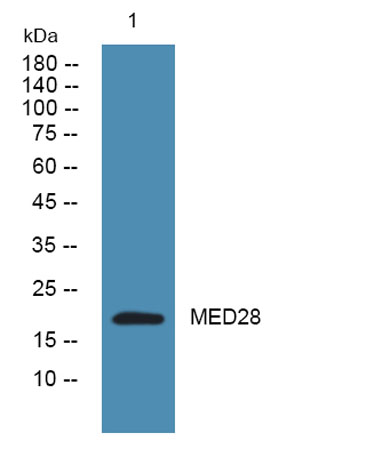
| Applications | WB;ELISA |
| Other name | |
| Size | 50μL |
| Unit price ($) | 148 |
| Human gene ID | 80306 |
| Human Swiss-Prot | Q9H204 |
| Source | Rabbit |
| Isotype | IgG |
| Target | MED28 |
| Fields | |
| Gene name | MED28 EG1 FKSG20 |
| Protein name | Mediator of RNA polymerase II transcription subunit 28 (Endothelial-derived protein 1) (Mediator complex subunit 28) (Merlin and Grb2-interacting cytoskeletal protein) (Magicin) (Tumor angiogenesis ma |
| Human gene link | |
| Human Swiss link | View Human Swiss-Prot |
| Mouse gene ID | |
| Mouse gene link | |
| Mouse Swiss-Prot | Q920D3 |
| Mouse Swiss link | View Mouse Swiss-Prot |
| Rat gene ID | |
| Rat gene link | |
| Rat Swiss-Prot | P68943 |
| Rat Swiss link | View Rat Swiss-Prot |
| Immunogen | Synthesized peptide derived from human protein . at AA range: 20-100 |
| Specificity | MED28 Polyclonal Antibody detects endogenous levels of protein. |
| Formulation | Liquid in PBS containing 50% glycerol, and 0.02% sodium azide. |
| Clonality | Polyclonal |
| Dilution | WB 1:500-2000 ELISA 1:5000-20000 |
| Purification | The antibody was affinity-purified from rabbit antiserum by affinity-chromatography using epitope-specific immunogen. |
| Concentration | 1 mg/ml |
| Storage stability | -20°C/1 year |
| Molecular Weight (Da) | |
| Observed band (KD) | 19kD |
| Background | function:Component of the Mediator complex, a coactivator involved in the regulated transcription of nearly all RNA polymerase II-dependent genes. Mediator functions as a bridge to convey information from gene-specific regulatory proteins to the basal RNA polymerase II transcription machinery. Mediator is recruited to promoters by direct interactions with regulatory proteins and serves as a scaffold for the assembly of a functional preinitiation complex with RNA polymerase II and the general transcription factors. May be part of a complex containing NF2/merlin that participates in cellular signaling to the actin cytoskeleton downstream of tyrosine kinase signaling pathways.,induction:Up-regulated by endothelial cells when exposed to tumor conditional media.,similarity:Belongs to the Mediator complex subunit 28 family.,subcellular location:According to PubMed:15467741, it is cytoplasmic and mainly membrane-associated.,subunit:Component of the Mediator complex, which is composed of MED1, MED4, MED6, MED7, MED8, MED9, MED10, MED11, MED12, MED13, MED13L, MED14, MED15, MED16, MED17, MED18, MED19, MED20, MED21, MED22, MED23, MED24, MED25, MED26, MED27, MED29, MED30, MED31, CCNC, CDK8 and CDC2L6/CDK11. The MED12, MED13, CCNC and CDK8 subunits form a distinct module termed the CDK8 module. Mediator containing the CDK8 module is less active than Mediator lacking this module in supporting transcriptional activation. Individual preparations of the Mediator complex lacking one or more distinct subunits have been variously termed ARC, CRSP, DRIP, PC2, SMCC and TRAP. Forms a ternary complex with NF2/merlin and GRB2. Binds to actin.,tissue specificity:Widely expressed. Highly expressed in vascular tissues such as placenta, testis and liver., |
| Function | function:Component of the Mediator complex, a coactivator involved in the regulated transcription of nearly all RNA polymerase II-dependent genes. Mediator functions as a bridge to convey information from gene-specific regulatory proteins to the basal RNA polymerase II transcription machinery. Mediator is recruited to promoters by direct interactions with regulatory proteins and serves as a scaffold for the assembly of a functional preinitiation complex with RNA polymerase II and the general transcription factors. May be part of a complex containing NF2/merlin that participates in cellular signaling to the actin cytoskeleton downstream of tyrosine kinase signaling pathways.,induction:Up-regulated by endothelial cells when exposed to tumor conditional media.,similarity:Belongs to the Mediator complex subunit 28 family.,subcellular location:According to PubMed:15467741, it is cytoplasmic a |
| Subcellular location | Nucleus . Cytoplasm . Membrane ; Peripheral membrane protein . According to PubMed:15467741, it is cytoplasmic and mainly membrane-associated. |
| Expression | Widely expressed. Highly expressed in vascular tissues such as placenta, testis and liver. |

Use collapsible tabs for more detailed information that will help customers make a purchasing decision.
Ex: Shipping and return policies, size guides, and other common questions.