 Français
 English
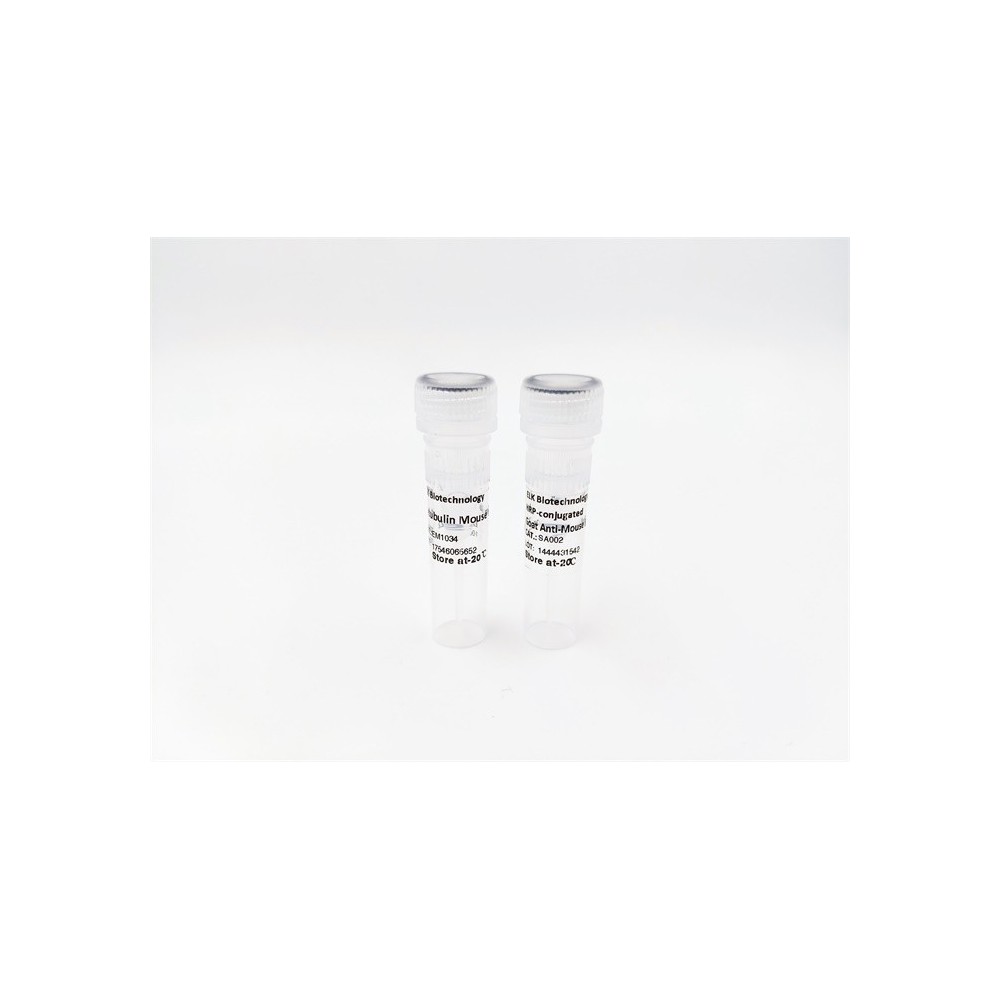

| ELK.No | ES9798 |
| Product name | MCP rabbit pAb |
| Reactivity | Human;Rat;Mouse |
| Applications | WB;ELISA |
| Other name | |
| Size | 50μL |
| Unit price ($) | 148 |
| Human gene ID | 4179 |
| Human Swiss-Prot | P15529 |
| Source | Rabbit |
| Isotype | IgG |
| Target | MCP |
| Fields | >>Complement and coagulation cascades;>>Measles |
| Gene name | CD46 MCP MIC10 |
| Protein name | Membrane cofactor protein (TLX) (Trophoblast leukocyte common antigen) (CD antigen CD46) |
| Human gene link | |
| Human Swiss link | View Human Swiss-Prot |
| Mouse gene ID | |
| Mouse gene link | |
| Mouse Swiss-Prot | O88174 |
| Mouse Swiss link | View Mouse Swiss-Prot |
| Rat gene ID | |
| Rat gene link | |
| Rat Swiss-Prot | Q9Z0M4 |
| Rat Swiss link | View Rat Swiss-Prot |
| Immunogen | Synthesized peptide derived from human protein . at AA range: 10-90 |
| Specificity | MCP Polyclonal Antibody detects endogenous levels of protein. |
| Formulation | Liquid in PBS containing 50% glycerol, and 0.02% sodium azide. |
| Clonality | Polyclonal |
| Dilution | WB 1:500-2000 ELISA 1:5000-20000 |
| Purification | The antibody was affinity-purified from rabbit antiserum by affinity-chromatography using epitope-specific immunogen. |
| Concentration | 1 mg/ml |
| Storage stability | -20°C/1 year |
| Molecular Weight (Da) | |
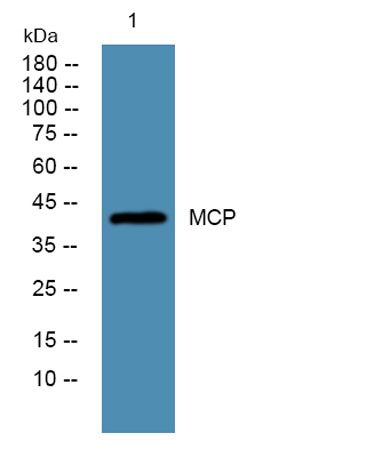
| Observed band (KD) | 43kD |
| Background | The protein encoded by this gene is a type I membrane protein and is a regulatory part of the complement system. The encoded protein has cofactor activity for inactivation of complement components C3b and C4b by serum factor I, which protects the host cell from damage by complement. In addition, the encoded protein can act as a receptor for the Edmonston strain of measles virus, human herpesvirus-6, and type IV pili of pathogenic Neisseria. Finally, the protein encoded by this gene may be involved in the fusion of the spermatozoa with the oocyte during fertilization. Mutations at this locus have been associated with susceptibility to hemolytic uremic syndrome. Alternatively spliced transcript variants encoding different isoforms have been described. [provided by RefSeq, Jun 2010], |
| Function | alternative products:Additional isoforms seem to exist. The complete sequences of the isoforms are not known. Isoforms are classified as alpha (isoform C and isoform D), beta (isoform E and isoform F), gamma (isoform A and isoform B) and delta (isoform N). Isoforms gamma are preferentially expressed in EBV-B cells and leukemic cells. Isoforms alpha (66 kDa) and isoforms beta (56 kDa) are found in all tissues except sperm. Isoform delta is expressed in spermatozoa. The exon 9 is specifically deleted in some placentae isoforms. All tissues differentially splice exon 13,disease:Defects in CD46 are a cause of atypical hemolytic-uremic syndrome (HUS) [MIM:235400]. HUS is a microvasculature disorder leading to microangiopathic hemolytic anemia associated with distorted erythrocytes ('burr cells'), thrombocytopenia, and acute renal failure. Both dominant and recessive modes of inheritance have |
| Subcellular location | Cytoplasmic vesicle, secretory vesicle, acrosome inner membrane ; Single-pass type I membrane protein . Inner acrosomal membrane of spermatozoa. Internalized upon binding of Measles virus, Herpesvirus 6 or Neisseria gonorrhoeae, which results in an increased susceptibility of infected cells to complement-mediated injury. In cancer cells or cells infected by Neisseria, shedding leads to a soluble peptide. |
| Expression | Expressed by all cells except erythrocytes. |

Use collapsible tabs for more detailed information that will help customers make a purchasing decision.
Ex: Shipping and return policies, size guides, and other common questions.
