 Français
 English
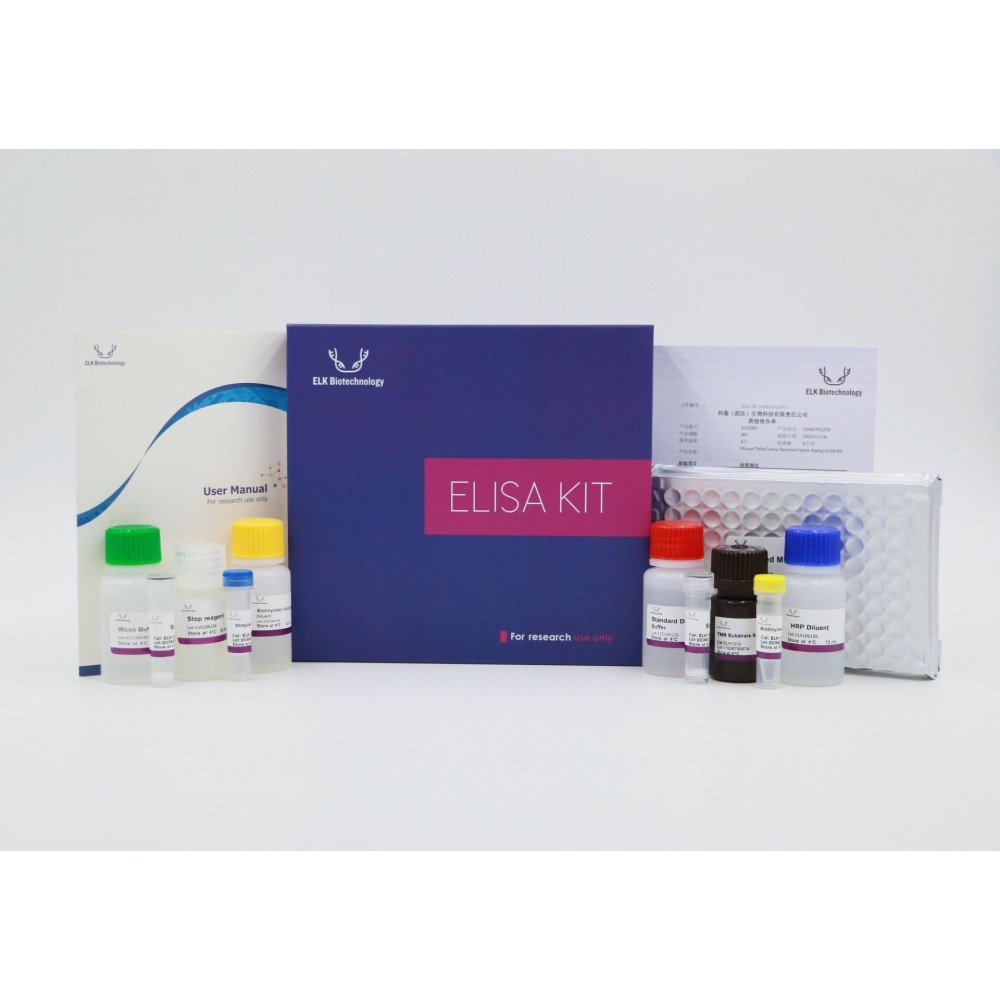
Human TRPM1(Transient Receptor Potential Cation Channel Subfamily M, Member 1) ELISA Kit
AO-06-ELK3614-96T

| Cat.No | ELK3614 |
| Product Name | Human TRPM1(Transient Receptor Potential Cation Channel Subfamily M, Member 1) ELISA Kit |
| Reactivity | Human |
| Alternative Names | LTRPC1; MLSN1; Melastatin 1; Long transient receptor potential channel 1 |
| Assay Type | Sandwich |
| Sensitivity | 0.053 ng/mL |
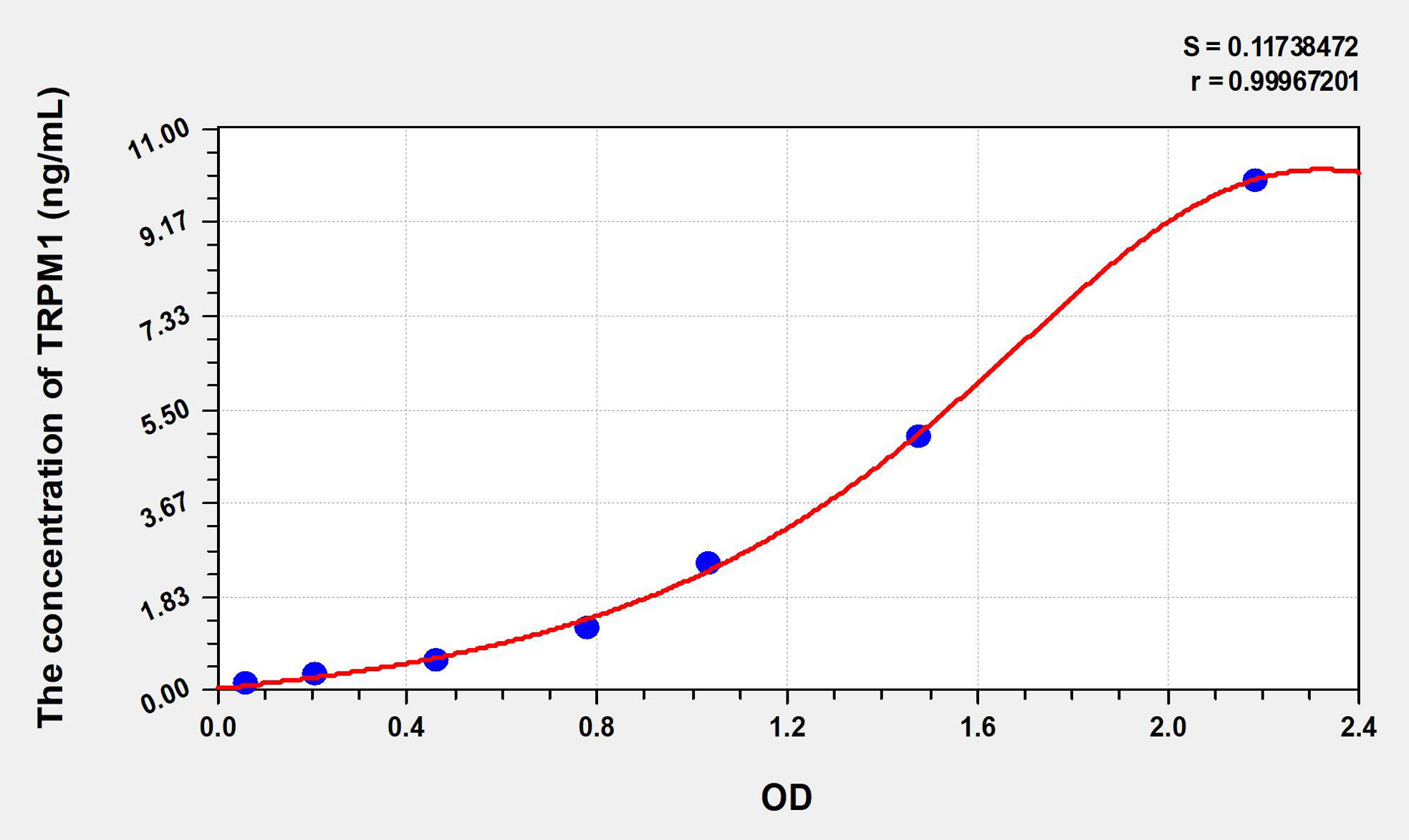
| Standard | 10 ng/mL |
| Detection Range | 0.16-10 ng/mL |
| Sample Type | Tissue homogenates and other biological fluids. |
| Assay Length | 3.5h |
| Research Area | Signal transduction; |
| Test Principle | The test principle applied in this kit is Sandwich enzyme immunoassay. The microtiter plate provided in this kit has been pre-coated with an antibody specific to Human TRPM1. Standards or samples are added to the appropriate microtiter plate wells then with a biotin-conjugated antibody specific to Human TRPM1. Next, Avidin conjugated to Horseradish Peroxidase (HRP) is added to each microplate well and incubated. After TMB substrate solution is added, only those wells that contain Human TRPM1, biotin-conjugated antibody and enzyme-conjugated Avidin will exhibit a change in color. The enzyme-substrate reaction is terminated by the addition of sulphuric acid solution and the color change is measured spectrophotometrically at a wavelength of 450nm ± 10nm. The concentration of Human TRPM1 in the samples is then determined by comparing the OD of the samples to the standard curve. |

Use collapsible tabs for more detailed information that will help customers make a purchasing decision.
Ex: Shipping and return policies, size guides, and other common questions.