 Français
 English
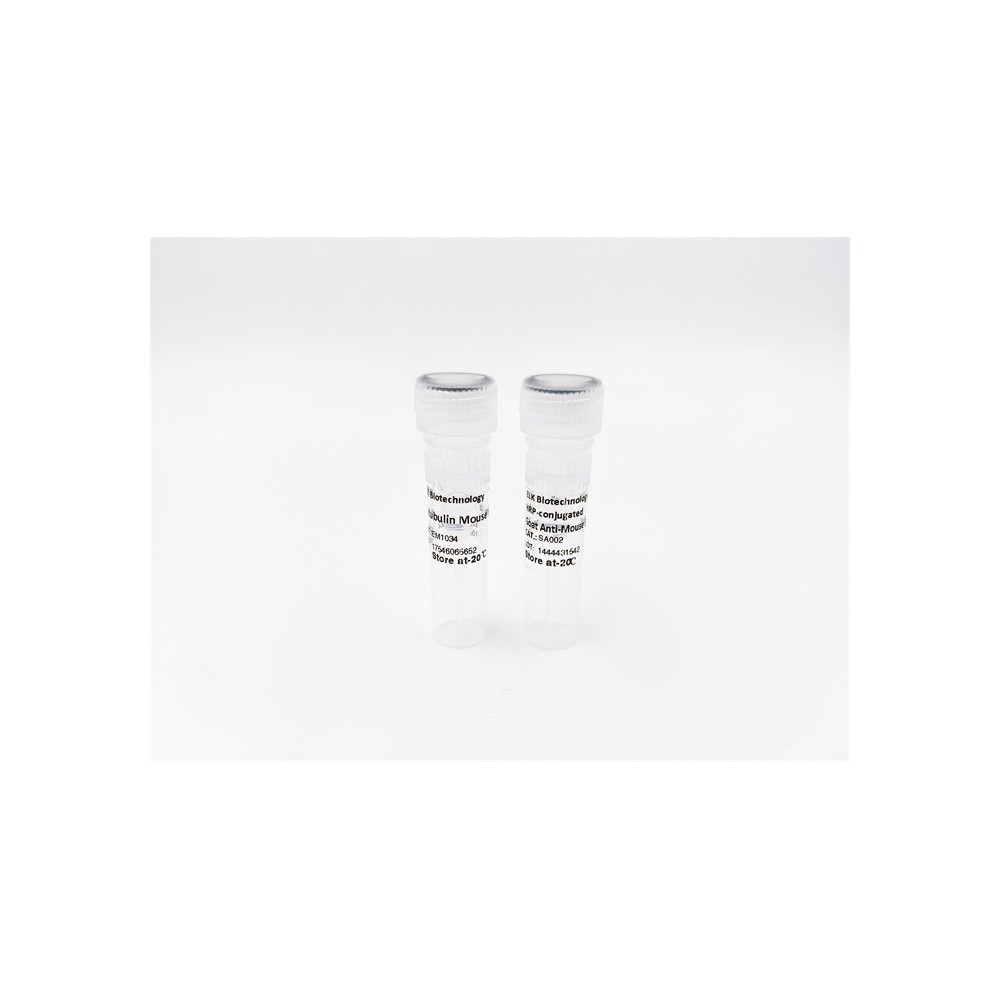

| ELK.No | EM1016 |
| Product name | S-Tag Mouse mAb |
| Reactivity | |
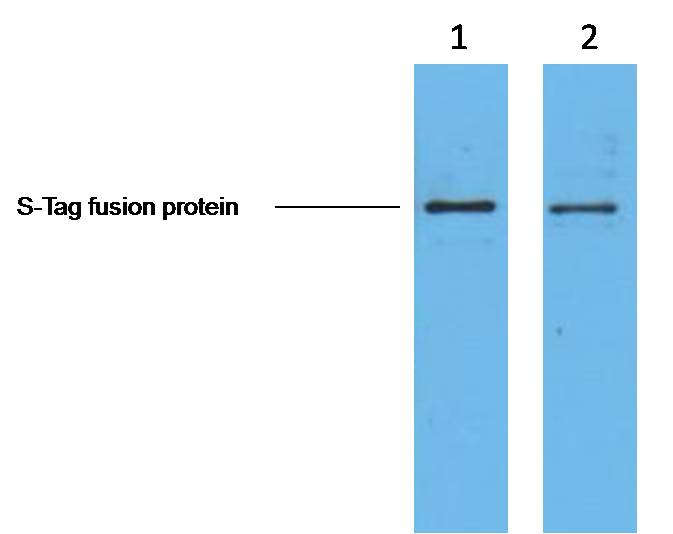
| Applications | WB |
| Other name | |
| Size | 50μL |
| Unit price ($) | 148 |
| Human gene ID | |
| Human Swiss-Prot | |
| Source | Mouse |
| Isotype | IgG1 |
| Target | |
| Fields | |
| Gene name | |
| Protein name | |
| Human gene link | |
| Human Swiss link | |
| Mouse gene ID | |
| Mouse gene link | |
| Mouse Swiss-Prot | |
| Mouse Swiss link | |
| Rat gene ID | |
| Rat gene link | |
| Rat Swiss-Prot | |
| Rat Swiss link | |
| Immunogen | Synthetic Peptide |
| Specificity | |
| Formulation | |
| Clonality | Monoclonal |
| Dilution | WB 1:5,000 |
| Purification | |
| Concentration | 1mg/mL |
| Storage stability | PBS with 0.02% sodium azide and 50% glycerol pH 7.4. Store at -20°C. Avoid repeated freeze-thaw cycles. |
| Molecular Weight (Da) | |
| Observed band (KD) | |
| Background | S-tag is the name of an oligopeptide derived from pancreatic ribonuclease A (RNase A). If RNase A is digested with subtilisin, a single peptide bond is cleaved, but the resulting two products remain weakly bound to each other and the protein, called ribonuclease S, remains active although each of the two products alone shows no enzymatic activity. The N-terminus of the original RNase A, also called S-peptide, consists of 20 amino acid residues, of which only the first 15 are required for ribonuclease activity. This 15 amino acids long peptide is called S15 or S-tag.The amino acid sequence of the S-tag is: KETAAAKFERQHMDS conjugated to KLH. S- Tag antibody can recognize C-terminal, internal, and N-terminal S-tagged proteins. |
| Function | |
| Subcellular location | |
| Expression |

Use collapsible tabs for more detailed information that will help customers make a purchasing decision.
Ex: Shipping and return policies, size guides, and other common questions.