 Français
 English

| ELK.No | ES8011 |
| Product name | GPR56 rabbit pAb |
| Reactivity | Human;Rat;Mouse; |
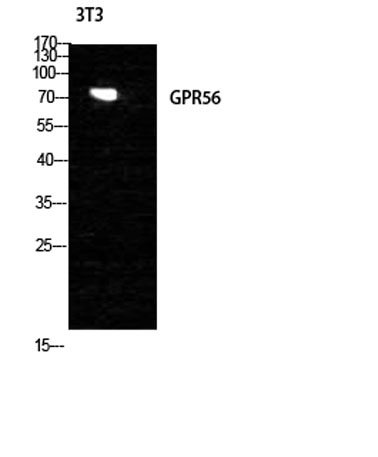
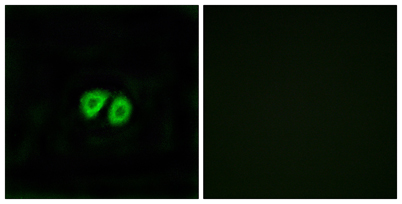
| Applications | WB;IF;ELISA |
| Other name | GPR56; TM7LN4; TM7XN1; G-protein coupled receptor 56; Protein TM7XN1 |
| Size | 100μL |
| Unit price ($) | 248 |
| Human gene ID | 9289 |
| Human Swiss-Prot | Q9Y653 |
| Source | Rabbit |
| Isotype | IgG |
| Target | GPR56 |
| Fields | |
| Gene name | GPR56 |
| Protein name | G-protein coupled receptor 56 |
| Human gene link | View Human Gene |
| Human Swiss link | View Human Swiss-Prot |
| Mouse gene ID | |
| Mouse gene link | |
| Mouse Swiss-Prot | Q8K209 |
| Mouse Swiss link | View Mouse Swiss-Prot |
| Rat gene ID | |
| Rat gene link | |
| Rat Swiss-Prot | |
| Rat Swiss link | |
| Immunogen | The antiserum was produced against synthesized peptide derived from human GPR56. AA range:251-300 |
| Specificity | GPR56 Polyclonal Antibody detects endogenous levels of GPR56 protein. |
| Formulation | Liquid in PBS containing 50% glycerol, 0.5% BSA and 0.02% sodium azide. |
| Clonality | Polyclonal |
| Dilution | Western Blot: 1/500 - 1/2000. Immunofluorescence: 1/200 - 1/1000. ELISA: 1/20000. Not yet tested in other applications. |
| Purification | The antibody was affinity-purified from rabbit antiserum by affinity-chromatography using epitope-specific immunogen. |
| Concentration | 1 mg/ml |
| Storage stability | -20°C/1 year |
| Molecular Weight (Da) | |
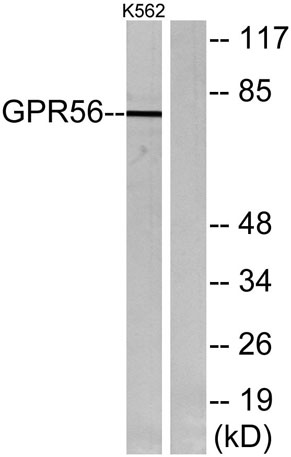
| Observed band (KD) | 78kD |
| Background | This gene encodes a member of the G protein-coupled receptor family and regulates brain cortical patterning. The encoded protein binds specifically to transglutaminase 2, a component of tissue and tumor stroma implicated as an inhibitor of tumor progression. Mutations in this gene are associated with a brain malformation known as bilateral frontoparietal polymicrogyria. Alternative splicing results in multiple transcript variants. [provided by RefSeq, Feb 2014], |
| Function | disease:Defects in GPR56 are the cause of bilateral frontoparietal polymicrogyria (BFPP) [MIM:606854]. BFPP is characterized by disorganized cortical lamination that is most severe in frontal cortex.,function:Could be involved in cell-cell interactions.,similarity:Belongs to the G-protein coupled receptor 2 family. LN-TM7 subfamily.,similarity:Contains 1 GPS domain.,tissue specificity:Widely distributed with highest levels found in thyroid gland, brain and heart. Expressed in a great number of tumor cells., |
| Subcellular location | Cell membrane ; Multi-pass membrane protein .; [ADGRG1 N-terminal fragment]: Secreted .; [ADGRG1 C-terminal fragment]: Membrane raft . Interaction with its ligand COL3A1 leads to the release of ADGRG1 NT from the membrane and triggers the association of ADGRG1 CT with lipid rafts. . |
| Expression | Widely distributed with highest levels found in thyroid gland, brain and heart. Expressed in a great number of tumor cells. Expression is down-regulated in different tumors from highly metastatic cells. |

Use collapsible tabs for more detailed information that will help customers make a purchasing decision.
Ex: Shipping and return policies, size guides, and other common questions.